
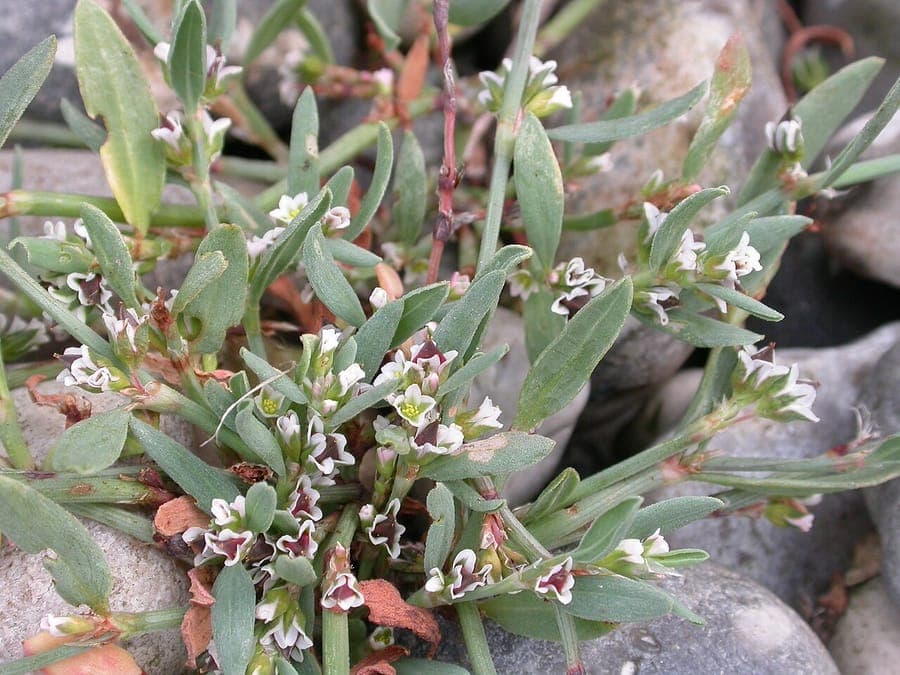
Olivier Pichard / CC BY-SA 3.0, via Wikimedia Commons
Sharp-fruit knotweed: complete guide
Polygonum oxyspermum
¿Quieres ver Sharp-fruit knotweed: complete guide en tu jardín?
1 minuto, sin tarjeta de crédito
Overview
Sharp-fruit knotweed (Polygonum oxyspermum), also known as Ray's Knotgrass, is a resilient low-growing plant naturally occurring in the coastal regions of Northern Europe, from southern Norway to the Baltic States. This adaptive plant thrives in some of the most challenging environments, particularly sandy and rocky coastal shorelines subjected to salt water and strong sea winds. With its compact growth and small leaves, it is a perfect choice for xeriscaping and coastal landscapes.
Appearance and Bloom
Sharp-fruit knotweed reaches only 10-30 centimeters in height and forms a very compact, cushion-like growth habit. The small leaves are linear to lanceolate, sometimes with red or purplish tinting, especially in cold seasons. The plant flowers from July to October with very small, inconspicuous flowers in rose to red tones. After blooming, very small, pointed fruits appear, which explains the scientific name "oxyspermum" (sharp seed). The plant forms a very compact, robust plant perfectly adapted to wild coastal shorelines.
Ideal Location
Sharp-fruit knotweed thrives best in very sunny, open coastal shorelines. This plant tolerates 6-8 hours of direct sunlight daily without any problem. In fact, the more sun, the better. The plant grows well in very windy locations, where other plants struggle. Wind protection is not needed; the plant was, after all, born there. This is the perfect choice for beach gardens, coastal boundary plantings, and dry sandy soils.
Soil
Sharp-fruit knotweed is exceptionally adaptive to difficult soils. Sandy soils are ideal; indeed, this plant grows better in poor sandy soil than in rich, fertile soils. The plant even tolerates salt in the soil, making it perfect for coastal applications. Extremely well-drained soil is essential; the plant does not tolerate waterlogging well. pH can vary from acidic to basic, leaning toward basic. This is a plant for the most difficult, most abandoned corners of your garden.
Diseño gratis
¿Quieres ver Sharp-fruit knotweed: complete guide en tu jardín? Crea un diseño gratis ahora.
Watering
Once established, Sharp-fruit knotweed is very drought-tolerant and requires minimal water. In the first growing year, water during dry periods. After establishment, you need add almost no water. This plant prefers dry, well-drained soils and tolerates drought even better than moist conditions. Waterlogging causes root rot and plant death. No watering in winter; the plant rests.
Pruning
Sharp-fruit knotweed requires very minimal pruning. The plant naturally forms a compact, cushion-like form. In early spring you can carefully remove dead material. Heavy pruning is not needed and is even discouraged. Let the plant retain its natural, cushion-like form. This plant recovers slowly from damage.
Maintenance Calendar
Spring: Beginning of growth. Check for winter damage. Minimal watering in dry springs. Summer: Flowering time. Enjoy the compact, dense growth habit. No pruning or watering needed, unless very dry. Autumn: Plant prepares for winter. Leaves may become purplish. Winter: Plant rests. No water, no maintenance. Enjoy the winter silhouette.
Winter Hardiness
Sharp-fruit knotweed is very winter hardy and thrives throughout Northern Europe. It tolerates temperatures down to -20°C or lower without protection. This plant was, after all, naturally born in very cold coastal shorelines. In the Netherlands, Belgium, and northern France, outdoor overwintering is problem-free. This is one of the hardiest plants for coastal applications.
Companion Plants
Other coastal plant species that combine well: Catchfly (Silene uniflora), Marram Grass (Ammophila arenaria), Sea Pink (Armeria maritima). Also interesting are combinations with other salt-tolerant, drought-resistant plants such as Sedum or other succulents. These combinations create authentic, resilient coastal landscapes.
Closing
Sharp-fruit knotweed is an exceptional plant for the most difficult coastal applications and sandy conditions. With its extreme winter hardiness, drought resistance, and salt tolerance, it is indispensable for authentic coastal gardening. This plant requires almost no maintenance and grows only better the more harsh the conditions become. Discover on gardenworld.app how to create resilient coastal gardens with this robust Northern European plant.
¿Quieres ver Sharp-fruit knotweed: complete guide en tu jardín? Crea un diseño gratis ahora.
Sube una foto, elige un estilo y obtén un diseño fotorrealista con lista de plantas en menos de un minuto.
Más de 10.000 jardines diseñados
Sin tarjeta de crédito


Plantas similares
Crosby's wild buckwheat: complete guide
Eriogonum crosbyae
Full guide to growing Eriogonum crosbyae: ideal site, soil, watering, winter hardiness and companion plants for this rare western wild buckwheat.
Spreading buckwheat: complete guide
Eriogonum effusum
Full guide to growing Eriogonum effusum: ideal site, soil, watering, winter hardiness and companion plants for this prairie subshrub from the American West.
Tall woolly buckwheat: complete guide
Eriogonum elatum
Full guide to Eriogonum elatum: siting, soil, watering, pruning and companion plants for this elegant white-flowered buckwheat from the western United States.