
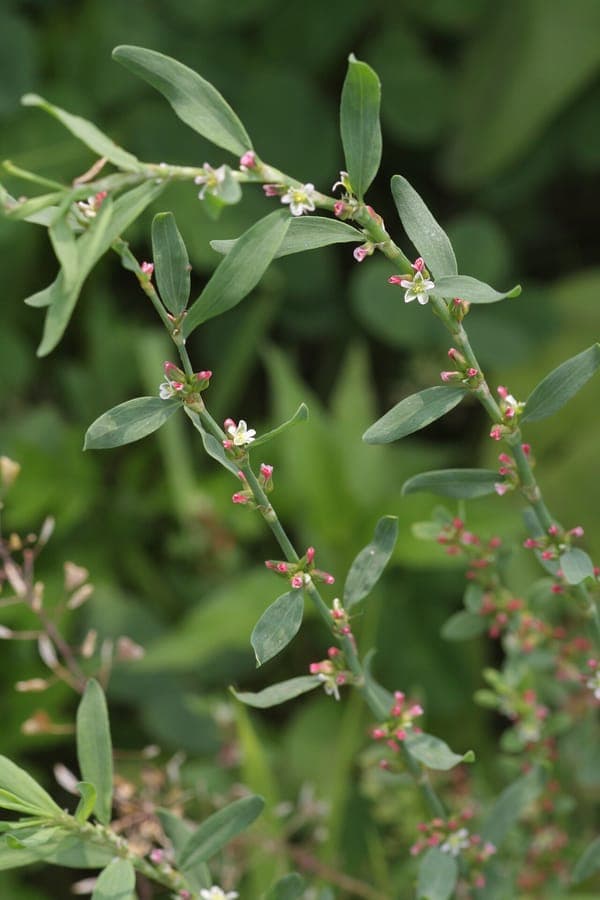
Dalgial / CC BY-SA 3.0, via Wikimedia Commons
Prostrate Knotweed: complete guide
Polygonum aviculare
¿Quieres ver Prostrate Knotweed: complete guide en tu jardín?
1 minuto, sin tarjeta de crédito
Overview
Prostrate Knotweed (Polygonum aviculare) is a remarkably resilient, low-growing plant that proliferates in nearly all temperate climates. This creeping annual weed is unpopular among gardeners, but it possesses interesting properties worthy of understanding. Historically, Prostrate Knotweed has been used as a medicinal plant and forage crop.
The plant grows along pathways, on waste ground, and between paving stones - anywhere other plants cannot take root. While typically classified as a weed, Prostrate Knotweed has ecological value and remains valued in some cultures. For garden designers, its primary importance lies in understanding how to manage it.
Appearance and Bloom
Prostrate Knotweed is an extremely low plant, usually 4-12 inches (10-30 cm) tall, with thin, shiny stems that radiate from a central growth point. This creates a characteristic star shape on the ground. The leaves are small, 6-25 millimeters long, lance-shaped and dark green.
The flowers are miniscule, white to pink colored, appearing from summer to fall. They grow in leaf axils and are inconspicuous. Prostrate Knotweed flowers for months, producing abundant seeds that disperse readily. The plant is completely frost-sensitive and dies at the first frost.
Ideal Location
Prostrate Knotweed is completely non-discriminating about location. It grows in full sun and partial shade, on dry ground and moist soil. This plant is an opportunist - it establishes itself wherever other plants fail. Paving, compacted soil, sandy surfaces, footpaths - Prostrate Knotweed finds a foothold everywhere.
The plant thrives best on warm, somewhat compacted soil. In very wet conditions it disappears naturally. This is therefore a plant that tolerates drought better than waterlogging.
Soil
Prostrate Knotweed has virtually no soil preference. It grows on sand, clay, silt, and compacted earth. The plant can sustain itself on extremely nutrient-poor soil where almost nothing else grows. Very wet, heavy clay presents the only real growth impediment.
The plant multiplies explosively on compacted garden soil - precisely because competition is absent. Where other plants retreat, Prostrate Knotweed triumphs.
Watering
Prostrate Knotweed is particularly drought-tolerant and normally requires no supplemental water. It becomes problematic only during very dry, hot summers when seedlings establish massively. The plant has very shallow roots that quickly adapt to moisture deficit.
During wet periods, Prostrate Knotweed grows weakly. Waterlogging is therefore the best method to suppress the plant without using chemicals.
Diseño gratis
¿Quieres ver Prostrate Knotweed: complete guide en tu jardín? Crea un diseño gratis ahora.
Pruning
Pruning Prostrate Knotweed is impractical because the plant remains so low. More effective is regular shallow raking with a rake or similar rough implement. This damages shallow roots and destroys many seedlings.
The plant can continue growing until late season, so repeated removal in August-September helps considerably. Hand-pulling works, but only on young plants - mature specimens break apart and regrow from fragments.
Maintenance Calendar
Spring (March-May): Prostrate Knotweed awakens. Young seedlings appear everywhere. This is the moment to take preventative measures with mulch or ground cover.
Summer (June-September): Full growth. Plant flowers and seed ripens. Regular cleanup prevents seed dispersal. During hot, dry periods, explosive growth can occur.
Fall (September-November): Plant begins dying as frost approaches. On warm sites, growth may continue. First frost kills the plant definitively.
Winter (December-February): Dead plant material on ground. Seed survives in soil. Can be carefully scraped away without disturbing soil.
Winter Hardiness
Prostrate Knotweed is not winter hardy. It is an annual plant that dies at the first frost. The plant can survive brief light frosts but dies at -1 to -2 degrees Celsius permanently.
This gives gardeners an advantage: the plant disappears naturally in fall. Seed sleeps in soil over winter and germinates when spring warmth returns.
Companion Plants
Prostrate Knotweed usually grows only as an undesirable companion. However, there are traditional associations: on fields where animals grazed (hence "pigweed"), it grew with other forage. Also on fallow acres it formed part of pioneer plant communities.
In gardens, one typically sees Prostrate Knotweed growing between paving and in cracks. It forms here an unwanted carpet with other pioneer plants like garden Mousetail.
Closing Thoughts
Prostrate Knotweed is a tough, adaptable plant best not welcomed in gardens. The best approach is prevention: maintain good soil structure, mulch, and remove regularly. Chemical control is usually unnecessary if mechanical methods are consistently applied.
On gardenworld.app you will find information about weed control and soil quality. This plant is useful for gardeners primarily as a warning signal that soil structure has deteriorated - precisely where Prostrate Knotweed grows, soil management must be improved.
At garden retailers you can obtain advice on natural weed control. Ensure you prevent seed production for lasting control.
¿Quieres ver Prostrate Knotweed: complete guide en tu jardín? Crea un diseño gratis ahora.
Sube una foto, elige un estilo y obtén un diseño fotorrealista con lista de plantas en menos de un minuto.
Más de 10.000 jardines diseñados
Sin tarjeta de crédito


Plantas similares
Crosby's wild buckwheat: complete guide
Eriogonum crosbyae
Full guide to growing Eriogonum crosbyae: ideal site, soil, watering, winter hardiness and companion plants for this rare western wild buckwheat.
Spreading buckwheat: complete guide
Eriogonum effusum
Full guide to growing Eriogonum effusum: ideal site, soil, watering, winter hardiness and companion plants for this prairie subshrub from the American West.
Tall woolly buckwheat: complete guide
Eriogonum elatum
Full guide to Eriogonum elatum: siting, soil, watering, pruning and companion plants for this elegant white-flowered buckwheat from the western United States.