
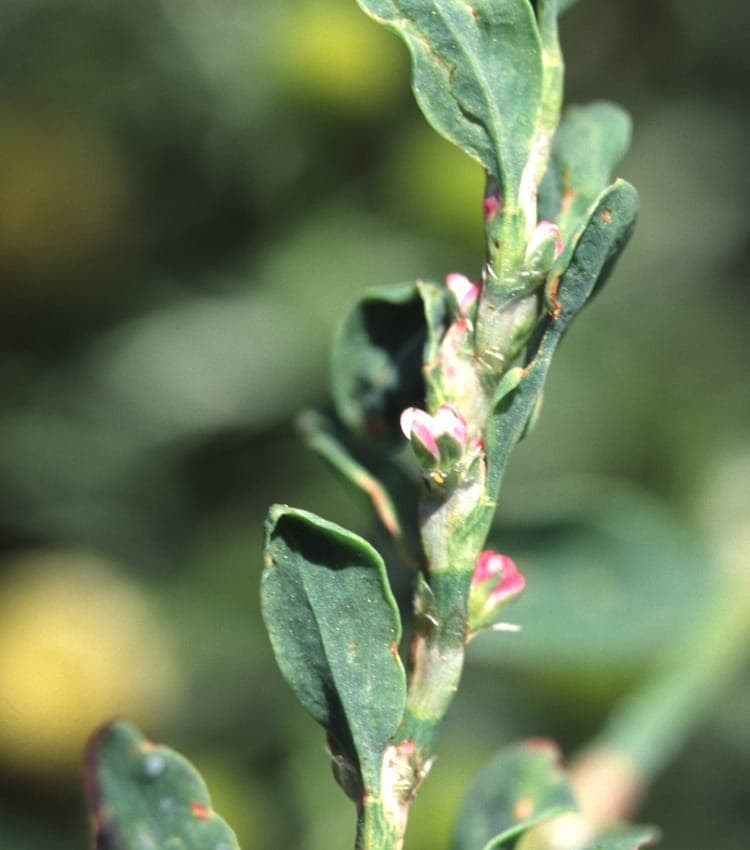
Gordon Leppig & Andrea J. Pickart / Public domain, via Wikimedia Commons
Polygonum arenastrum: complete guide
Polygonum arenastrum
¿Quieres ver Polygonum arenastrum: complete guide en tu jardín?
1 minuto, sin tarjeta de crédito
Overview
Polygonum arenastrum, commonly known as oval-leaf knotweed or seaside knotweed, is a versatile low-growing plant native to the Mediterranean and North Africa. This is a valuable plant for groundcover in challenging conditions.
Belonging to the Polygonaceae family, it grows naturally on sand, gravel, and other harsh substrates. At gardenworld.app, we help you use this resilient plant for landscape design and practical purposes.
Appearance and bloom
Polygonum arenastrum grows as a low, creeping plant, typically 5-20 centimeters tall and much wider. The leaves are small, elliptical to oval, and remain green year-round.
Flowers are small, pink to white, appearing in dense flower spikes in the leaf axils. They bloom from May to October, providing extended seasonal interest.
The plant forms dense mats of vegetation, perfect for natural groundcover. The texture is fine and orderly, not unruly.
Ideal location
Polygonum arenastrum grows best in full to partial sun. At least three to four hours of direct sunlight daily is recommended. The plant tolerates lightly shaded locations, though flowering diminishes.
The plant is very drought-tolerant once established. This is ideal for difficult, dry locations where other plants struggle. It grows well on slopes, between pavers, and in containers.
The plant tolerates windy, salt-influenced conditions well, making it suitable for coastal gardens.
Soil
Polygonum arenastrum grows on virtually all soils but prefers sand, gravel, and other well-draining substrates. This is a plant tolerating poor soils.
It thrives on impoverished soils requiring no amendment. On heavy clay soils, add grit and sand for drainage. pH range is broad - 4.5 to 8.5 is acceptable.
The plant even thrives on salt-influenced soils, making it perfect for coastal gardens.
Watering
Once established, regular watering is unnecessary. This is a very drought-tolerant plant. Regular water during the first growing year aids establishment.
Once established (after 6-12 months), supplemental watering is rarely needed. The plant tolerates drought better than most groundcovers.
Avoid waterlogging, especially in winter. Good drainage is essential.
Diseño gratis
¿Quieres ver Polygonum arenastrum: complete guide en tu jardín? Crea un diseño gratis ahora.
Maintenance
Minimal maintenance is needed. Trim back periodically to desired size, though the plant naturally remains compact. Remove dead or yellowed foliage as preferred.
The plant is self-seeding and may spread via self-sown seedlings. This can be interesting for natural spread, but control if it becomes problematic.
During very hot summers, supplemental water can support flowering.
Maintenance calendar
January to March: Check for winter damage. Light cleanup.
April to May: Growth begins. Water regularly for first months.
June to August: Minimal maintenance. Monitor growth. Trim back if needed.
September to October: Flowering continues. Normal maintenance.
November to December: Plant enters dormancy. Minimal care.
Seeding and establishment
Polygonum arenastrum can be seeded in spring. Sow on moist soil and press gently. Seeds germinate in 2-3 weeks.
The plant is easily propagated from cuttings by taking small segments of creeping stems and embedding them in well-draining soil.
Seeding occurs naturally - seeds from ripe seed capsules disperse and self-sow at suitable locations.
Winter hardiness
Polygonum arenastrum is winter hardy to approximately -10 degrees Celsius in protected locations. In the Netherlands and Belgium, it can overwinter outdoors, though extreme frost may cause some foliage loss.
The plant is evergreen and remains visually interesting year-round, though growth slows in winter.
In very cold regions, plant against a south-facing wall for protection.
Companion plants
Polygonum arenastrum combines well with other drought-tolerant groundcovers.
Compatible: Other low-growing groundcovers like sedum and sempervivum.
Contrast: Grey-foliaged plants like artemisia or santolina.
Structural: Small shrubs like cistus.
Conclusion
Polygonum arenastrum is a resilient plant perfect for difficult garden locations. With minimal care, it provides year-round interest and helps combat erosion. It is especially valuable for dry, sandy or gravelly sites, slopes, and coastal gardens. For gardening in extreme conditions, this is an excellent choice. Visit gardenworld.app for more advice on groundcovers and xeriscaping.
¿Quieres ver Polygonum arenastrum: complete guide en tu jardín? Crea un diseño gratis ahora.
Sube una foto, elige un estilo y obtén un diseño fotorrealista con lista de plantas en menos de un minuto.
Sin tarjeta de crédito


Plantas similares
Crosby's wild buckwheat: complete guide
Eriogonum crosbyae
Full guide to growing Eriogonum crosbyae: ideal site, soil, watering, winter hardiness and companion plants for this rare western wild buckwheat.
Spreading buckwheat: complete guide
Eriogonum effusum
Full guide to growing Eriogonum effusum: ideal site, soil, watering, winter hardiness and companion plants for this prairie subshrub from the American West.
Tall woolly buckwheat: complete guide
Eriogonum elatum
Full guide to Eriogonum elatum: siting, soil, watering, pruning and companion plants for this elegant white-flowered buckwheat from the western United States.