
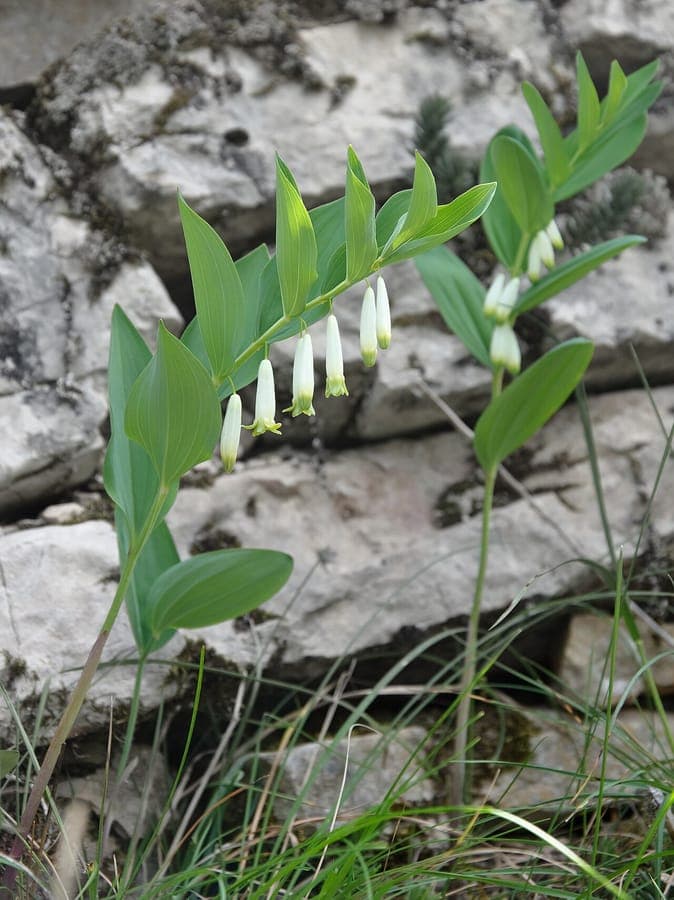
Myrabella / CC BY-SA 3.0, via Wikimedia Commons
Aromatic Solomon's Seal: complete guide
Polygonatum odoratum
¿Quieres ver Aromatic Solomon's Seal: complete guide en tu jardín?
1 minuto, sin tarjeta de crédito
Overview
Aromatic Solomon's Seal (Polygonatum odoratum), also known as Angular Solomon's Seal, is a captivating shade plant spanning from Europe to Japan. This member of the Asparagaceae family is uniquely celebrated for its pleasant fragrance and medicinal properties. With its stiffer growth habit than Polygonatum multiflorum and aromatic qualities, this offers a completely different character.
This plant is essential for gardeners seeking fragrance in shaded areas. Its more compact form and traditional medicinal uses make it indispensable for contemporary herb gardens and natural woodland landscapes.
Appearance and Bloom
Aromatic Solomon's Seal displays stiffer, more upright stems than related species, reaching 30-50 centimeters height. Flowers are white, pendant, fragrant, appearing April to June. The fragrance is notably sweet and herbaceous. Small green berries ripen to blue-black.
The leaves distinctly feature angular stems, from which the name "Angular Solomon's Seal" derives. This is an architecturally interesting plant with added fragrance.
Ideal Location
Shade to light partial shade is ideal. The plant grows in less shade than P. multiflorum. Ensure adequate air circulation. Position where fragrance can be appreciated - near paths, seating areas, or garden entrances.
Combine with other fragrant shade plants for sensory experiences.
Diseño gratis
¿Quieres ver Aromatic Solomon's Seal: complete guide en tu jardín? Crea un diseño gratis ahora.
Soil
Fertile, humus-enriched, moisture-retentive soil is ideal. A pH between 6.0-7.5 is suitable. Soil improvement programs with organic matter help establishment. Good drainage is essential - avoid winter waterlogging.
Mulching with leaf litter helps maintain soil moisture levels.
Watering
Regular watering during the growing season is essential. The plant enjoys well-moistured soil without waterlogging. In dry summers, water regularly.
Woodland conditions with high leaf litter simulate natural moisture conditions well.
Pruning
Minimal pruning is needed. Carefully remove dead stems in early spring. Form is generally attractive and needs little adjustment.
Maintenance Calendar
February-March: Remove dead growth, add mulch. April-June: Monitor for bloom and fragrance. July-September: Normal maintenance. October-January: Minimal care.
Winter Hardiness
Fully hardy throughout Europe to zone 5 (-29°C). The plant tolerates severe winters without protection.
Companion Plants
Perfect partners are fragrant shade plants: French lilies, ferns, fragrant ground covers. Helleborus species form beautiful companions. Ferns provide interesting foliage structure.
Groupings of 3-5 plants create fragrant borders.
Closing
Aromatic Solomon's Seal is unique for gardeners seeking fragrance in shade. Its traditional medicinal use, aromatic qualities, and elegance make it indispensable. Discover today why this is a gardener's favorite. Visit gardenworld.app!
gardenworld.app: your guide to fragrant gardens! gardenworld.app: where tradition meets beauty!
¿Quieres ver Aromatic Solomon's Seal: complete guide en tu jardín? Crea un diseño gratis ahora.
Sube una foto, elige un estilo y obtén un diseño fotorrealista con lista de plantas en menos de un minuto.
Sin tarjeta de crédito


Plantas similares
Narrow-leaved dracaena: complete guide
Dracaena angustifolia
Everything about Dracaena angustifolia - the narrow-leaved dracaena: location, care, overwintering and use as a houseplant or patio plant.
Chaparral yucca: complete guide to Hesperoyucca whipplei
Hesperoyucca whipplei
Hesperoyucca whipplei (Our Lord's candle) is a dramatic rosette-forming plant from California that produces a towering flower spike, ideal for dry and gravel gardens.
False lily-of-the-valley: complete guide
Maianthemum dilatatum
Everything about Maianthemum dilatatum, the false lily-of-the-valley. Care, shade location, propagation and garden combinations for this popular shade ground cover.