
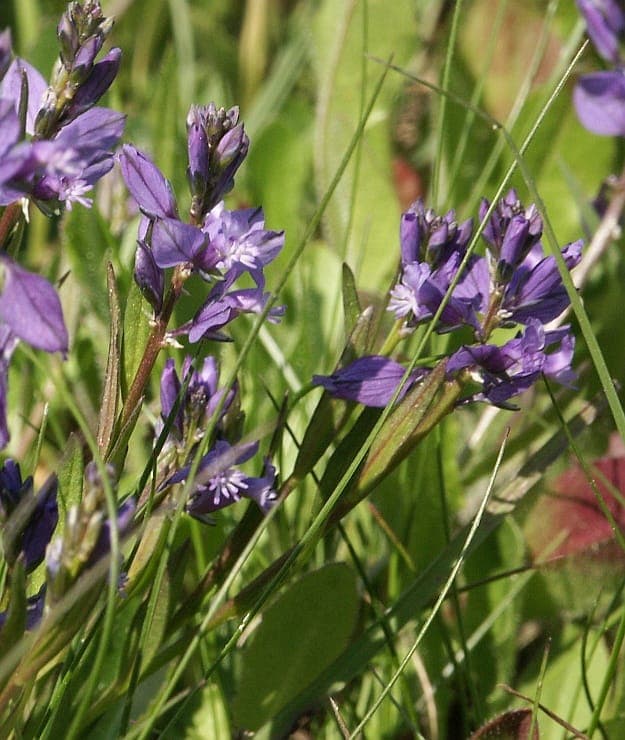
Wikimedia Commons / CC BY-SA 3.0, via Wikimedia Commons
Common Milkwort: complete guide
Polygala vulgaris
¿Quieres ver Common Milkwort: complete guide en tu jardín?
1 minuto, sin tarjeta de crédito
Overview
Common Milkwort (Polygala vulgaris), undoubtedly the most widespread of the Polygalas, is a classic wildflower occurring from Atlantic Portugal to Turkey. This plant belongs to the Polygalaceae family and is renowned for its resilience and adaptability. With its introduction to North America and other regions, Common Milkwort has spread worldwide.
This plant excels in wildflower meadows, heathland, alpine gardens, and informal border plantings. With its compact form and prolonged blooming, it is a true all-round winner.
Appearance and Bloom
Common Milkwort displays slender stems bearing flowers in white, blue, and purple shades. Blooms are small but profuse, visible from May through September. Lance-shaped leaves are deep green and densely arranged. The plant reaches heights of 15-30 centimeters.
This is a highly polymorphic species with many regional color variations. Some populations are predominantly white, others deep purple.
Ideal Location
Common Milkwort thrives in full sun to light partial shade. This plant is highly adaptable to various light conditions, though full sun provides best flowering. Place in wildflower meadows, heathland, along paths, or in informal borders.
The plant tolerates rough conditions and is perfect for difficult-to-reach spots or naturalistic plantings.
Soil
Of all Polygalas, this is the least fussy about soil. It grows in acid to neutral soils, with a pH range of 5.0-8.0. Average fertile soil is sufficient; too much fertilizer promotes excessive leafy growth. Good drainage is important, though the plant tolerates some moisture.
Compost application at planting is beneficial but not essential.
Diseño gratis
¿Quieres ver Common Milkwort: complete guide en tu jardín? Crea un diseño gratis ahora.
Watering
This is a fairly drought-tolerant plant once established. Water regularly during the first growing season. Thereafter, rainfall usually suffices except in extreme drought. This plant thrives under normal moist conditions.
Monitor moisture during dry summers and the bloom period.
Pruning
Deadhead faded flowers continuously for extended blooming. Light spring pruning helps maintain compact form. After bloom, trim back to about half height.
Maintenance Calendar
February-March: Light pruning. March-May: Regular watering, special attention. June-September: Deadheading. October-January: Normal maintenance.
Winter Hardiness
Fully hardy throughout Europe to zone 5 (-29°C) or even colder. This plant tolerates frost and snow without protection. Good drainage helps in wet winters.
Companion Plants
Combine with other wildflowers such as daisy, flax, and grassland natives. Heathland partners include heathers, gorse, and juniper. Alpine combinations with sedums and saxifrages.
Group 3-5 plants per square meter for full ground coverage in wildflower plantings.
Closing
Common Milkwort is a reliable choice for any gardener. Its resilience, adaptability, and attractiveness make it indispensable. Discover today why this is the most beloved Polygala across Europe and beyond. Visit gardenworld.app for all your wildflower needs!
gardenworld.app: your guide to wildflower plantings! gardenworld.app: where nature and garden meet!
¿Quieres ver Common Milkwort: complete guide en tu jardín? Crea un diseño gratis ahora.
Sube una foto, elige un estilo y obtén un diseño fotorrealista con lista de plantas en menos de un minuto.
Más de 10.000 jardines diseñados
Sin tarjeta de crédito


Plantas similares
Rock milkwort: complete guide
Polygala rupestris
Everything about Polygala rupestris, the Mediterranean rock milkwort, for dry rock gardens and warm sunny spots with well-drained alkaline soil.
Polygala senega: complete guide
Polygala senega
Seneca snakeroot: a North American native herb with elegant flower spikes. Cultivation, care tips, and garden design ideas for mixed borders.
Alpen-Kreuzblume: complete guide
Polygala alpestris
Discover the elegant Alpen-Kreuzblume (Polygala alpestris), an alpine mountain plant with blue flowers perfect for rock gardens and alpine borders.