
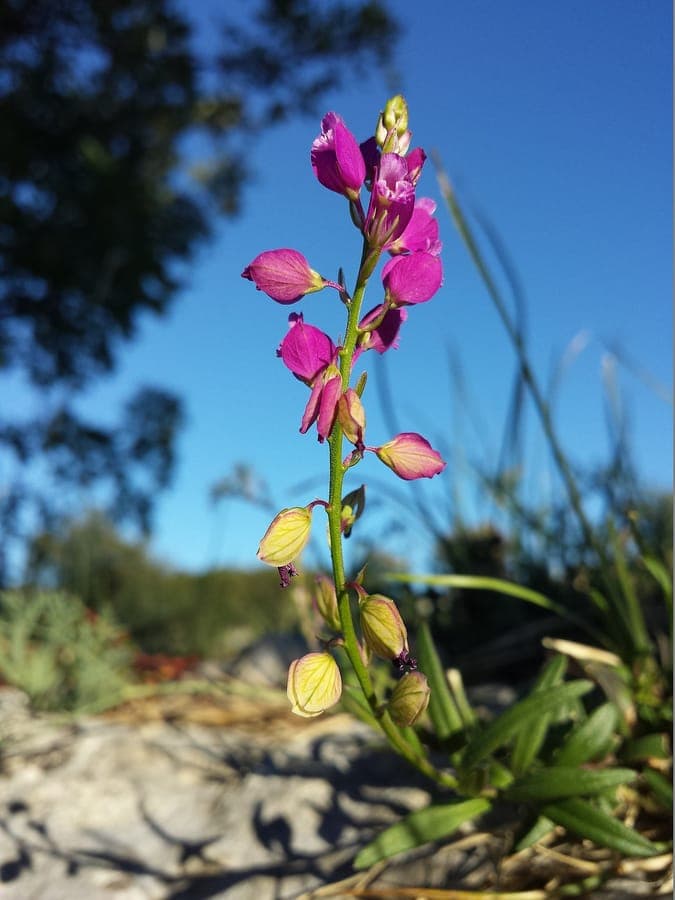
Stefan.lefnaer / CC BY-SA 4.0, via Wikimedia Commons
Polygala nicaeensis: complete guide
Polygala nicaeensis
¿Quieres ver Polygala nicaeensis: complete guide en tu jardín?
1 minuto, sin tarjeta de crédito
Overview
Polygala nicaeensis, commonly called Nice milkwort, is an enchanting small Mediterranean flower named after the warm regions around Nice in France. This elegant plant is celebrated for producing delicate flowers in shades of white, blue, and purple, creating a visual spectacle in any garden. With its compact growth and long flowering period, this plant is ideal for front garden borders, rock gardens, and container planting.
Belonging to the Polygalaceae family, this plant naturally occurs in southeastern France to northwestern Italy. Growing on various habitats from chalky slopes to rocky terrain demonstrates that it is a highly adaptable species. The Nice milkwort is an excellent choice for gardeners seeking something unique and non-standard in their front garden design.
Appearance and Bloom
The Nice milkwort is a compact plant, typically not exceeding 30 centimeters in height, making it perfect for the front of borders. The leaves are small, narrow, and arranged along thin, gray-green stems. What truly distinguishes this plant, however, are its magnificent small flowers.
The flowers are highly characteristic and appear in clusters at the top of the stems. They feature a subtle, delicate structure with two large wings (specialized sepals) that can be white, blue, or purple. The center contrasts beautifully with these wings, creating a visually interesting effect. Some flowers are predominantly white, while others are more intensely blue or purple, giving the plant a lovely color-gradient effect.
It blooms from April to May in most climates, though in warmer regions this can extend to June. The flowering period is relatively long, meaning you can enjoy this beauty for an extended time.
Ideal Location
Polygala nicaeensis thrives best in full sun. The plant requires at least six to seven hours of direct sunlight daily to bloom optimally. Without sufficient sunlight, the plant will flower weakly and its growth pattern may become lanky and stretched.
Protection from strong, dry winds is also important. While the plant is drought-tolerant, harsh winds can damage the fine foliage. A position at the foot of a wall or with some protection from other plants is ideal.
This is not a plant for full shade or partial shade. It performs best in open, sunny locations in your front garden.
Soil
One advantage of Polygala nicaeensis is its flexibility regarding soil type. However, the plant has a strong preference for well-draining soil. It can quickly rot in wet, heavy clay soils.
Ideal is a light sandy or loamy, well-draining, nutrient-poor to moderately nutrient-rich soil. The plant even seems to prefer poorer terrain - typical of Mediterranean plants that naturally grow on lean, chalky slopes.
Ensure good drainage by adding grit or sand if you have heavy soil. A pH of 8 to 9 (alkaline) is preferred, but the plant can grow in weakly acidic to neutral soils.
Diseño gratis
¿Quieres ver Polygala nicaeensis: complete guide en tu jardín? Crea un diseño gratis ahora.
Watering
Once established, Polygala nicaeensis is very drought-tolerant thanks to its deep root system. During the growing season (March to May), it needs moderate watering, especially if the soil becomes dry. In hot, dry weeks, you may water more thoroughly.
After flowering (from June onwards), you can drastically reduce watering. In winter, virtually no additional watering is needed except in exceptionally dry winters.
Overwatering is a bigger problem than underwatering. Always ensure that the soil can dry out between waterings.
Pruning
Polygala nicaeensis requires minimal maintenance regarding pruning. After flowering (late May/June), you can remove damaged or dead stems. Light trimming of about one-third of the plant immediately after blooming can help keep the growth pattern compact and stimulate stronger growth for the following year.
Remove faded flowers regularly during the growing season to encourage longer blooming. This does not need to be intensive - a quick weekly inspection is sufficient.
Cut back to healthy green wood. Avoid hard cutting into old wood, as the plant does not readily shoot from old wood.
Maintenance Calendar
March: Check the plant for winter damage. Remove dead stems. Begin gentle pruning if needed. Ensure drainage is good.
April-May: The flowering season. Keep soil evenly moist (not wet). Remove faded flowers.
June-August: After flowering, perform light pruning. Minimal watering needed - only water during extremely dry periods. Watch for fungal infections in damp weather.
September-October: No maintenance needed. Check drainage for approaching rains.
November-February: Winter dormancy. No maintenance. Protect against waterlogging in very wet winters.
Winter Hardiness
Polygala nicaeensis is well-hardy down to about -12 to -15 degrees Celsius, especially in dry conditions. In the Netherlands and Belgium, the plant can overwinter outdoors, though in very cold regions it is better grown in containers that can be moved indoors.
The biggest winter threat is wetness combined with frost. A layer of gravel or terracotta fragments around the plant's base helps prevent water from accumulating around the crown.
Companion Planting
Polygala nicaeensis grows beautifully alongside other Mediterranean plants with similar requirements:
Lavandula (lavender) - same sunny, dry requirements Cistus (rock roses) - similar hardiness and drainage preference Achillea (yarrow) - compatible growth pattern Garlic chives (allium) - provide height contrast Limonium (sea lavender) - long-lasting blooms, complementary colors
Combine these for a full, Mediterranean planting scheme where this plant thrives.
Closing
Polygala nicaeensis deserves far more attention in front garden designs. With its delicate, multi-colored flowers, compact form, and simple maintenance requirements, it is a perfect choice for those seeking something unique and distinctive. Available at major garden centers, this is a plant certainly worth experimenting with. Visit gardenworld.app for more plant combination ideas and front garden inspiration. For additional plant guides, consult gardenworld.app where you will find comprehensive tips for all your front garden planning needs.
¿Quieres ver Polygala nicaeensis: complete guide en tu jardín? Crea un diseño gratis ahora.
Sube una foto, elige un estilo y obtén un diseño fotorrealista con lista de plantas en menos de un minuto.
Más de 10.000 jardines diseñados
Sin tarjeta de crédito


Plantas similares
Rock milkwort: complete guide
Polygala rupestris
Everything about Polygala rupestris, the Mediterranean rock milkwort, for dry rock gardens and warm sunny spots with well-drained alkaline soil.
Polygala senega: complete guide
Polygala senega
Seneca snakeroot: a North American native herb with elegant flower spikes. Cultivation, care tips, and garden design ideas for mixed borders.
Alpen-Kreuzblume: complete guide
Polygala alpestris
Discover the elegant Alpen-Kreuzblume (Polygala alpestris), an alpine mountain plant with blue flowers perfect for rock gardens and alpine borders.