
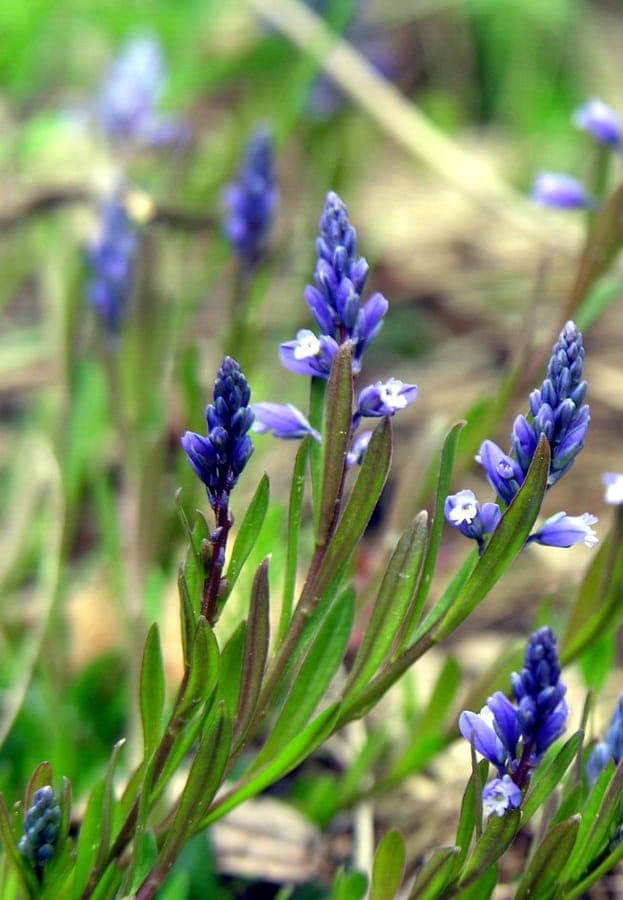
Algirdas / CC BY-SA 3.0, via Wikimedia Commons
Dwarf Milkwort: complete guide
Polygala amarella
¿Quieres ver Dwarf Milkwort: complete guide en tu jardín?
1 minuto, sin tarjeta de crédito
Overview
The Dwarf Milkwort (Polygala amarella), also called Bitter Milkwort, is a charming alpine plant native to Central and Eastern Europe and West Siberia. This compact herbaceous perennial produces striking blue flowers and thrives in well-drained, moisture-loving soils. Its delicate appearance belies surprising hardiness, making it an excellent choice for naturalistic garden designs and alpine troughs.
Appearance and Blooming
Reaching only 10-30 cm in height, the Dwarf Milkwort makes an ideal specimen for compact borders and container gardening. The plant develops narrow, linear leaves arranged densely along the stem. Its primary attraction comes from the charming flowers that appear from May through June. The blooms are a vivid blue to purple, clustered in compact spikes with distinctive wing-like sepals that give the plant its common name.
Following flowering, the plant produces delicate heart-shaped seed capsules with papery wings, adding subtle interest through late summer and autumn.
Ideal Location
Select a location receiving full sun to partial shade, with at least four hours of direct sunlight daily for optimal blooming. In regions with intense summer heat, afternoon shade proves beneficial. The plant adapts well to open meadow-like settings or alpine garden arrangements.
The Dwarf Milkwort pairs beautifully with other alpine species in naturalized plantings, adding vertical interest among lower-growing groundcovers.
Soil Requirements
This species prefers limestone-rich, well-draining soils with pH levels between 7.5 and 8.0. Loamy, sandy soils amended with compost provide ideal conditions. Heavy clay soils retain excessive moisture, leading to root rot and plant decline.
Amend planting areas with 5-10 cm of well-decomposed compost or aged leaf mold before planting. This improves drainage while supplying essential nutrients for vigorous establishment.
Watering
During the active growing season (April to October), provide moderate, consistent moisture. Water deeply but infrequently, allowing the soil surface to dry slightly between waterings. This promotes stronger root development and prevents fungal issues.
In winter dormancy (November to March), reduce watering substantially. Check soil moisture with your finger before watering, as the plant's reduced activity requires minimal liquid intake.
Diseño gratis
¿Quieres ver Dwarf Milkwort: complete guide en tu jardín? Crea un diseño gratis ahora.
Pruning
Minimal pruning is required for this naturally compact species. After flowering fades, gently remove spent flower spikes to encourage a second, lesser bloom flush and prevent excessive self-seeding. Avoid cutting into woody base material.
If the plant becomes leggy or damaged, gentle pruning in early spring works well, but always maintain natural form.
Maintenance Calendar
April: Remove dead winter material; ensure proper drainage. Apply slow-release organic fertilizer. May-June: Enjoy the spectacular blooming display. Deadhead spent flowers. July-August: Water regularly during dry spells. September: Collect seeds for propagation if desired. October: Reduce watering as dormancy approaches. November-March: Minimal care needed; occasional drainage checks.
Winter Hardiness
The Dwarf Milkwort withstands temperatures to -15 degrees Celsius, thriving in USDA zones 5-8. This ensures success throughout most European gardens. In extreme winters, light mulching around plants provides extra insurance against damage.
Companion Plants
Combine Dwarf Milkwort with these alpine species for cohesive designs:
Thyme (Thymus serpyllum) for extended flowering and fragrance Speedwell (Veronica) for similar cultural requirements Fine fescue grasses (Festuca ovina) for structural contrast Spring cinquefoil (Potentilla verna) for yellow color accents Mountain avens (Geum montanum) for architectural interest
These pairings create naturalistic compositions that appeal both visually and ecologically.
Closing Thoughts
The Dwarf Milkwort represents an exceptional choice for gardeners seeking native alpine flora with modest cultural requirements. Its delicate beauty, hardy nature, and early-season flowers make it invaluable for creating authentic alpine gardens and naturalized landscapes.
Locate plants at specialty alpine nurseries or garden centers. A few specimens can transform a corner into a miniature mountain meadow. For more design inspiration and planting guides, visit gardenworld.app.
¿Quieres ver Dwarf Milkwort: complete guide en tu jardín? Crea un diseño gratis ahora.
Sube una foto, elige un estilo y obtén un diseño fotorrealista con lista de plantas en menos de un minuto.
Sin tarjeta de crédito


Plantas similares
Rock milkwort: complete guide
Polygala rupestris
Everything about Polygala rupestris, the Mediterranean rock milkwort, for dry rock gardens and warm sunny spots with well-drained alkaline soil.
Polygala senega: complete guide
Polygala senega
Seneca snakeroot: a North American native herb with elegant flower spikes. Cultivation, care tips, and garden design ideas for mixed borders.
Alpen-Kreuzblume: complete guide
Polygala alpestris
Discover the elegant Alpen-Kreuzblume (Polygala alpestris), an alpine mountain plant with blue flowers perfect for rock gardens and alpine borders.