
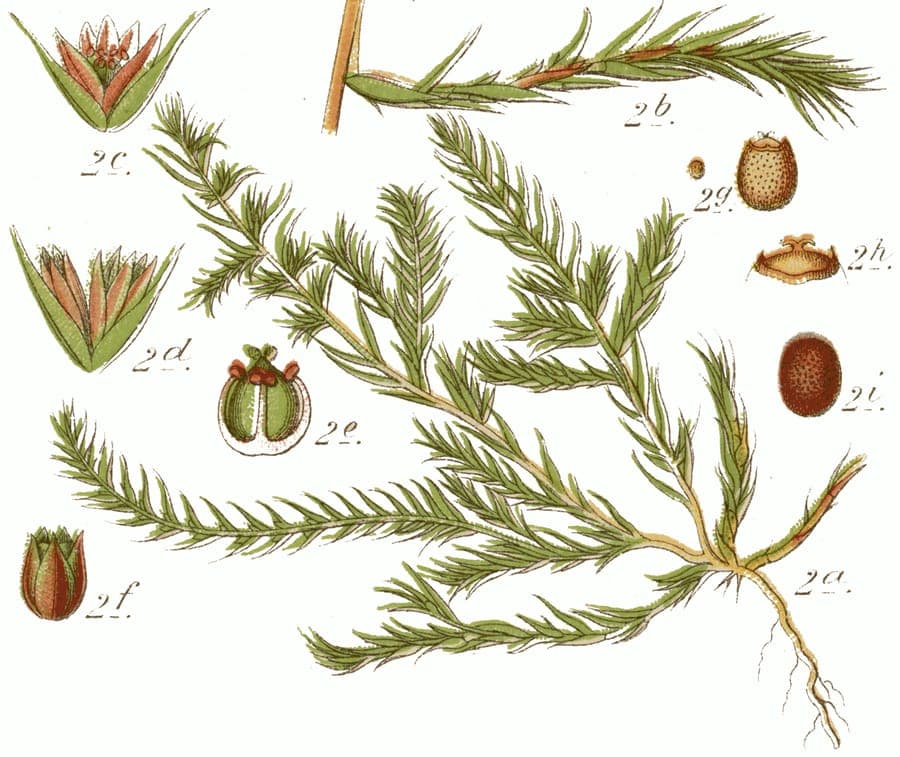
Johann Georg Sturm (Painter: Jacob Sturm) cleaned by uploader / Public domain, via Wikimedia Commons
Soft needleleaf: complete guide
Polycnemum arvense
¿Quieres ver Soft needleleaf: complete guide en tu jardín?
1 minuto, sin tarjeta de crédito
Overview
Soft needleleaf (Polycnemum arvense) is a fascinating small seed flower from the Amaranthaceae family, native to Europe through Xinjiang. This annual to biennial herb is an interesting specimen for wild gardens or xerophytic borders. With fine, needle-like leaves and compact growth, it offers unique texture in gardens.
Appearance and bloom
Soft needleleaf forms compact, branched plants typically 10-30 cm tall. The characteristic needle-like, extremely fine leaves grow spirally around stems. The flowers are small, white stars appearing June through September. While not spectacular, they contribute to plant's delicate texture. After blooming, numerous tiny seeds develop and self-sow naturally.
Ideal location
Soft needleleaf prefers full sun to very light shade. Plant in warm, dry locations. This herb tolerates partial shade but grows more compactly in full sun. Minimum 6 hours direct sunlight daily is ideal for best results.
Soil
Soft needleleaf grows best in dry, nutrient-poor soil. Sandy, loose soil is perfect. The plant tolerates chalky soil well. Don't add compost as it results in luxurious, leggy growth. pH between 7.0 and 7.5 is ideal. This plant indicates nutrient-poor gardens.
Watering
Soft needleleaf is highly drought-tolerant once established. Minimal water needed even in dry seasons. Seeds germinate better with moderate moisture in spring, but adult plants tolerate drought well. Excessive water leads to thin, tall plants and possible fungal issues.
Diseño gratis
¿Quieres ver Soft needleleaf: complete guide en tu jardín? Crea un diseño gratis ahora.
Pruning
Soft needleleaf requires no active pruning. It naturally grows in compact form. Leave spent flowers if you want self-seeding. Otherwise, remove dead stems for neater appearance. This is a low-maintenance plant.
Maintenance calendar
Spring (April-May): Direct sow seeds in ground. Established plants need virtually no care. Summer (June-September): Deadheading to prevent spread, water only in extreme drought. Autumn (October-November): Let seeds fall for next season. Winter: No care needed, plant disappears.
Winter hardiness
Soft needleleaf is not winter-hardy as it's an annual to biennial herb. In temperate climates, it will self-seed from the previous season's seed. Plants self-seed in dry, nutrient-poor soil.
Companion plants
Soft needleleaf grows beautifully among other drought-tolerant herbs and plants. Plant with Linaria, Teucrium, and other nutrient-poor soil plants. Works well in rock gardens and crevices. Ideal for wild and naturalistic gardens.
Closing
Soft needleleaf brings fine texture and ecological importance to dry gardens. With minimal water and maintenance needs, it's ideal for sustainable gardens. Seed available from seed suppliers. Visit gardenworld.app for more wild garden inspiration. This food plant supports insect life and perpetuates naturally.
Visit gardenworld.app today for more inspiration!
¿Quieres ver Soft needleleaf: complete guide en tu jardín? Crea un diseño gratis ahora.
Sube una foto, elige un estilo y obtén un diseño fotorrealista con lista de plantas en menos de un minuto.
Más de 10.000 jardines diseñados
Sin tarjeta de crédito


Plantas similares
Bassia laniflora (woolly summer-cypress): complete guide
Bassia laniflora
Full guide to Bassia laniflora: origin, appearance, ideal location, soil, watering and care for this drought-tolerant annual.
Suaeda spicata: complete guide
Suaeda spicata
Everything about Suaeda spicata (spiked seablite): a rare salt-tolerant coastal succulent from the western Mediterranean and Macaronesia.
California amaranth: complete guide
Amaranthus californicus
Full guide to California amaranth (Amaranthus californicus): growing tips, ideal location, soil needs, watering, and garden design ideas.