
Wikimedia Commons / Public domain, via Wikimedia Commons
Four-leaf allseed: complete guide
Polycarpon tetraphyllum
¿Quieres ver Four-leaf allseed: complete guide en tu jardín?
1 minuto, sin tarjeta de crédito
Overview
Four-leaf allseed (Polycarpon tetraphyllum) is an elegant, low-growing groundcover from the Caryophyllaceae family. Native to the Mediterranean through Sri Lanka, this versatile small plant is perfect for rock gardens, borders, and terraces. With fine texture and extended blooming from March to October, it provides year-round garden interest.
Appearance and bloom
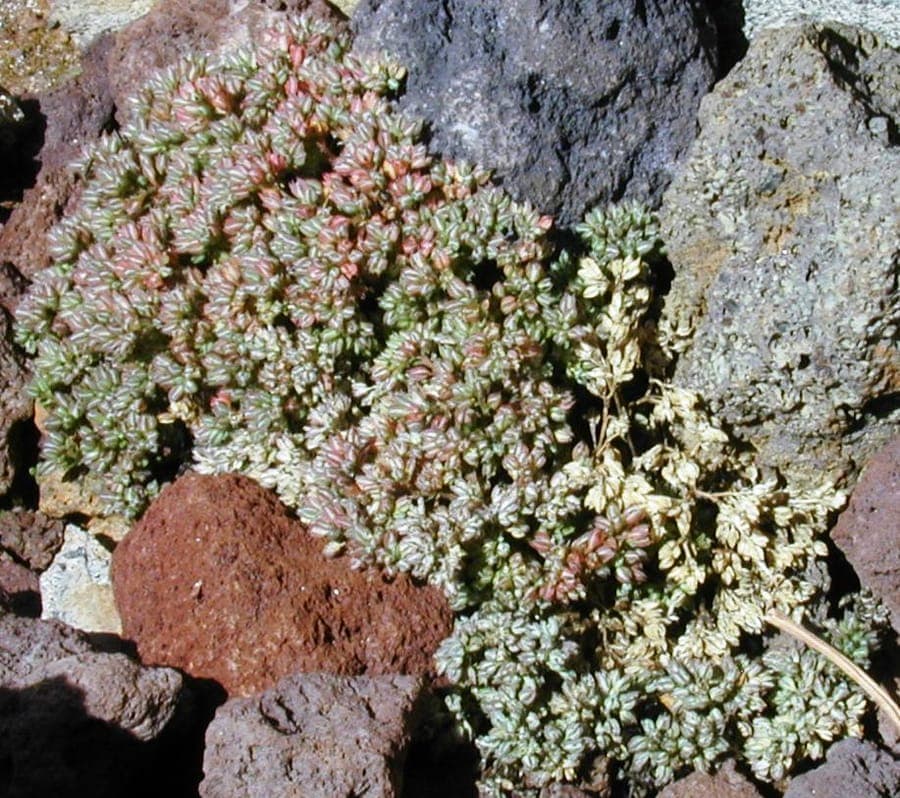
Four-leaf allseed is a herbaceous plant typically no more than 15-20 cm tall. Small, ribbon-like leaves grow in opposite pairs with fine, lacy appearance. The flowers are not spectacularly large but appear in massive numbers as delicate white stars, sometimes with pink tinges. The blooming period extends from March to October in temperate climates, providing extended visual interest.
Ideal location
Four-leaf allseed blooms best in warm, sunny locations. Plant in full sun to light shade. This Mediterranean plant tolerates partial shade well and can thrive in dappled light. Minimum 5-6 hours daily sunlight gives best blooming and most compact growth.
Soil
Four-leaf allseed is undemanding and grows on virtually any soil. Preference goes to well-draining, slightly sandy soil. Add sand or small gravel to heavy clay soils. The plant tolerates poor, infertile soil well and even grows in crevices and cracks. pH between 5.5 and 6.5 is ideal.
Watering
Once established, Four-leaf allseed is highly drought-tolerant thanks to Mediterranean heritage. Water during growing periods when soil surface feels dry. Excessive water leads to leggy growth and potential root rot. In extreme drought, regular watering prevents plant desiccation, but generally water needs are minimal.
Diseño gratis
¿Quieres ver Four-leaf allseed: complete guide en tu jardín? Crea un diseño gratis ahora.
Pruning
Four-leaf allseed requires minimal pruning. Remove spent flowers regularly for extended blooming. Cut back leggy or excessive growth in spring. After winter, remove dead material. Biennial light pruning maintains compact form.
Maintenance calendar
Spring (March-April): Remove winter dead material. Light fertilizer application possible. Summer (May-September): Deadheading, minimal watering. Autumn (October): Stop fertilizing, prepare for winter. Winter: Protective mulch in very cold regions.
Winter hardiness
Four-leaf allseed is moderately hardy, tolerating approximately minus 10 degrees Celsius in well-drained soil. In regions with wet winters, extra drainage may be essential for survival. Plant on raised beds or slopes for better winter drainage. In very cold regions, protective mulch may be beneficial.
Companion plants
Four-leaf allseed works excellently in rock gardens with other succulents and drought-tolerant plants. Combine with Sedum, Sempervivum, and other groundcovers. Plant beneath shrubs for weed control. Perfect for alpine troughs and rock planting schemes.
Closing
Four-leaf allseed brings fine texture and white blooms to rock gardens and borders. With minimal water needs and straightforward care, it's ideal for dry, sunny locations. Available at quality garden centers. Visit gardenworld.app for more groundcover inspiration. Years of low maintenance and delicate growth make Four-leaf allseed a valuable garden addition.
Visit gardenworld.app today for more garden design information!
¿Quieres ver Four-leaf allseed: complete guide en tu jardín? Crea un diseño gratis ahora.
Sube una foto, elige un estilo y obtén un diseño fotorrealista con lista de plantas en menos de un minuto.
Más de 10.000 jardines diseñados
Sin tarjeta de crédito


Plantas similares
Dianthus karami: complete guide
Dianthus karami
Dianthus karami is a rare Lebanese mountain pink with fringed pink blooms on limestone cliffs, ideal for rock gardens and troughs.
Sicilian pink: complete guide
Dianthus siculus
Discover Dianthus siculus, an elegant purple bloomer from Sicily. Cultivation, June-September flowering and garden combinations.
Alpine mouse-ear chickweed: complete guide
Cerastium pedunculatum
Full growing guide for Cerastium pedunculatum: ideal location, soil, watering, winter hardiness, and companion plants for rock gardens.