
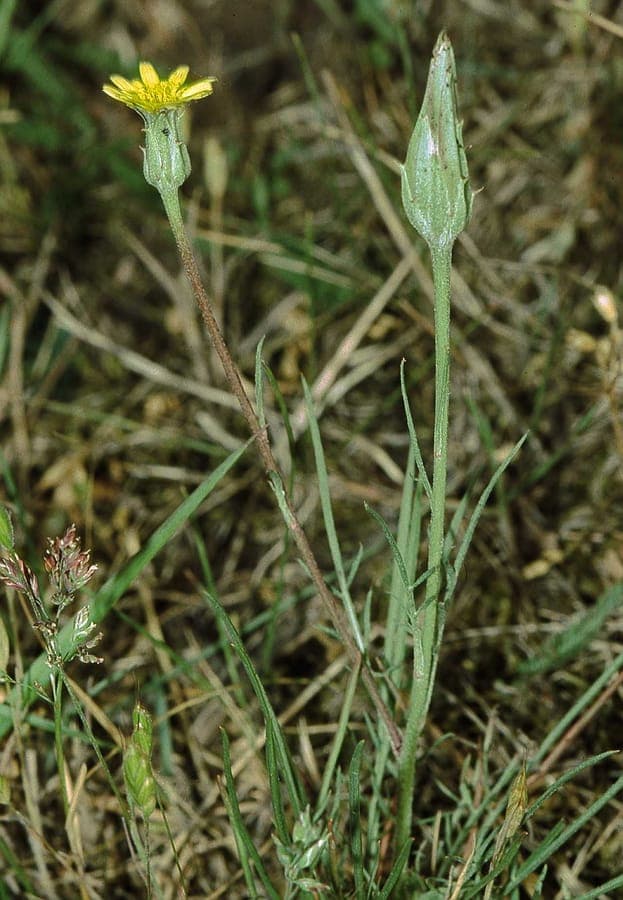
User:Fornax[1] / CC BY-SA 3.0, via Wikimedia Commons
Podospermum laciniatum: complete guide
Podospermum laciniatum
¿Quieres ver Podospermum laciniatum: complete guide en tu jardín?
1 minuto, sin tarjeta de crédito
Overview
Podospermum laciniatum, commonly known as scorzonera or viper's-grass, is a fascinating wildflower from the Asteraceae family. This unique plant is known for its bright yellow flowers and its distinctive, fringed leaves. Despite its modest appearance, scorzonera offers subtle beauty and is a bird attraction and friend to insects.
Appearance and bloom
Scorzonera grows as an elegant plant of 30-80 centimeters tall. The leaves are deeply cut and beautifully shaped, with a hairy, silvery appearance. The flowers are bright yellow, resembling small dandelions, and appear from June to October. The seed heads are particularly striking, furnished with a long, thin stem (hence the name scorzonera).
Ideal location
Scorzonera likes full sun and well-draining soil. It thrives in dry, sunny locations and is tolerant of poor soil. The plant is very hardy and can tolerate extreme cold. An open, windy spot helps keep the plant strong.
Soil
The soil must drain well and can be quite poor, sandy or gravelly soil. A pH of 6.0 to 7.5 is ideal. Scorzonera doesn't need heavy feeding and actually grows better in less fertile soil. Too much feeding can lead to excessive growth and fewer flowers.
Diseño gratis
¿Quieres ver Podospermum laciniatum: complete guide en tu jardín? Crea un diseño gratis ahora.
Watering
Once established, scorzonera is very drought tolerant and requires little water. Water only during extended drought periods. Excessive water can lead to root rot. The plant values good drainage more than regular watering.
Pruning
Scorzonera doesn't need to be pruned, but removing withered flowers stimulates further flowering. If you don't want the seed to spread, remove seed heads before they ripen. In autumn, dead leaves can be removed.
Maintenance calendar
Scorzonera is a low maintenance plant. Sow seeds in spring directly in the ground. Once established, it requires minimal care. Occasionally check for weeds and do not apply fertilizer. The plant grows best without much attention.
Winter hardiness
Scorzonera is completely winter hardy and can tolerate temperatures down to -20 degrees Celsius. It survives even in very cold, snowy winters. A mulch layer is not necessary.
Companion plants
Scorzonera combines well in wild plantings with other drought-tolerant plants such as sunflowers, various grasses and other Asteraceae family members. It also works well in gravel or rock gardens.
Closing
Scorzonera is a useful, low-maintenance plant that contributes to the biodiversity of your garden. Its yellow flowers and unique seed structure provide years of interest with minimal care. For wildflower enthusiasts, scorzonera is a valuable addition.
¿Quieres ver Podospermum laciniatum: complete guide en tu jardín? Crea un diseño gratis ahora.
Sube una foto, elige un estilo y obtén un diseño fotorrealista con lista de plantas en menos de un minuto.
Más de 10.000 jardines diseñados
Sin tarjeta de crédito


Plantas similares
Calendula stellata: complete guide
Calendula stellata
Complete guide to Calendula stellata, the star-flowered marigold from Sicily: location, soil, watering and companion planting tips.
Korean chrysanthemum: complete guide
Chrysanthemum x rubellum
Chrysanthemum x rubellum is a hardy autumn perennial with single pink to copper flowers from August to November. Care and combinations.
Helianthus divaricatus: complete guide
Helianthus divaricatus
Helianthus divaricatus is a North American woodland sunflower with yellow summer blooms, ideal for naturalistic borders and shady edges.