
Crusier / CC BY 3.0, via Wikimedia Commons
Podocarpus neriifolius: complete guide
Podocarpus neriifolius
¿Quieres ver Podocarpus neriifolius: complete guide en tu jardín?
1 minuto, sin tarjeta de crédito
Overview
Podocarpus neriifolius, commonly known as Brown Pine or Mountain Teak, is an ancient conifer native to the mountainous regions of Nepal, Assam, and Southeast Asia. This graceful tree reaches 15-20 meters in its natural habitat, earning favor among gardeners for its refined, narrow foliage that closely resembles oleander leaves. In cultivation, it grows more moderately and thrives in containers. For those seeking an exotic, frost-sensitive conifer with sophisticated appeal, Podocarpus neriifolius is an excellent choice.
Appearance and Bloom
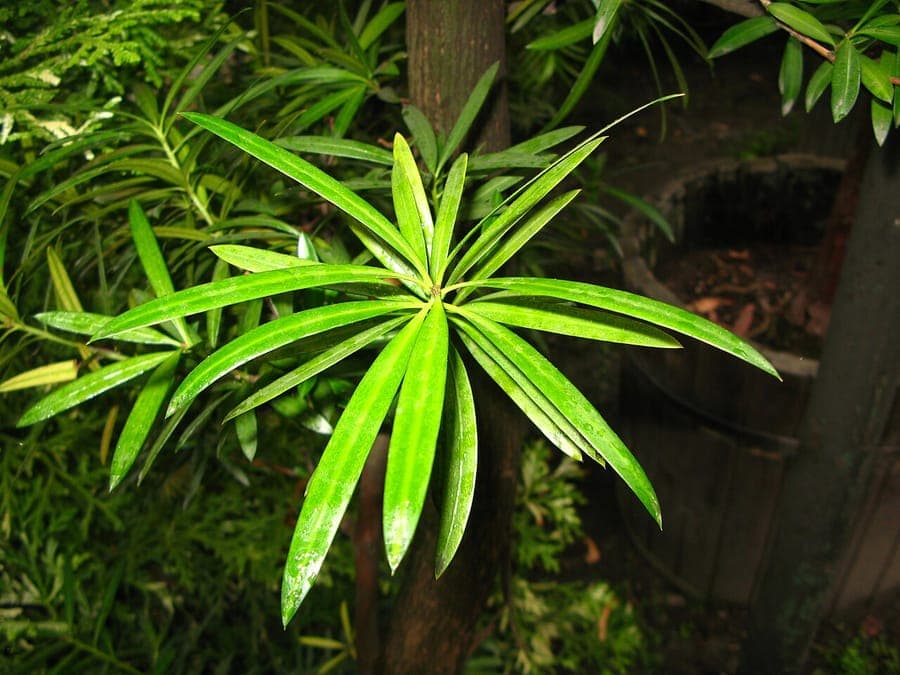
The signature feature is its elegant needle canopy: narrow, elongated needles 3-6 cm long arranged in two distinct rows along the branches. Bark is grey-brown with a rugged texture. The tree naturally forms a columnar to pyramidal silhouette and responds well to pruning. Flowers and fruit are modest and not visually prominent. However, the foliage mass itself is the showstopper: a permanent year-round green display that brings elegance to any garden setting.
Ideal Location
Podocarpus neriifolius thrives in warm, sheltered spots receiving 4-6 hours of direct sun daily, though it tolerates partial shade, especially in warm regions. Protection from harsh winter winds is crucial, as severe frost can cause damage. In Northern Europe and similar climates, this tree performs best in USDA zones 9b and warmer. The tree appreciates humidity and sheltered microclimates, so positioning against a south-facing wall or in a courtyard yields optimal results.
Soil
Good drainage is essential. This tree grows in well-draining, fertile soil. A mix of general-purpose potting mix (50%), peat (25%), and perlite or pumice (25%) provides optimal aeration. Soil pH should range between 6.0-7.0. For container cultivation, use potting mix formulated for ornamental shrubs and conifers. Add slow-release fertilizer in spring; excess nitrogen promotes weak growth.
Watering
Maintain consistent soil moisture without waterlogging. During the growing season (April-September), water when the top 2 cm of soil feels dry. In winter, allow soil to be slightly drier. Container plants dry out faster than in-ground specimens. Regular misting of the foliage helps, especially in drier indoor air or during warm spells. Soft, unchlorinated water is preferred by this subtropical species.
Diseño gratis
¿Quieres ver Podocarpus neriifolius: complete guide en tu jardín? Crea un diseño gratis ahora.
Pruning
Podocarpus neriifolius tolerates pruning well. Prune throughout the growing season, but spring (March-April) is ideal before new growth emerges. Remove dead or damaged branches. For size management, cut back young shoots along the sides of the main trunk. The tree naturally forms an attractive shape, so minimal pruning maintains the most natural appearance. Container cultivation may require slightly more pruning to maintain compactness.
Maintenance Calendar
March: inspect for winter damage, prepare soil, light pruning. April-June: active growth phase, regular watering, monthly feeding. July-August: continued growth, water during dry spells, mist during heat waves. September: growth slowing, reduce watering. October-December: dormancy, minimal water, no feeding, prepare frost protection. January-February: in cold regions provide frost cloth or move container under shelter.
Winter Hardiness
Podocarpus neriifolius tolerates brief cold to -5 to -10 degrees Celsius, but extended freezing is damaging. This makes outdoor cultivation challenging in northern climates. For permanent outdoor placement, select sites with winter lows around -2 to +5 degrees Celsius. Container specimens benefit from frost cloth protection or relocation to an unheated greenhouse or sheltered wall position. Heavy mulch around the base also helps.
Companion Plants
Combine Podocarpus neriifolius with other warm-climate plants:
- Fatsia japonica (Japanese Aralia) - similar moisture tolerance
- Laurus nobilis (Bay Laurel) - matching warmth requirements, classic pairing
- Bamboo species (clumping forms for controlled growth) - adds Asian flair
- Trachelospermum (Star Jasmine) - climbing vine with refined foliage
- Buxus sempervirens (Boxwood) as understory - solid structure
Conclusion
Podocarpus neriifolius is an outstanding choice for patient gardeners with warm microclimates. Its elegant, fine needle structure provides year-round greenery with minimal fuss, naturally developing an attractive form. Ensure excellent drainage, protection from frost and summer drought, and you'll create a tropical garden atmosphere that transports you to Nepal's cloud forests. For northern gardeners, try a container specimen in a protected, sunny location first, and you'll come to appreciate this remarkable species.
Available through specialty garden centers and online nurseries. Check retailers for specialized conifer collections.
¿Quieres ver Podocarpus neriifolius: complete guide en tu jardín? Crea un diseño gratis ahora.
Sube una foto, elige un estilo y obtén un diseño fotorrealista con lista de plantas en menos de un minuto.
Más de 10.000 jardines diseñados
Sin tarjeta de crédito

