
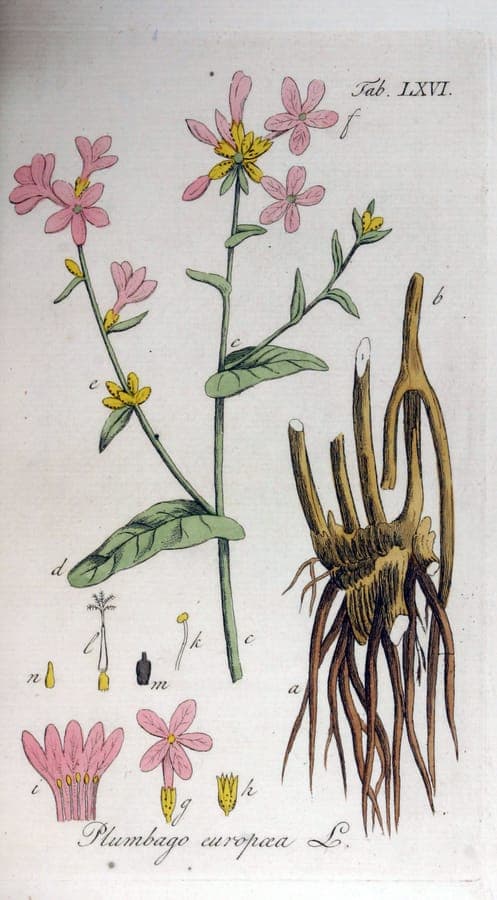
Wikimedia Commons / Public domain, via Wikimedia Commons
Plumbago europaea: complete guide
Plumbago europaea
¿Quieres ver Plumbago europaea: complete guide en tu jardín?
1 minuto, sin tarjeta de crédito
Overview
Plumbago europaea, commonly called European leadwort or European plumbago, is a compact, low-growing Mediterranean plant ideal for smaller gardens. This is a far better choice for confined spaces than the larger Plumbago auriculata.
Belonging to the Plumbaginaceae family, it works perfectly as groundcover or short hedge. It flowers abundantly with beautiful blue-purple blooms from May to October. At gardenworld.app, we help you integrate this charming plant into your landscape.
Appearance and bloom
Plumbago europaea grows as a low, compact shrub, typically 30-60 centimeters tall and 60-90 centimeters wide. Foliage is small, elliptical, and green, maintaining healthy appearance year-round.
The flowers are the real attraction - small, five-petaled blooms in shades of blue to purple, sometimes white-tinged. They appear in dense clusters at branch tips. Flowering extends from May through October, with peak bloom in summer.
After flowering, small, elongated seed capsules form, adding ongoing visual interest.
Ideal location
Plumbago europaea thrives in full sun to light dappled shade. At least four to six hours of direct sunlight daily is needed for optimal flowering. In very hot regions, some afternoon shade is acceptable, but reduced sun diminishes blooms.
The plant is remarkably drought-tolerant once established. It performs excellently against south and west-facing walls, where it absorbs heat. Protect from strong winds.
Ideal for container cultivation on terraces and balconies.
Soil
Plumbago europaea thrives in well-draining soil. Heavy clay must be improved with grit and compost. pH range 6.0-8.0 is acceptable.
Amend heavy soils with sand, gravel, and compost. The plant tolerates even poor soils, though flowering improves with moderately fertile soil.
In containers, use standard potting mix combined with extra grit (30%) for superior drainage.
Diseño gratis
¿Quieres ver Plumbago europaea: complete guide en tu jardín? Crea un diseño gratis ahora.
Watering
Once established, regular watering is not essential. The plant is drought-tolerant. During dry periods without rainfall, supplemental water helps.
During the first year, ensure the plant doesn't completely dry out. Once established (after 1-2 years), water only during extreme dry spells.
In containers, check soil more frequently - pots dry faster. Ensure drainage holes to prevent stagnation.
Winter: Minimal water needed. Plant is semi-deciduous.
Pruning
Light pruning in early spring maintains compactness. Cut back to about one-third of height. This promotes dense, bushy growth and better flowering.
Remove dead or damaged branches as you notice them. After winter frost, cut back further if needed.
Naturally growing compact, heavy pruning is rarely needed.
Maintenance calendar
January to March: Spring pruning. Remove dead branches.
April to May: Growth accelerates. Regular watering. Flowering begins.
June to August: Full bloom. Regular watering during dry spells. Deadhead spent flowers.
September to October: Blooming continues. Normal watering.
November to December: Winter preparation. Reduce watering. Plant drops some foliage.
Winter hardiness
Plumbago europaea is hardy to approximately -5 to -8 degrees Celsius. In warmer parts of the Netherlands and Belgium, it can overwinter outdoors against sheltered south-facing walls.
In cooler climates, the plant tolerates frost periods if protected from north winds and positioned against south walls. In severe winters, plants may freeze to ground but typically resprout from roots in spring.
In containers, move to protected location (shed, greenhouse) if temperatures below -5 degrees Celsius are forecast.
Companion plants
Plumbago europaea pairs beautifully with other low-growing Mediterranean plants.
Compatible: Lavender, catananche, and gaura.
Contrast: Grey-foliaged plants like helichrysum or artemisia.
Taller accent: Rosemary positioned nearby.
In containers: Combine with silver-leafed senecio for striking contrast.
Conclusion
Plumbago europaea is an ideal plant for warm, dry gardens. With minimal care, it provides flowering from May through October and attractive, compact growth. Perfect for groundcover, low hedging, or container cultivation. Visit gardenworld.app for more advice on Mediterranean garden design.
¿Quieres ver Plumbago europaea: complete guide en tu jardín? Crea un diseño gratis ahora.
Sube una foto, elige un estilo y obtén un diseño fotorrealista con lista de plantas en menos de un minuto.
Más de 10.000 jardines diseñados
Sin tarjeta de crédito


Plantas similares
Limonium brassicifolium: complete guide
Limonium brassicifolium
Full guide to growing Limonium brassicifolium: ideal site, soil, watering and care tips for this rare Canary Islands sea lavender.
Many-headed Thrift: complete guide
Armeria multiceps
Full guide to Armeria multiceps, the Corsican many-headed thrift: pink globe flowers, dry rock garden culture, soil, care, and companion planting.
Spiny Thrift: complete guide
Armeria pungens
Everything about Armeria pungens: location, soil, care and planting combinations for this robust Mediterranean coastal plant.