
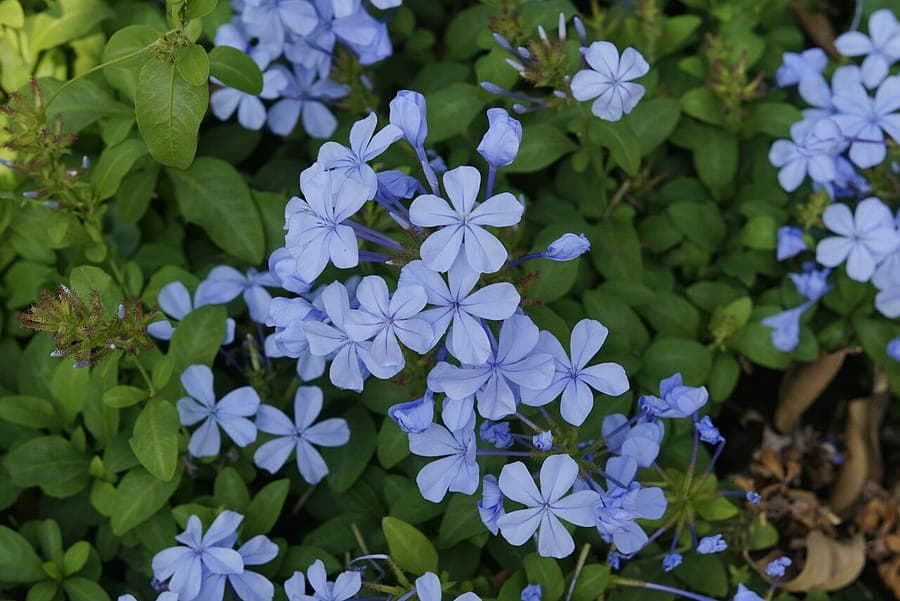
Vengolis / CC BY-SA 4.0, via Wikimedia Commons
Plumbago: complete guide
Plumbago auriculata
¿Quieres ver Plumbago: complete guide en tu jardín?
1 minuto, sin tarjeta de crédito
Overview
Plumbago auriculata, commonly known as Leadwort or Cape plumbago, is an impressive climbing plant native to Mozambique and South Africa. This plant is renowned for its lush growth habit and spectacular azure-blue flowers that appear from June through September. Under ideal conditions, Plumbago can reach heights of 3-4 meters and develop dense foliage that gives your garden a tropical appearance. With proper care, this plant blooms continuously throughout an extended season, making it an essential addition to Mediterranean and contemporary garden designs.
Appearance and bloom
The plant grows as a twining or sprawling climber, reaching impressive heights under optimal conditions. The leaves are glossy green, oval in shape, and densely arranged along the stems. Flowers appear in clusters at the tips of new growth, with each individual bloom measuring approximately 2-3 centimeters across. The distinctive five-petaled flowers display that characteristic heavenly blue color. A white variety (Plumbago auriculata alba) exists, though the blue form remains the most sought-after. The blooming period extends from early summer through autumn, depending on your climate and growing conditions.
Ideal location
Plumbago thrives in sunny positions. Ideally, provide at least 6-8 hours of direct sunlight daily for the best flowering. In extremely hot regions, some afternoon shade is beneficial, but in temperate climates, this plant benefits from maximum light exposure. Plant Plumbago against a sunny wall or along a pergola where it receives full sun. The plant is frost-sensitive and in colder areas performs better when grown in a container against a sheltered wall, allowing you to bring it indoors during winter.
Soil
Plumbago performs best in well-draining soil. Heavy clay soil can cause root rot problems, so ensure water does not pool. Amend heavy soil with compost or potting mix to improve structure. The plant is not particularly fussy about pH levels but prefers neutral to slightly acidic soil (pH 6.0-7.0). Ensure the soil contains humus-rich materials for better water retention and nutrient availability.
Watering
During the growing season (April through September), Plumbago requires regular watering, especially during dry periods. Keep the soil consistently moist but not waterlogged. Container-grown plants need more frequent watering than in-ground specimens. Check soil regularly: when the top 2 centimeters feel dry, it is time to water. During winter, as growth slows, reduce watering considerably. Ensure roots do not dry out completely, especially for container-grown plants.
Diseño gratis
¿Quieres ver Plumbago: complete guide en tu jardín? Crea un diseño gratis ahora.
Pruning
Plumbago responds well to regular pruning, which keeps the plant fuller and more compact. In early spring (March to April), remove dead and damaged branches. During the growing season, regularly trim the tips of long stems, which stimulates lateral bud development and creates more flowering opportunities. After winter, prune fairly hard; do not fear cutting drastically as Plumbago regrows quickly. This pruning maintains plant vigor and encourages fuller blooming.
Maintenance calendar
April: Inspect the plant for winter damage. Remove damaged sections and feed the plant. May through August: Water regularly, especially during hot periods. Feed every 2-3 weeks with a balanced or low-strength fertilizer. August through September: Gradually reduce watering. October through March: Minimal care; water only if soil becomes very dry. Stop feeding. Keep the plant dry and cool if possible during this dormant period.
Winter hardiness
Plumbago auriculata is not winter-hardy in temperate climates and most European regions. The plant suffers severely when temperatures fall below 5 degrees Celsius. In urban areas in warmer regions, the plant might occasionally survive against a heat-radiating wall, but this is unreliable. The safest approach is to grow the plant in a container and bring it indoors before the first frost. Place it in a cool, bright location where temperatures remain between 5 and 12 degrees Celsius. Provide water, but much less frequently than during the growing season.
Companion planting
Plumbago works beautifully alongside other Mediterranean plants. Lavender, rosemary, and sage form perfect companions at the base, with their violet-purple tones creating lovely contrast against the heavenly blue. You can also allow clematis to grow alongside or through the Plumbago, extending the flowering period. In containers, low-growing sedums and cream-colored roses complement Plumbago nicely.
Closing remarks
Plumbago auriculata brings a piece of South Africa into your garden with its spectacular azure-blue flowers and tropical presence. Though not winter-hardy in colder climates, a well-prepared specimen provides years of abundant bloom. Plant it in a sunny location with well-draining soil and water regularly during the growing season. You will find Plumbago plants at major garden retailers across Europe. With this comprehensive guide, you are well-prepared to successfully integrate this stunning plant into your garden, and gardenworld.app helps you find the perfect spot for your Plumbago!
¿Quieres ver Plumbago: complete guide en tu jardín? Crea un diseño gratis ahora.
Sube una foto, elige un estilo y obtén un diseño fotorrealista con lista de plantas en menos de un minuto.
Más de 10.000 jardines diseñados
Sin tarjeta de crédito


Plantas similares
Limonium brassicifolium: complete guide
Limonium brassicifolium
Full guide to growing Limonium brassicifolium: ideal site, soil, watering and care tips for this rare Canary Islands sea lavender.
Many-headed Thrift: complete guide
Armeria multiceps
Full guide to Armeria multiceps, the Corsican many-headed thrift: pink globe flowers, dry rock garden culture, soil, care, and companion planting.
Spiny Thrift: complete guide
Armeria pungens
Everything about Armeria pungens: location, soil, care and planting combinations for this robust Mediterranean coastal plant.