
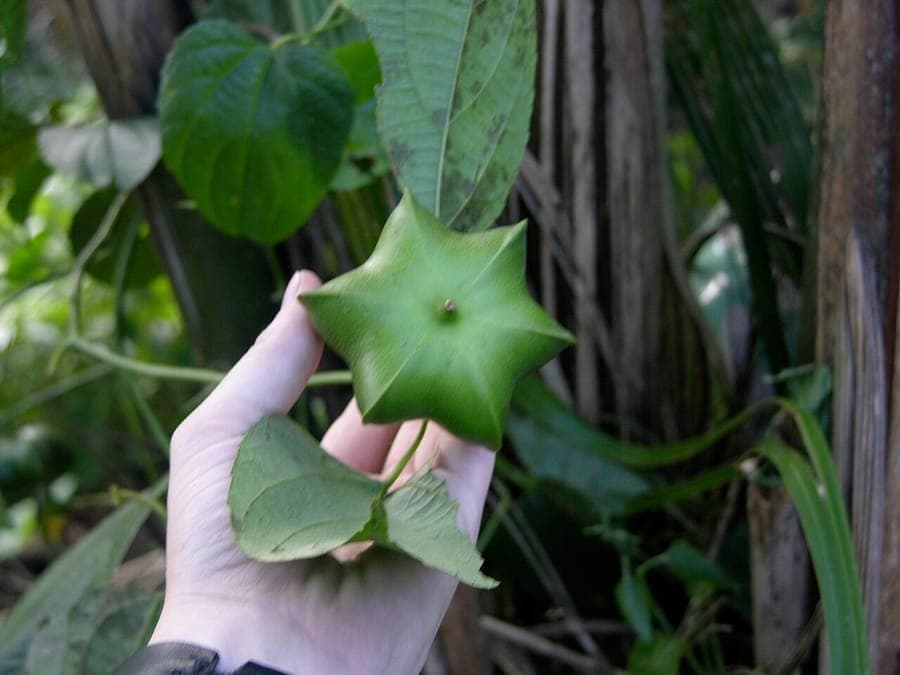
The lifted lorax / CC BY-SA 3.0, via Wikimedia Commons
Sacha Inchi: complete guide
Plukenetia volubilis
¿Quieres ver Sacha Inchi: complete guide en tu jardín?
1 minuto, sin tarjeta de crédito
Overview
the Sacha Inchi, botanically known as Plukenetia volubilis, is a unique tropical vine from the Euphorbiaceae family, native to the Amazon of Peru, Ecuador, Colombia and other South American countries. This plant produces nutritious seeds known for their high omega-3 fatty acid content. The plant grows as a climbing vine up to 3-4 meters and blooms yellow with characteristic four-pointed fruits. In Europe, this plant can be grown under controlled conditions as a seasonal crop.
Appearance and Bloom
the Sacha Inchi is a slender, climbing vine that winds around support structures. The leaves are elongated, glossy green and provide a nice architectural element. The yellow flowers are small but numerous, attracting bees and other pollinators. After bloom, remarkably shaped fruits form with four symmetrical points, each containing nut-like seeds. The fruits change from green to reddish-brown when ripe. Blooming runs from May to September in Europe.
Ideal Location
Plukenetia volubilis requires a very sunny location. Plant it in locations with at least 8 hours of direct sunlight daily. In warm, southern regions, it can even tolerate bright midday shade. Protection from cold wind is essential, especially in northern climates. The plant grows best in warm microclimates against south-facing walls or in greenhouses. In tropical and subtropical climates, it can be grown outdoors.
Soil
Sacha Inchi shows preference for rich, well-drained soils with good organic matter. A soil pH between 6.0 and 7.5 is ideal. Work in plenty of compost or rotted organic material before planting. The plant tolerates somewhat moister soils better than many other tropical crops, but waterlogging is still problematic. Ensure adequate drainage.
Diseño gratis
¿Quieres ver Sacha Inchi: complete guide en tu jardín? Crea un diseño gratis ahora.
Watering
Keep the soil regularly moist during the growing season, but not waterlogged. Water when the top two centimeters feel dry. During bloom and fruit set, consistent water is essential for good yields. In winter you may reduce watering frequency. Provide mulch around the base to retain moisture and protect roots from cold.
Pruning
Pruning helps the plant maintain the desired form. Cut climbing material back to about two-thirds of its length to encourage branching. Remove undersized or weak branches. After blooming you can cut back aging vines. Be careful never to prune the plant severely as this can limit the next harvest.
Maintenance Calendar
Spring: Begin feeding every two weeks with balanced fertilizer. Water regularly. Summer: Continue feeding. Intensive watering. Monitor for pests. Autumn: Reduce watering frequency. Harvest ripe fruits. Winter: Minimal care. Frost protection.
Winter Hardiness
Plukenetia volubilis is sensitive to frost and cannot survive temperatures below 10 degrees Celsius. In temperate zones it must be grown in greenhouses or as an annual plant. In southern parts of Europe it can overwinter outdoors under protection. In tropical and subtropical zones it grows outdoors as a perennial.
Companion Plants
In greenhouses, combine Sacha Inchi well with other tropical vines such as passion fruit and cucumber. Underplant with fast-growing groundcovers. In outdoor gardens, protect against other vines that may become too dominant. Combine with tropical shrubs for structure.
Closing Thoughts
the Sacha Inchi is a fascinating and nutritious plant for gardeners in Europe seeking unique, nutritious fruit crops. While temperature constraints limit outdoor cultivation in many regions, it can be grown in greenhouses or as a seasonal crop. The seeds are a fantastic source of omega-3 fatty acids. Visit specialized seed sellers for seeds and young plants.
GardenWorld.app helps you design tropical gardens with unique nutritious crops like Sacha Inchi.
¿Quieres ver Sacha Inchi: complete guide en tu jardín? Crea un diseño gratis ahora.
Sube una foto, elige un estilo y obtén un diseño fotorrealista con lista de plantas en menos de un minuto.
Más de 10.000 jardines diseñados
Sin tarjeta de crédito


Plantas similares
Woolly mercury: complete guide
Mercurialis tomentosa
All about Mercurialis tomentosa, the woolly mercury from southwestern Europe: site, soil, watering, care and garden design tips.
Shurur: complete guide
Euphorbia fruticosa
Everything about Shurur: cultivation in dry climates, xeriscaping, care and tips for drought-resistant gardens in warm climates
Glary spurge: complete guide
Euphorbia glareosa
Everything about glary spurge: cultivation, maintenance, frost hardiness and use in Mediterranean and mountain-inspired gardens