
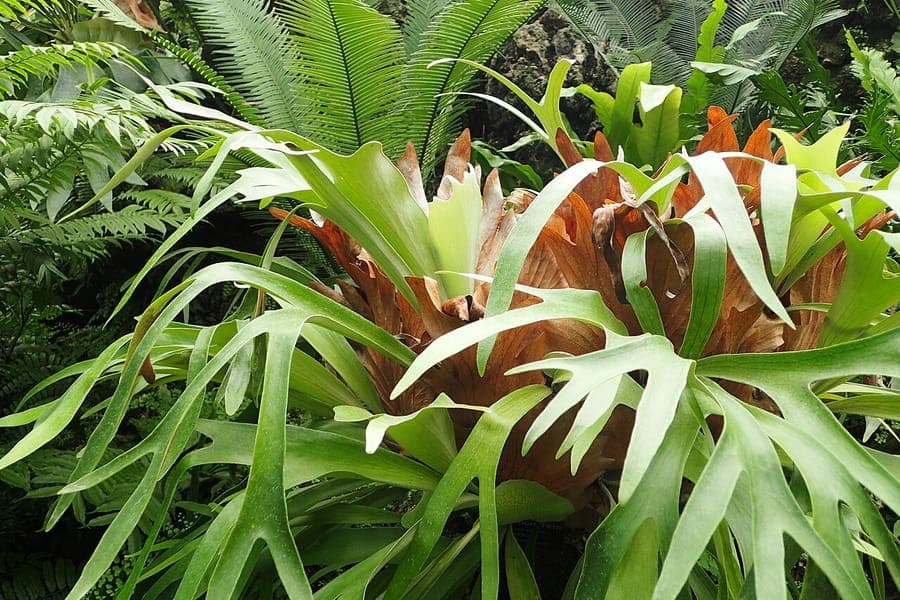
Krzysztof Ziarnek, Kenraiz / CC BY-SA 4.0, via Wikimedia Commons
Common staghorn fern: complete guide
Platycerium bifurcatum
¿Quieres ver Common staghorn fern: complete guide en tu jardín?
1 minuto, sin tarjeta de crédito
Overview
The Common staghorn fern (Platycerium bifurcatum), also known as Elkhorn Fern, is a fascinating epiphytic fern originating from Australia, Indonesia, and Melanesia. Unlike ground-dwelling ferns, this species naturally grows on tree trunks in rainforests, giving it a unique growth habit. With its striking, bifurcated fronds resembling deer or elk horns, it is a spectacular houseplant for bright light locations.
Appearance and Growth
The staghorn fern forms two types of leaves. The basal shield-shaped leaves form a compact disk that adheres to the substrate. These leaves trap dead organic material and retain moisture. The frondose, bifurcated leaves, on the other hand, grow upward and can reach 60-90 centimeters in length. These frondose leaves are the characteristic "horns" of the plant. Under good conditions, the plant can become very large and impressive, especially when grown on tree trunks.
Ideal Location
The staghorn fern thrives best in locations with bright, indirect light. This plant does not tolerate direct sunlight, which causes leaf scorch. A location near a north or east window is ideal. In homes with much diffuse light, the plant grows well. Temperatures between 16-24°C are ideal. Avoid cold locations below 10°C. This is a tropical plant that appreciates warm, humid air.
Soil
The staghorn fern requires no traditional potting soil. As an epiphytic plant, it naturally grows on tree bark. For home cultivation, best use: a mixture of loose bark, sphagnum, and coconut fiber. Ensure excellent drainage. Some growers mount the plant on pieces of bark or wooden boards. Hydroculture also works well. A pH of 6.5-7.0 is ideal.
Watering
The staghorn fern loves humidity without waterlogging. Watering through frequent, light misting of the leaves is ideal. Check that the bark-like growing medium remains moist but not wet. In summer, water regularly; in winter somewhat less. This plant thrives on moisture needs in its tropical habitat, so regular misting of the leaves helps. Soft water is preferred; hard water can leave stains.
Diseño gratis
¿Quieres ver Common staghorn fern: complete guide en tu jardín? Crea un diseño gratis ahora.
Pruning
The staghorn fern requires very little pruning work. Remove only dead or damaged fronds carefully at the base. Removing the shield-shaped basal leaves is not recommended, as they protect the roots and retain moisture. If the plant becomes too large, you can remove the entire growth structure from the substrate and rebuild on a larger piece of bark. This is better than pruning.
Maintenance Calendar
Spring: Beginning of growing season. Increase watering and misting. Check for pests. Summer: Peak of growth. Water regularly, mist regularly. Temperature remains warm. Autumn: Gradually reduce water; plant prepares for cooler season. Winter: Less water, less misting. Plant partially rests. Ensure sufficient light.
Winter Hardiness
The staghorn fern is not winter hardy and cannot grow outdoors in temperate climates. This is a tropical plant that requires permanently warm conditions. In temperate zones, it must be grown indoors, preferably in a warm interior or in a warm greenhouse or glasshouse. Temperatures below 10°C can cause plant disease or stop growth.
Companion Plants
Other epiphytic ferns offer similar interest: Bird's Nest Fern (Asplenium nidus), Button Fern (Humata tyermannii). Also interesting combinations with other tropical plants such as Monstera, Alocasia, or other epiphytic plants. Maintaining entire ecosystems of epiphytes creates stunning tropical interiors.
Closing
The staghorn fern is a truly unique and spectacular houseplant that transforms your interior with its exotic, bifurcated fronds. Although it requires careful handling, it is very rewarding for enthusiasts. With sufficient humidity, indirect light, and warm conditions, this plant will grow beautifully. Find on gardenworld.app ideas for creating exotic interior scapes.
¿Quieres ver Common staghorn fern: complete guide en tu jardín? Crea un diseño gratis ahora.
Sube una foto, elige un estilo y obtén un diseño fotorrealista con lista de plantas en menos de un minuto.
Más de 10.000 jardines diseñados
Sin tarjeta de crédito


Plantas similares
Dryopteris sieboldii: complete guide
Dryopteris sieboldii
Discover Dryopteris sieboldii (Siebold's Buckler Fern), an elegant evergreen fern from Asia. Growing tips, care, and uses in shade gardens.
Dryopteris tyrrhena: complete guide
Dryopteris tyrrhena
Discover Dryopteris tyrrhena (Mediterranean Buckler-fern), a rare and exquisite fern species. Growing tips, care, and shade garden design.
Dryopteris villarii: complete guide
Dryopteris villarii
Dryopteris villarii, known as rigid buckler fern, is a shade-loving fern form from the Alps. Discover how to grow and maintain this elegant alpine fern in your garden.