
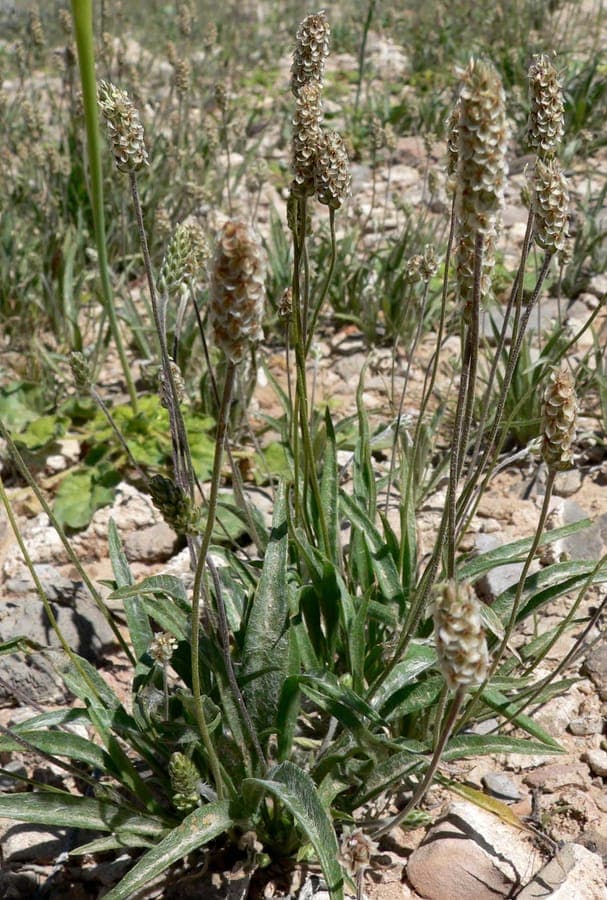
Stan Shebs / CC BY-SA 3.0, via Wikimedia Commons
Plantago ovata: complete guide to psyllium or ispaghula
Plantago ovata
¿Quieres ver Plantago ovata: complete guide to psyllium or ispaghula en tu jardín?
1 minuto, sin tarjeta de crédito
Overview
Plantago ovata, commonly known as psyllium, ispaghula, or blond plantain, is an interesting and versatile plant originating from North Africa, the Middle East, and India. This member of the Plantaginaceae family has been used for millennia in traditional medicine because of its fiber-rich seeds, which are beneficial for digestive health. In recent years, this plant has become increasingly popular in European gardens among people interested in growing their own food and traditional herbal medicine.
Plantago ovata grows as a compact herb typically reaching 15-40 cm tall. It is widely used in nutritional supplements and traditional medicine. For gardens, it is advantageous because it is easy to grow, requires little maintenance, and produces useful seeds. The plant is also attractive to pollinators and has delicate blooms.
Appearance and Bloom
Plantago ovata possesses oblong-ovate leaves typically 3-8 cm long and growing in a rosette around the base. The leaves feature distinct parallel veins and a lighter midrib running from base to apex. This leaf pattern is characteristic of Plantago species.
During flowering (typically June to September), tall flower spikes emerge, approximately 20-50 cm high, with densely stacked small flowers in cylindrical heads atop the stems. These flowers are usually white to creamy yellow colored and have subtle reddish stamens. Though not spectacularly beautiful, these blooms give an elegant rusticity to the plant.
Following bloom, small seed capsules form containing ripened seed. These seeds are small and black to dark brown colored, approximately 2-3 mm large. Hundreds of seeds are produced per plant, making this plant attractive for seed collectors.
Ideal Location
Plantago ovata thrives in full sun to light half-shade, preferring minimum 6 hours of direct sunlight. In too much shade, the plant grows more slowly and seed production may be reduced. Sunny locations also promote deeper leaf coloring.
Wind tolerance is reasonable; the plant grows in windy situations but becomes more compact. Protected locations help prevent tall flower stems from falling over. An important advantage is that Plantago ovata has no special microclimate requirements and grows in many different situations.
Temperature: The plant grows best in warm seasons and is usually treated as an annual in temperate climates. For perennial growth, warmer regions are recommended.
Soil
Plantago ovata is highly flexible with soil types and grows in sand, loam, clay, and mixtures. The plant is renowned for thriving in lean soils where many other herbs don't grow well. This makes it excellent for marginal garden space.
Drainage is more important than fertility. Heavy clay can be improved with sand or grit to enhance drainage. pH can be very acidic to very alkaline, though a pH range of 6.0 to 7.5 is optimal.
Soil preparation: No special preparation is usually needed. Loose, well-drained soil is sufficient. The plant tolerates compact soil reasonably but prefers some looseness.
Diseño gratis
¿Quieres ver Plantago ovata: complete guide to psyllium or ispaghula en tu jardín? Crea un diseño gratis ahora.
Watering
Once established, Plantago ovata requires moderate water. Regular watering helps growth, but the plant tolerates reasonable drought well. For seed production, regular watering helps, but not excessive.
During establishment phase (first month), regular watering is beneficial. Once established, watering can be limited to weekly in temperate climates, though monthly watering during normal growing season is beneficial.
Mulching is useful. A 2-3 inch layer of organic mulch around the plant helps moisture retention and reduces weed competition.
Pruning
Plantago ovata requires no pruning for healthy growth. The plant naturally develops an attractive, full form. Deadheading (removal of spent flower heads) can be done to promote seed production by stimulating further bloom.
If you want seeds for next season, allow some seed heads to ripen on the plant and don't remove them. The plant will naturally disperse seed once fully ripe seed is reached.
Maintenance Calendar
Spring (March-May): Sow seed in protected environment or directly in garden. Apply mulch. Water regularly until established.
Summer (June-August): Water regularly. Deadhead spent blooms. Monitor for pest damage (rarely needed). Seed heads ripen.
Fall (September-October): Harvest seed heads when fully brown. Dry seed for storage or next season sowing.
Winter (November-February): In temperate climates, the plant usually dies back or dies. No maintenance needed.
Winter Hardiness
Plantago ovata is typically annual in temperate climates (USDA zones 6-9), though it can be biennial or perennial in warm zones (10-11). The plant tolerates gentle frost but dies in severe frost.
In cold climates, sow seed in spring after frost danger passes. In warmer regions, seed can be sown in fall for early spring bloom.
Companion Plants
Plantago ovata combines well with other herbs such as Coriandrum sativum (coriander) and Cuminum cyminum (cumin). Complementary partners include Origanum vulgare (oregano) for pollinator food, Satureja montana (winter savory) for structural contrast, and Thymus vulgaris (thyme) for ground coverage.
Flowering plants such as Cosmos bipinnatus and Calendula officinalis grow well in similar conditions and help attract pollinators.
Closing
Plantago ovata deserves recognition as a unique, advantageous plant for gardens of people interested in growing their own food and traditional medicine. With its simple growth requirements, lean soil tolerance, and useful seeds, it's a smart addition to any herb bed. Seek more planting inspiration on gardenworld.app. Visit your local garden center or organic nursery for seed and expert advice.
Whether you're food self-sufficient focused or simply interested in botanical efficacy, Plantago ovata gives you a satisfying growing experience. Start sowing today on gardenworld.app.
¿Quieres ver Plantago ovata: complete guide to psyllium or ispaghula en tu jardín? Crea un diseño gratis ahora.
Sube una foto, elige un estilo y obtén un diseño fotorrealista con lista de plantas en menos de un minuto.
Más de 10.000 jardines diseñados
Sin tarjeta de crédito


Plantas similares
White Beardtongue: complete guide
Penstemon albidus
Discover white beardtongue (Penstemon albidus) - elegant perennial with white to cream flowers. Drought-resistant, perfect for prairie and dry gardens.
Longsepal Beardtongue: complete guide
Penstemon calycosus
Discover longsepal beardtongue (Penstemon calycosus) - beautiful perennial with lilac-blue flowers. For partial shade and moist soil. Ideal for naturalized.
Penstemon cusickii: complete guide
Penstemon cusickii
Discover Cusick's beardtongue, a compact alpine flowering plant with violet-pink blooms. Perfect choice for rock gardens and water-wise landscaping.