
sannse / CC BY-SA 3.0, via Wikimedia Commons
Plantago lanceolata: complete guide
Plantago lanceolata
¿Quieres ver Plantago lanceolata: complete guide en tu jardín?
1 minuto, sin tarjeta de crédito
Overview
Plantago lanceolata, commonly known as Ribwort plantain or Narrowleaf plantain, is an important native perennial widely distributed throughout Europe. It is a valuable plant both ecologically and aesthetically. The plant is widely used in wildflower seed mixes and plays a crucial role in supporting bee populations.
The botanical name "lanceolata" refers to the characteristic lanceolate leaves - long, narrow, and pointed. This plant is immensely important for ecological networks and protects itself against many insect pests.
Appearance and Bloom
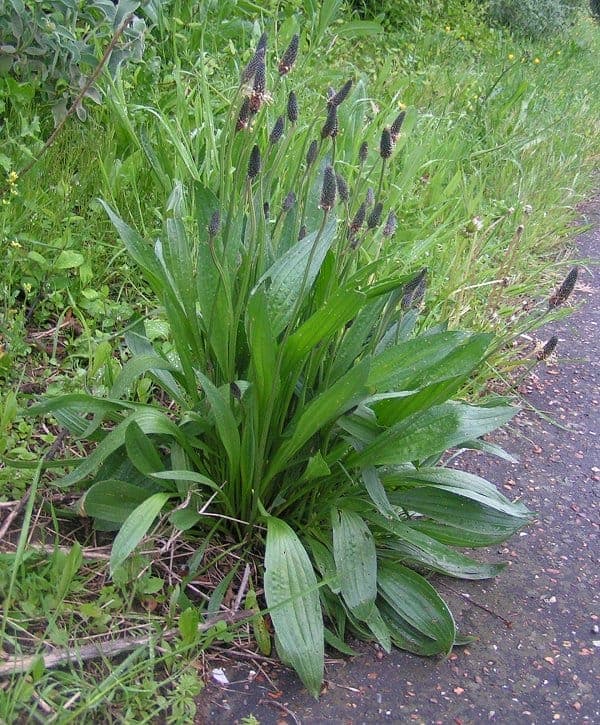
Plantago lanceolata forms a dense rosette of lanceolate leaves directly from ground level. The leaves are long and narrow (4-12 cm), green, and feature distinct parallel veins. The plant grows to approximately 20-40 cm tall depending on growing conditions.
Flowers appear from May through October in elegant, compact spikes above the leaf rosette. Spikes are initially green, later becoming reddish-brown and approximately 1-2 cm long. The flowers are inconspicuous but frequently visited by honeybees and other pollinators.
Ideal Location
Ribwort plantain grows perfectly in fully sunny locations but tolerates partial shade sites. Minimum 4-5 hours sun daily is sufficient. The plant is also suitable for shadier meadows where many native plants grow.
The plant is very tolerant of windy locations. This makes it suitable for gardens in elevated terrain or along coastlines. Also suitable for neglected garden corners.
Soil
Ribwort plantain grows on virtually all soil types - from very poor sandy soils to heavy clay. The plant is undemanding and grows even on compacted meadows. This makes it ideal for gardens where other plants struggle.
Drainage is important but not critical. The plant tolerates both acidic and basic soils well.
Diseño gratis
¿Quieres ver Plantago lanceolata: complete guide en tu jardín? Crea un diseño gratis ahora.
Watering
Once established, Ribwort plantain is extremely drought-tolerant. This is actually one of the most drought-resistant native perennials in Europe. Water only during the first growing season.
After establishment, the plant needs virtually no supplementary water, even during dry summers. Actually, it tolerates wet winters better than many others.
Pruning
Pruning is not necessary. The plant naturally grows in a neat form. To encourage self-seeding, leave some flowers standing. This provides natural regeneration of the plant population.
Removal of spent flowers can be done for a neater appearance, but this is optional.
Maintenance Calendar
May-June: Flowering begins; insects visit flowers. July-September: Continuous flowering; deadheading optional. October-November: Seed production; flowering stops after frost. December-April: Plant rests; resumes growing next spring.
Winter Hardiness
Ribwort plantain is completely hardy throughout Europe, even in the coldest regions. This is a perennial plant that can grow for many years. The plant tolerates temperatures of -15 to -20 degrees Celsius without problems.
Companion Plants
Ribwort plantain combines excellently with other native wildflowers: White clover, Chicory, Mouse-ear chickweed, and various grasses. Also beautiful with other low-growing Plantago species.
In formal borders: Gaura, Linum, and other light-toned species.
Conclusion
Plantago lanceolata is a must-have for every ecological garden and for anyone who wants to attract honeybees and beetles. With its abundance, low maintenance requirements, and tremendous ecological value, it is one of the best plant choices. This is a plant that has proven itself over thousands of years.
For purchase: seek seed in ecological wildflower mixes or grow your own plants. Gardenworld.app helps you design ecological borders. Gardenworld.app provides support for biodiverse garden designs.
¿Quieres ver Plantago lanceolata: complete guide en tu jardín? Crea un diseño gratis ahora.
Sube una foto, elige un estilo y obtén un diseño fotorrealista con lista de plantas en menos de un minuto.
Más de 10.000 jardines diseñados
Sin tarjeta de crédito


Plantas similares
White Beardtongue: complete guide
Penstemon albidus
Discover white beardtongue (Penstemon albidus) - elegant perennial with white to cream flowers. Drought-resistant, perfect for prairie and dry gardens.
Longsepal Beardtongue: complete guide
Penstemon calycosus
Discover longsepal beardtongue (Penstemon calycosus) - beautiful perennial with lilac-blue flowers. For partial shade and moist soil. Ideal for naturalized.
Penstemon cusickii: complete guide
Penstemon cusickii
Discover Cusick's beardtongue, a compact alpine flowering plant with violet-pink blooms. Perfect choice for rock gardens and water-wise landscaping.