
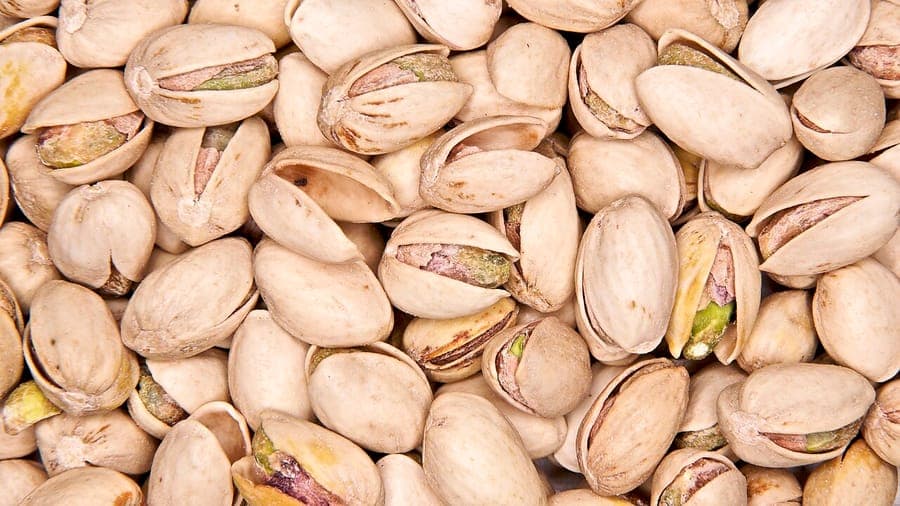
THOR / CC BY 2.0, via Wikimedia Commons
Pistacia vera: complete guide
Pistacia vera
¿Quieres ver Pistacia vera: complete guide en tu jardín?
1 minuto, sin tarjeta de crédito
Overview
Pistacia vera, better known as the pistachio or common pistachio, is an Asian tree of immense historical and economic importance. Native to Central Asia and Afghanistan, this tree is renowned for producing valuable nuts. The tree flowers and fruits in sunny, warm locations with extended growing seasons. In contemporary gardens, the pistachio offers benefits beyond nutrition: decorative foliage, bird attraction, and an interesting growth cycle.
Historically, pistachios have been an important crop in Middle Eastern and North African regions. Today they are also cultivated in southern Europe and warm parts of North America. For home gardeners, pistachio offers a unique combination of nutrition, beauty and wildlife benefits.
Appearance and bloom
Pistacia vera develops into a medium-sized tree typically 7 to 10 meters tall. The tree exhibits a broad, spreading crown with gray bark. Foliage is compound, large (20-35 cm long), featuring 9 to 11 pairs of leaflets plus a terminal leaflet. Leaves are green during summer, transitioning to gold and red in autumn.
Flowers are small, inconspicuous and purple-red, appearing before leaf-out in early spring. The fruits are striking and of great importance: split-hull pistachios with grass-green to yellowish flesh, maturing in autumn. The nuts are buff-colored with a rosy tint.
Ideal location
Pistacia vera is a sun-lover requiring full sun. It thrives in warm locations with long summer periods. The tree tolerates mild winters but requires very warm growing periods (minimum 4 to 5 frost-free months). It is unsuitable for cold or very wet climates.
In garden design, enthusiastic gardeners use Pistacia vera in very warm regions as a fruit tree on open, sunny sites. It is suitable for pot culture in less warm regions, with the container moved indoors for winter.
Soil
Pistacia vera thrives best on sandy, stony and calcareous soils ranging from neutral to basic (pH 7.0 to 8.5). The tree accepts nutrient-poor soils provided drainage is adequate. Heavy clay soils require amendment with sand and gravel.
The tree is very drought-tolerant but requires some nutrition for good fruiting. Light fertilization with potassium and magnesium during the growing season can be beneficial. Stagnant water is harmful.
Diseño gratis
¿Quieres ver Pistacia vera: complete guide en tu jardín? Crea un diseño gratis ahora.
Watering
Once established, Pistacia vera is drought-tolerant, though not as extremely as other pistaches. For optimal nut production, regular watering is important throughout the growing season. The tree requires less water than many other fruit trees.
Following planting, regular watering is essential throughout the first growing season. For mature trees, irrigation is particularly important during drought and nut maturation. In arid climates, supplemental watering may be necessary.
Pruning
Pistachio requires minimal pruning maintenance. The tree naturally develops an acceptable form. Dead branches can be removed year-round. Gentle pruning of young growth can encourage crown development.
Excessive pruning should be avoided as it may reduce fruit production. Once mature, minimal maintenance is best. Branches near ground level may be carefully removed for clearance.
Maintenance calendar
January to February: Remove dead branches. March to April: Flowering. Water regularly. May to June: Young nuts setting. July to August: Nuts growing. August to September: Nuts maturing. October: Harvest. November to December: Winter rest and preparation.
Winter hardiness
Pistacia vera is semi-hardy. It tolerates temperatures down to approximately -10 to -15 degrees Celsius depending on origin. In mild winter regions (southern France, southern Spain, southern Italy, southern California), it grows outdoors without protection. In colder regions, planting against a south-facing wall or pot culture is necessary.
Severe frost during flowering can destroy crops. Protection from spring frost is recommended in risk areas.
Companion plants
Pistachio combines beautifully with other warm-climate trees and shrubs. Olive trees (Olea europaea) form good partners. Other Pistacia species can help as pollinators (dioecious). Mediterranean shrubs such as lavender (Lavandula) and rosemary (Rosmarinus) fit well around the base.
Closing
Pistacia vera is a valuable fruit tree for very warm gardens with long growing seasons. With minimal care, it produces nutritious nuts and offers bird-friendly benefits. This makes it valuable for any warm-climate garden with space.
Want to add this fruit tree? Specialized nurseries in warm regions carry young specimens. Online plant retailers also stock this species. Spring planting produces best results.
GardenWorld.app helps you design fruit gardens for warm climates. Discover how to optimize nut production. Visit gardenworld.app for more guides.
¿Quieres ver Pistacia vera: complete guide en tu jardín? Crea un diseño gratis ahora.
Sube una foto, elige un estilo y obtén un diseño fotorrealista con lista de plantas en menos de un minuto.
Más de 10.000 jardines diseñados
Sin tarjeta de crédito


Plantas similares
Skunkbush sumac: complete guide
Rhus trilobata
Everything about Rhus trilobata: siting, soil, autumn colour, pruning, and how this tough ornamental shrub earns a place in any garden.
Winged sumac: complete guide
Rhus copallinum
Everything about Rhus copallinum, the winged sumac with spectacular autumn colour. Location, pruning and garden value in full detail.
Aromatic sumac: complete guide
Rhus aromatica
Full guide to aromatic sumac (Rhus aromatica): planting, soil, care, pruning and companion plants for dry, sunny gardens and slope stabilisation.