
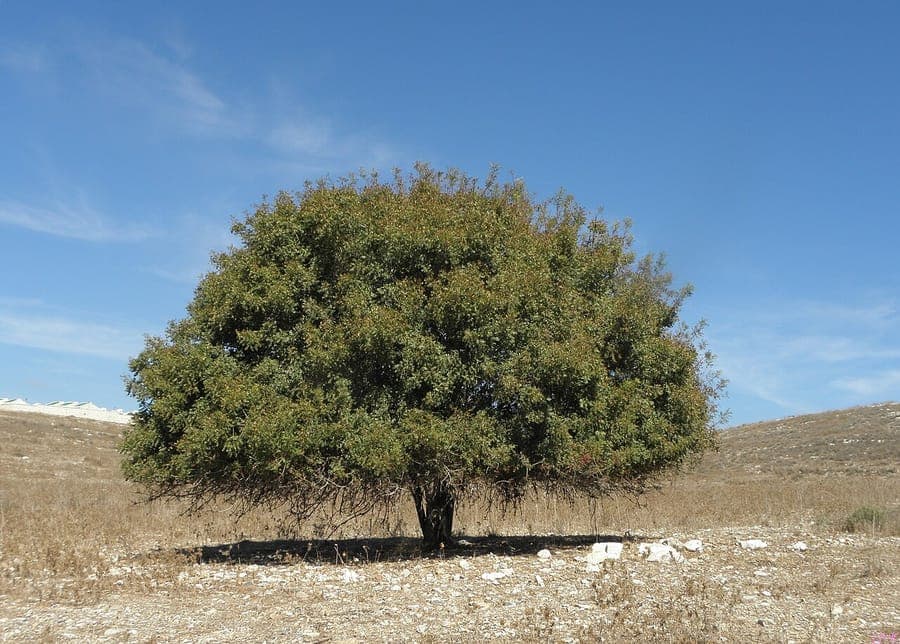
איתן פרמן / CC BY-SA 3.0, via Wikimedia Commons
Pistacia terebinthus: complete guide
Pistacia terebinthus
¿Quieres ver Pistacia terebinthus: complete guide en tu jardín?
1 minuto, sin tarjeta de crédito
Overview
Pistacia terebinthus, known as turpentine tree or Cyprus turpentine, is a Mediterranean tree occurring naturally from Mediterranean basins through the Arabian Peninsula. Prized since antiquity for its valuable resin used in industrial and medicinal applications, this tree now serves primarily as an ornamental with striking seasonal colors and bird-friendly attributes.
Historically, Pistacia terebinthus was a valuable source of turpentine and other resins used in paintings and medicines. Today, garden designers value this tree for its robust character, striking autumn colors, and ecological benefits.
Appearance and bloom
Pistacia terebinthus develops into a medium-sized tree typically 4 to 9 meters tall, occasionally higher under favorable conditions. The tree exhibits a spreading crown with gray-brown bark. Foliage is compound, moderate (15-30 cm long), featuring 4 to 10 pairs of leaflets plus a terminal leaflet. Leaves are green during summer, transitioning to ochre, red and gold in autumn.
Flowers are small, inconspicuous and reddish, appearing in spring in dense panicles. Fruits are striking deep red to dark brownish-red, approximately 8 mm diameter, maturing in autumn. These fruits strongly attract birds and persist on the tree well into winter.
Ideal location
Pistacia terebinthus is a full-sun tree. It thrives in warm, sunny locations and is particularly suited to coastal areas and sunny terraces. The tree tolerates windy conditions well thanks to its strong, flexible branches.
In garden design, turpentine tree serves as a specimen on warm, dry locations. It combines beautifully with other Mediterranean trees and shrubs. It is also suitable for inter-planting in established gardens as a shade source over terraces where extra warmth is beneficial.
Soil
Turpentine tree is tolerant of diverse soil conditions. It thrives on sandy, stony and calcareous soils ranging from neutral to basic (pH 7.0 to 8.5). The tree flourishes on nutrient-poor soils requiring minimal fertilization.
The tree benefits from well-draining soil. Heavy clay soils require amendment with sand and gravel. Stagnant water is harmful. Once established, this tree requires minimal feeding.
Watering
Once established, Pistacia terebinthus is extremely drought-tolerant. The tree possesses a deep root system accessing water sources deep in the soil profile. Following planting, regular watering is essential throughout the first year until the tree becomes fully rooted.
For mature trees, irrigation is only necessary during extreme droughts exceeding eight weeks without rainfall. Regular watering can actually be harmful. In Mediterranean climates, this tree thrives without any supplemental irrigation.
Diseño gratis
¿Quieres ver Pistacia terebinthus: complete guide en tu jardín? Crea un diseño gratis ahora.
Pruning
Turpentine tree requires minimal pruning maintenance. The tree naturally develops an acceptable form requiring no routine pruning. Dead branches can be removed year-round. Careful formative pruning of young trees encourages desired growth patterns.
Excessive pruning should be avoided as it creates vulnerable cut surfaces. Once mature, the tree is best allowed to develop naturally. Branches near ground level may be carefully removed for clearance, but the general crown shape should be respected.
Maintenance calendar
January to February: Inspect for damage. March to April: Flowering. Water regularly in dry weather. May to June: Fruit setting. July to August: Fruits developing. September to October: Fruits color deep red. Autumn colors emerge. November to December: Winter dormancy.
Winter hardiness
Pistacia terebinthus is semi-hardy. It tolerates temperatures down to approximately -10 to -12 degrees Celsius depending on origin and growing conditions. In mild winter regions (southern France, southern Spain, southern Italy), it grows outdoors without protection. In northern Mediterranean regions, planting against a south-facing wall is recommended.
In severe winters, above-ground parts may sustain damage. The tree typically recovers well from winter injury. Protection from severe frost is recommended in continental climates.
Companion plants
Turpentine tree combines beautifully with other Mediterranean trees including holm oak (Quercus ilex) and cork oak (Quercus suber). Shrubs such as lavender (Lavandula) and rosemary (Rosmarinus) fit well around the base. Other Pistacia species create harmonious combinations. Drought-lovers like agave (Agave) and fescue grass (Festuca) occupy the same ecological niche.
Closing
Pistacia terebinthus is a beautiful Mediterranean tree for warm, dry gardens offering striking seasonal colors. With minimal care once established, it provides bird benefits and autumn beauty. This makes it valuable for any warm climate garden.
Want to add this beautiful tree? Specialized nurseries in warm regions carry young specimens. Spring or early summer planting provides the best survival rates.
GardenWorld.app helps you design gardens for warm climates. Discover how to integrate Mediterranean trees and address challenging sites. Visit gardenworld.app for more inspiration.
¿Quieres ver Pistacia terebinthus: complete guide en tu jardín? Crea un diseño gratis ahora.
Sube una foto, elige un estilo y obtén un diseño fotorrealista con lista de plantas en menos de un minuto.
Más de 10.000 jardines diseñados
Sin tarjeta de crédito


Plantas similares
Skunkbush sumac: complete guide
Rhus trilobata
Everything about Rhus trilobata: siting, soil, autumn colour, pruning, and how this tough ornamental shrub earns a place in any garden.
Winged sumac: complete guide
Rhus copallinum
Everything about Rhus copallinum, the winged sumac with spectacular autumn colour. Location, pruning and garden value in full detail.
Aromatic sumac: complete guide
Rhus aromatica
Full guide to aromatic sumac (Rhus aromatica): planting, soil, care, pruning and companion plants for dry, sunny gardens and slope stabilisation.