
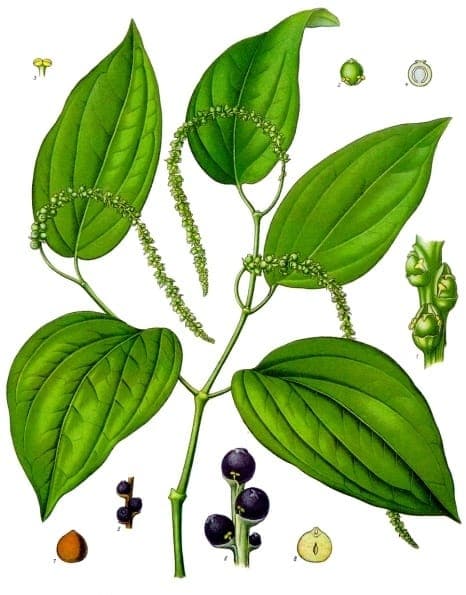
Franz Eugen Köhler, Köhler's Medizinal-Pflanzen / Public domain, via Wikimedia Commons
Piper nigrum: complete guide
Piper nigrum
¿Quieres ver Piper nigrum: complete guide en tu jardín?
1 minuto, sin tarjeta de crédito
Overview
Piper nigrum, commonly known as black pepper, is one of the most valued and sought-after spices in the world. This climbing vine originates from India and has been cultivated for centuries for its ripened berries, which produce the famous black peppercorns. In Europe, black pepper was once called 'black gold' due to its high value and the effort required to bring this plant from Asia to Europe.
Appearance and bloom
Piper nigrum grows as a perennial climbing vine that winds upward along supporting structures. The plant bears heart-shaped, lance-like leaves that release a pleasant aroma when rubbed. Flowers appear in unassuming, hanging flower clusters and are greenish to whitish in color. The fruits begin green, then turn yellow and finally red before becoming black. Only the black, ripe berries are traditionally dried to produce peppercorns.
Ideal location
Pepper plants thrive best in warm, humid tropical climates. They prefer abundant indirect sunlight and appreciate shelter from strong winds. In temperate climates, pepper plants must be grown in greenhouses or warm rooms. The plant appreciates temperatures of 15-30 degrees Celsius and humidity levels of 60-80%.
Soil
Soil must drain well and be rich in organic matter. A pH of 5.5 to 7.0 is ideal. A mixture of potting soil, coconut coir and compost provides a good base. Regular addition of organic matter helps maintain soil fertility.
Diseño gratis
¿Quieres ver Piper nigrum: complete guide en tu jardín? Crea un diseño gratis ahora.
Watering
Pepper plants prefer consistently moist, but not waterlogged soil. Water regularly, especially during the growing season, but avoid waterlogging. In winter, watering can be reduced. A mulch layer helps maintain soil moisture.
Pruning
Pruning stimulates dense, branched growth patterns and improves yield. Remove dead or damaged leaves and prune the plant to desired shape. Regular pinching of growing tips encourages more side shoots.
Maintenance calendar
During the growing season (spring-summer), feed regularly with nitrogen-rich fertilizer. When the plant is flowering, switch to a phosphorus-rich fertilizer. Repot every 2-3 years with fresh soil. Regularly check for pests and diseases, especially spider mites and powdery mildew.
Winter hardiness
Piper nigrum is not winter hardy and cannot tolerate temperatures below 10 degrees Celsius. In temperate climates, the plant is best overwintered indoors. Frost-free rooms (minimum 15 degrees) are essential for survival.
Companion plants
In tropical environments, pepper plants can grow well alongside other heat-loving plants such as vanilla, cinnamon and cacao. They can also be trained against the same support.
Closing
Growing pepper requires patience, warmth and attention, but the results are worth the effort. For spice enthusiasts and exotic plant lovers, growing Piper nigrum is a fascinating and rewarding endeavor. Care for your pepper plant well and enjoy fresh harvests for years to come.
¿Quieres ver Piper nigrum: complete guide en tu jardín? Crea un diseño gratis ahora.
Sube una foto, elige un estilo y obtén un diseño fotorrealista con lista de plantas en menos de un minuto.
Más de 10.000 jardines diseñados
Sin tarjeta de crédito


Plantas similares
Kava: complete guide to growing and care
Piper methysticum
Everything about kava (Piper methysticum): origin, appearance, location, soil, watering, pruning and overwintering outside the tropics.
Guinea Pepper: complete guide
Piper guineense
Guinea pepper is a tropical vine with aromatic fruits used in African cuisine. Learn how to grow this African pepper variant in warm indoor conditions.
Peperomia pellucida: complete guide to man-to-man herb
Peperomia pellucida
Master Peperomia pellucida, a compact herbaceous plant with translucent leaves ideal for indoor gardening and cool garden corners.