
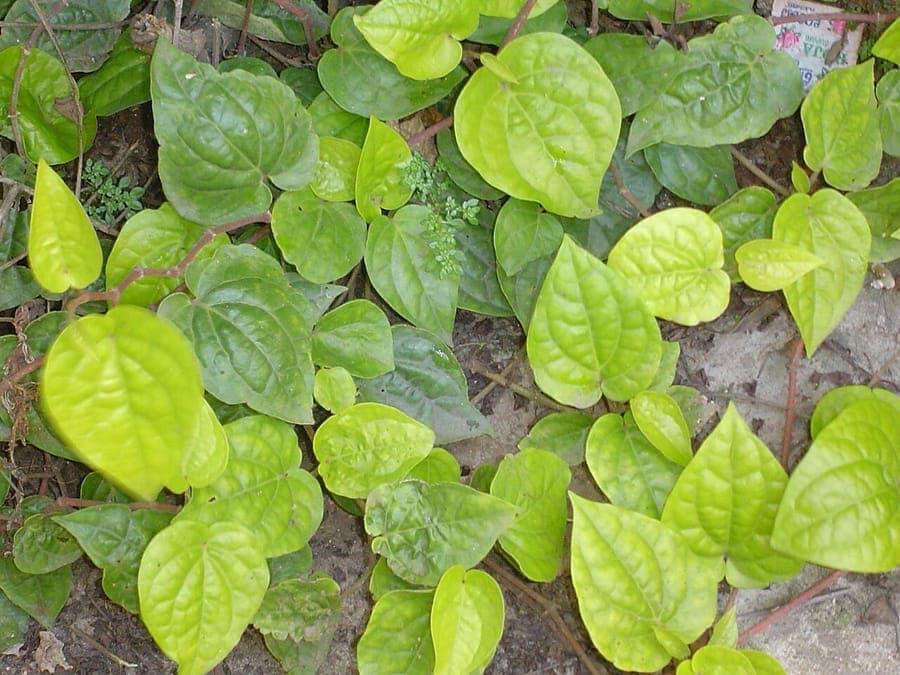
No machine-readable author provided. Pamri assumed (based on copyright claims). / Public domain, via Wikimedia Commons
Betel plant: complete guide
Piper betle
¿Quieres ver Betel plant: complete guide en tu jardín?
1 minuto, sin tarjeta de crédito
Overview
The Betel plant (Piper betle), also known as betel pepper, is a tropical climbing vine native to Indo-China and Malaysia. This plant grows as an elegant, vigorous vine that can easily reach 2 to 3 meters.
Belonging to the Piperaceae family, this plant is renowned for its aromatic leaves used extensively in many Asian cultures. The leaves have a spicy, slightly peppery taste with subtle anise undertones.
Appearance and growth
The Betel plant grows as an elegant, much-branching climbing vine with glossy green, heart-shaped leaves. The leaves reach approximately 7 to 15 centimeters long and 5 to 10 centimeters wide.
The stems are smooth, greenish-brown and become thicker with age. The plant naturally develops aerial rootlets that cling to surfaces.
The flowers are small, discrete cream-colored clusters appearing along stems in leaf axils. They are not particularly showy but emit a gentle fragrance.
The fruits are small, round berries that are not edible. It is the leaves that hold the true food and medicinal value.
Ideal location
The Betel plant thrives in warm, humid, partially shaded conditions. Plant in a location receiving filtered light or morning sun.
This plant is unsuitable for outdoor cultivation in temperate climates. It suits hardiness zones 10 to 12, possibly zone 9b with protection.
The plant can grow in greenhouses, conservatories, or as a houseplant in warm home locations.
Choose a location protected from direct afternoon sun, which can scorch the leaves.
Soil type
The Betel plant prefers well-draining, humus-rich soil. The pH should be between 6.0 and 7.0.
Amend the planting hole generously with mature compost or leaf mold. This helps retain moisture and provide nutrients.
Ensure the soil never completely dries out, but avoid standing water.
Diseño gratis
¿Quieres ver Betel plant: complete guide en tu jardín? Crea un diseño gratis ahora.
Watering
The Betel plant loves moist soil and regular watering. Water when the top 2-3 centimeters of soil feel dry.
Water the plant weekly, more frequently during warm, dry periods. The plant can show stress symptoms if soil becomes imbalanced.
Avoid spraying water directly on leaves in cooler periods, as this encourages fungal issues. In warm, humid conditions, however, regular misting can be beneficial.
Pruning
Pruning helps keep the Betel plant full and vine-like. Regularly pinch growing tips to encourage more side branching.
Remove yellow, diseased, or dead foliage. Prune damaged stems back to the next healthy node.
The plant can be cut back very carefully in spring if it becomes too large, though this must be done with care.
Maintenance calendar
Spring (March-May): Begin regular feeding. Tie young climbing shoots toward support.
Early summer (June-July): Water regularly. Monitor for pests, especially spider mites.
Mid summer (July-August): Ensure consistent moisture. Pinch growing tips for bushiness.
Autumn (September-October): Reduce feeding. Slightly lower watering.
Winter (November-February): Minimal feeding. Maintain moist soil.
Winter hardiness
The Betel plant is extremely cold-sensitive and cannot survive temperatures below 10 degrees Celsius. In temperate climates, this plant must be kept indoors.
The plant grows best at temperatures between 20 and 30 degrees Celsius. Temperature fluctuations can cause leaf drop.
Provide protection from drafts and sudden temperature changes.
Companion plants
The Betel plant pairs well with:
- Other tropical climbing vines like Philodendron
- Shade-loving plants like Fittonia for understory
- Ferns for vertical interest
- Trailing basket plants in mixed displays
Closing thoughts
The Betel plant is an excellent choice for tropical garden collectors and those with warm, humid growing conditions. With its aromatic leaves and elegant vine growth, it is both functional and decorative.
This plant can be obtained from online retailers in warm temperate areas, or from garden centers in tropical climates.
Visit gardenworld.app/en for more garden advice for tropical plants. See also gardenworld.app/nl for tips in Dutch.
¿Quieres ver Betel plant: complete guide en tu jardín? Crea un diseño gratis ahora.
Sube una foto, elige un estilo y obtén un diseño fotorrealista con lista de plantas en menos de un minuto.
Más de 10.000 jardines diseñados
Sin tarjeta de crédito


Plantas similares
Kava: complete guide to growing and care
Piper methysticum
Everything about kava (Piper methysticum): origin, appearance, location, soil, watering, pruning and overwintering outside the tropics.
Guinea Pepper: complete guide
Piper guineense
Guinea pepper is a tropical vine with aromatic fruits used in African cuisine. Learn how to grow this African pepper variant in warm indoor conditions.
Peperomia pellucida: complete guide to man-to-man herb
Peperomia pellucida
Master Peperomia pellucida, a compact herbaceous plant with translucent leaves ideal for indoor gardening and cool garden corners.