
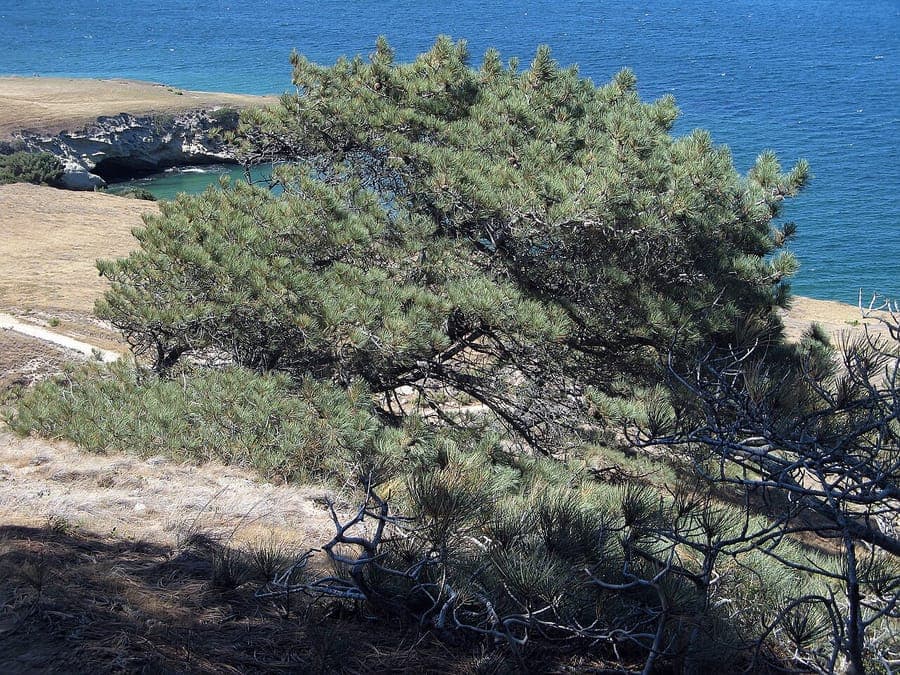
en:User:Geographer / CC BY 2.5, via Wikimedia Commons
Torrey Pine: complete guide
Pinus torreyana
¿Quieres ver Torrey Pine: complete guide en tu jardín?
1 minuto, sin tarjeta de crédito
The Torrey pine is an exceptionally rare and distinctive conifer native to California, particularly around San Diego. This graceful tree stands out for its delicate, extremely long needles and open crown structure. As an ornamental, the Torrey pine is gaining popularity in Mediterranean and xeric gardens worldwide, including temperate regions where proper microclimates allow for successful cultivation.
Overview
Pinus torreyana belongs to the Pinaceae family and is recognized as one of the rarest pines in North America. In the wild, only a few hundred trees remain on Torreyana Island and near San Diego. The tree can reach 15 meters in height and is famous for its characteristic blue-gray needles that can extend to 25 centimeters. The ivory-colored bark provides an elegant aesthetic.
Appearance and Bloom
The Torrey pine distinguishes itself through its unique growth pattern and needle arrangement. Needles grow in bundles of three and are extremely long and slender, giving a wispy appearance. Young shoots display a bluish gloss. Male flowers appear as yellow catkins in spring, while female cones start purple before ripening over two years into brown, approximately 15-centimeter-long cones. The bark develops into a characteristic grayish-brown with deep fissures as the tree matures.
Ideal Location
Torrey pines thrive in full sun with good air circulation. Position the tree where it receives at least 6 hours of direct sunlight daily. The species is extremely drought-tolerant once established, but appreciates some wind protection during youth. A southwest-facing location proves ideal. Avoid low-lying areas where rainwater pools after heavy precipitation.
Soil
The Torrey pine prefers well-draining, relatively dry soil. Both acidic and neutral soils are tolerated, with optimal pH between 6 and 7.5. For best growth, soil should be loamy and not overly fertile. Heavy clay must be amended with sand and humus before planting. Waterlogged conditions are fatal to the root system.
Diseño gratis
¿Quieres ver Torrey Pine: complete guide en tu jardín? Crea un diseño gratis ahora.
Watering
After the first growing season, the Torrey pine is remarkably drought-tolerant and rarely needs supplemental water. Newly planted trees require regular watering, especially in warm periods. Water thoroughly but infrequently rather than light, frequent sprinklings. In normal years, additional irrigation is unnecessary. During extreme drought, occasional deep watering supports stressed trees.
Pruning
The Torrey pine requires minimal pruning. Preserve the natural growth form. Remove only dead, diseased, or damaged branches. Excessive pruning can disrupt growth patterns. Rubbing branches within the canopy may be gently removed to maintain an open crown. Wounds heal poorly, so avoid unnecessary cuts.
Maintenance Calendar
January-February: Inspect for winter damage, remove dead branches March-April: Growth season begins, water moderately if conditions are dry May-June: Peak growth, monitor for pests and diseases July-August: Keep soil moist during extreme heat September-October: Complete growth activities November-December: Winter preparation, no pruning needed
Winter Hardiness
The Torrey pine offers moderate cold hardiness, tolerating temperatures to approximately -8 degrees Celsius. However, in northern climates, protection during severe winters is advisable. Shield young plants with burlap or bamboo screens. Established specimens prove hardier. In regions with harsh winters, the tree handles stress better when well-established.
Companion Plants
The Torrey pine works beautifully with other drought-tolerant species. Low-growing rosemary, santolina, or lavender create a Mediterranean effect. Ornamental grasses like Stipa gigantea provide elegant contrast. Combine with Quercus ilex (holm oak) for a Mediterranean woodland feel. Deep groundcovers like Ajuga reptans thrive beneath the open canopy.
Closing
The Torrey pine offers a unique opportunity to introduce this rare California native to your garden. With proper drainage, sunlight, and initial care, this remarkable conifer develops into a spectacular focal point. For Mediterranean gardens or dry-climate landscapes, this tree represents an exceptional choice. Find healthy specimens at specialty nurseries and premium garden centers.
¿Quieres ver Torrey Pine: complete guide en tu jardín? Crea un diseño gratis ahora.
Sube una foto, elige un estilo y obtén un diseño fotorrealista con lista de plantas en menos de un minuto.
Más de 10.000 jardines diseñados
Sin tarjeta de crédito


Plantas similares
Abies delavayi: complete guide
Abies delavayi
Delavayi fir is an elegant, medium-sized coniferous tree from the Pinaceae family with dark green needles. This Asian evergreen is perfect for alpine gardens and large landscapes.
Taiwan fir: complete guide
Abies kawakamii
Discover the magnificent Taiwan fir, a rare evergreen conifer from Taiwan's mountain regions. Learn growth requirements, care tips, and why this beautiful tree is perfect for collectors of unique garden specimens.
Farges fir: complete guide
Abies fargesii
Discover the majestic Farges fir, an impressive conifer from China's mountains with elegant foliage and columnar form. Ideal for large gardens.