
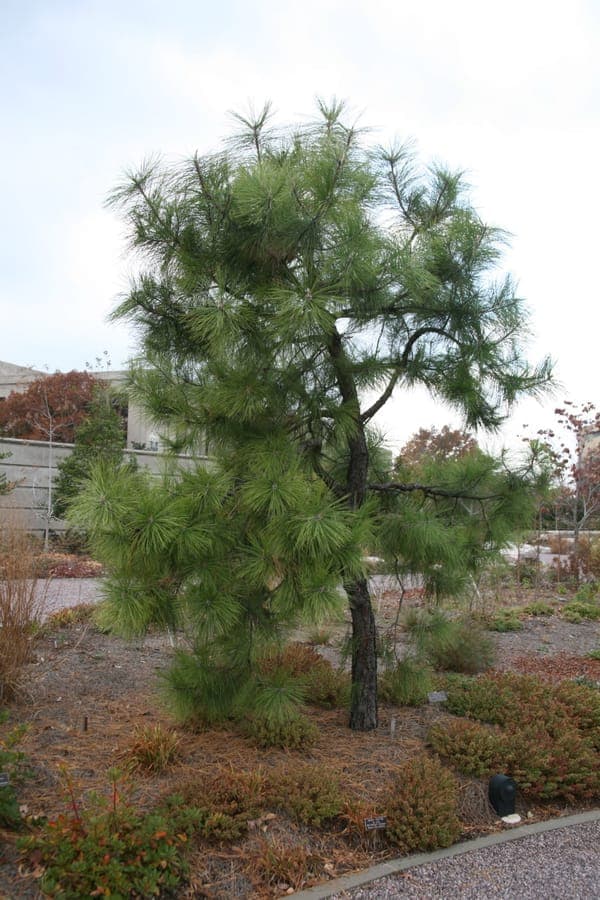
Cliff1066 at Flickr / CC BY 2.0, via Wikimedia Commons
Pinus serotina: complete guide to the marsh pine
Pinus serotina
¿Quieres ver Pinus serotina: complete guide to the marsh pine en tu jardín?
1 minuto, sin tarjeta de crédito
Overview
Pinus serotina, the marsh pine, is an impressive North American conifer native to the eastern United States, particularly in moist lowland regions from New Jersey to Florida. This mid-sized to large evergreen tree belongs to the Pinaceae family and stands out for its exceptional ability to thrive in wet conditions where many other trees fail. The name 'serotina' references the delayed cone maturation, setting this species apart in the dendrochronological landscape.
What makes this pine remarkable is its resilience and adaptability. Pinus serotina grows at a slow to moderate pace, initially forming a handsome pyramidal shape that becomes more columnar with age. In its natural habitat, it flourishes in acid-neutral, heavy soils and tolerates various stress factors that would damage many other conifers. For gardeners and landscape architects seeking a sustainable, stress-resistant tree for problem sites, Pinus serotina is a prime candidate.
Appearance and Bloom
Pinus serotina exhibits classic pine needle characteristics: long, fine needles arranged in bundles of two or three (fascicles). The needles are a fresh green color with a silvery-gray tint, especially visible on new growth. Needles measure approximately 7-10 cm in length, giving the tree a refined, almost woolly appearance.
The bark is characteristically reddish-brown to grayish-brown, developing deep vertical furrows on older trees that expose protective tissues. This pattern provides winter interest, especially when weak winter sun shines at low angles. Male flowers appear as small, inconspicuous yellow strobili at the base of young shoots. Female cones are far more prominent: beginning purple-red, they slowly ripen over two to three seasons into grayish-brown cones measuring about 6-7 cm long.
Cone maturation takes considerably longer than many other pine species, hence the serotina designation. This natural patience adds bird food to winter landscapes, as finches and other songbirds eagerly extract seeds from these cones.
Ideal Location
Pinus serotina performs best in locations receiving full sunlight for most of the day, minimum 6-8 hours of direct sun exposure. In shadier situations, the tree grows more slowly and foliage becomes less dense. The tree tolerates light shade if other conditions are optimal.
Regarding site selection, moisture tolerance is this pine's strong suit. Pinus serotina thrives in both wet, marshy soils and moderately dry conditions, making it ideal for challenging locations. Better still: this tree tolerates seasonal fluctuations in groundwater levels and can withstand brief flooding episodes.
Wood characteristics also determine planting site. In gardens with heavy or alkaline soil, Pinus serotina may perform less vigorously. A location with stable year-round sun warmth helps prevent frost damage and wind injury to young specimens. Protective windbreak situations are ideal for newly planted trees.
Soil
Pinus serotina displays remarkable flexibility with soil types, performing optimally in acidic soils with pH between 4.8 and 6.8. Lean to moderately fertile soils work well, provided drainage accommodates moisture availability. Heavy clay can cause issues without adequate aeration. The tree tolerates clay and loam better than many other conifers, especially if soils receive regular incorporation of organic matter.
Organic matter in soil is beneficial. An annual topping with 5-7 cm of processed compost or pine needle litter around the root zone helps moisture retention and promotes healthy soil environment. Drainage improvements are typically unnecessary unless you have extremely heavy clay; acidifying heavy soils with sulfate can help in alkaline conditions.
Compaction tolerance test: Pinus serotina tolerates compacted soils reasonably well (such as around new construction), though slight loosening promotes better growth.
Diseño gratis
¿Quieres ver Pinus serotina: complete guide to the marsh pine en tu jardín? Crea un diseño gratis ahora.
Watering
During the first growing season after planting, regular water is essential. Young specimens benefit from approximately 2-3 inches (5-7.5 cm) of water weekly, distributed over two irrigation sessions. Once established (after 12-18 months), Pinus serotina is quite drought-tolerant, though it still responds well to regular moisture management.
Mature trees require less supplemental water. During dry periods lasting longer than two weeks without rain, supplementation can be helpful, especially for trees in full sun. A helpful guideline: keep soil moist to 4-6 inches (10-15 cm) deep, but never waterlogged.
Mulching is highly beneficial. A 3-4 inch (7.5-10 cm) layer of wood chips or pine needle litter around the root zone helps retain moisture and moderates soil temperature. Leave 3-4 inches (7.5-10 cm) clear around the trunk to prevent rot.
Pruning
Pinus serotina naturally develops an attractive form and requires minimal pruning. The tree forms a strong central leader and symmetrical sides by itself. Light pruning work focuses mainly on removing dead, damaged, or diseased branches.
Pruning is best done in late winter or early spring, just before new growth begins. Avoid pruning in fall or early winter, which can increase frost damage susceptibility. If heavy formative pruning is needed (rarely), conduct it gradually over multiple seasons.
Gently cutting back branch tips may be desired if lower sides droop excessively and block sightlines. Branches can be gently guided upward using ties without pruning.
Maintenance Calendar
Spring (March-May): Check new growth for pine borer and pine beetle damage. Apply feeding if needed (rarely). Replenish mulch to ideal thickness.
Summer (June-August): Water during dry periods. Regularly check for insect damage, especially pine scale insects. Prune dead branches as needed.
Fall (September-October): Reddish needle drop is normal; no intervention needed. Prepare for winter by tying hanging branches against heavy snow.
Winter (November-February): Inspect for frost damage, especially on sun-facing surfaces after cold snaps. Prune damaged branches. In snow-heavy regions, periodically remove heavy snow accumulation from branches.
Winter Hardiness
Pinus serotina is extremely winter hardy, thriving in USDA hardiness zones 7 through 9, with some specimens overwintering in cold zone 6. The tree hails from a region with cold winters, so it tolerates substantial frost periods. Very young specimens may be frost-sensitive in their first winter; protective windbreaks are beneficial.
Snow damage is less problematic for this species than many other conifers, as branches remain somewhat flexible. Heavy ice accumulation, however, can cause injury; carefully removing ice (not shaking!) helps prevent damage.
Companion Plants
Pinus serotina combines well with other acid-loving conifers such as Tsuga caroliniana (Carolina hemlock) and Picea pungens (Colorado spruce). Complementary shrubs include Ilex verticillata (Winterberry) for winter bird food, Kalmia latifolia (Mountain laurel) for shade provision, and Vaccinium corymbosum (Highbush blueberry) for fruit masses.
Low-maintenance groundcovers like Carex elata (Bowles' Sedge) and Festuca glauca (Blue fescue) add understory character without competing. For early-season ornamental interest, Helleborus niger (Christmas rose) and Galanthus nivalis (Snowdrop) bloom beneath the canopy.
Closing
Pinus serotina deserves recognition as a versatile, hardy conifer for British and European gardens, especially where problem soil or moist conditions exist. With its patience, low-maintenance natural form, and winter beauty, this marsh pine offers sustainable value across decades. Visit gardenworld.app for further inspiration with conifers and hardy evergreens. Find your local garden center for quality plant material and expert advice on your garden project.
Whether you seek an unobtrusive tree for a difficult spot or a majestic conifer for your garden silhouette, Pinus serotina delivers both. Start planning your garden transformation today on gardenworld.app.
¿Quieres ver Pinus serotina: complete guide to the marsh pine en tu jardín? Crea un diseño gratis ahora.
Sube una foto, elige un estilo y obtén un diseño fotorrealista con lista de plantas en menos de un minuto.
Más de 10.000 jardines diseñados
Sin tarjeta de crédito


Plantas similares
Abies delavayi: complete guide
Abies delavayi
Delavayi fir is an elegant, medium-sized coniferous tree from the Pinaceae family with dark green needles. This Asian evergreen is perfect for alpine gardens and large landscapes.
Taiwan fir: complete guide
Abies kawakamii
Discover the magnificent Taiwan fir, a rare evergreen conifer from Taiwan's mountain regions. Learn growth requirements, care tips, and why this beautiful tree is perfect for collectors of unique garden specimens.
Farges fir: complete guide
Abies fargesii
Discover the majestic Farges fir, an impressive conifer from China's mountains with elegant foliage and columnar form. Ideal for large gardens.