
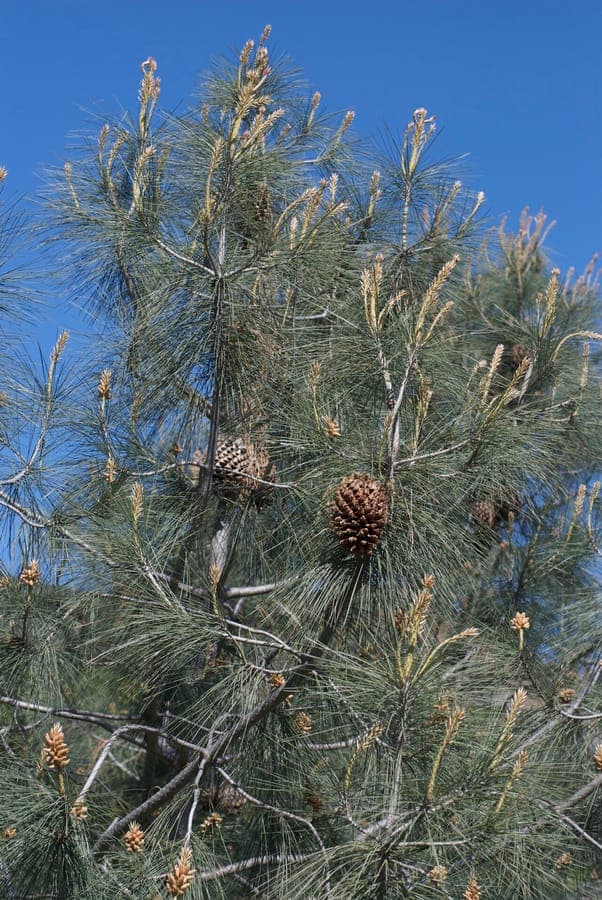
Eric in SF / CC BY-SA 3.0, via Wikimedia Commons
Pinus sabiniana: complete guide
Pinus sabiniana
¿Quieres ver Pinus sabiniana: complete guide en tu jardín?
1 minuto, sin tarjeta de crédito
Overview
Pinus sabiniana, commonly called Foothill Pine, Gray Pine, or Digger Pine, is a distinctive conifer native to the foothill regions of California. This slow-growing tree is perfectly adapted to the dry mountain climates of California and distinguishes itself through gray-green needles, an open crown structure, and large, resinous pine nuts.
This tree differs markedly from conventional pines due to its sparse needles and open crown, creating a unique, sculptural form that weathers beautifully. With extreme drought tolerance and winter hardiness, this tree is ideal for xeriscape gardens and hot, arid regions worldwide.
Appearance and Bloom
The needles are gray-green to blue-green, moderately long, and arranged in bundles of three with distinctive spreading. This gives the tree its characteristic airy, open appearance. The bark is gray-brown and deeply fissured. The branch structure is strong but naturally irregular.
The tree produces large, resinous cones containing substantial seeds. These cones are valuable to wildlife and were an important food source for indigenous peoples. Cones frequently persist on the tree for several years, adding architectural interest.
Ideal Location
Pinus sabiniana thrives in full sun on dry, well-drained sites. This tree particularly suits warm, arid mountain slopes and foothill regions. Position it where it receives maximum direct sunlight.
The tree tolerates wind excellently and grows even on exposed sites. For best growth, select locations without excessive shade or water stagnation. The tree is ideal for challenging hillside locations and difficult terrain.
Diseño gratis
¿Quieres ver Pinus sabiniana: complete guide en tu jardín? Crea un diseño gratis ahora.
Soil
Foothill Pine grows best on sandy, rocky soils with pH values between 6.0 and 8.3. The tree is remarkably tolerant of lean soils and grows even on steep slopes with minimal nutrient availability. Excellent drainage is essential.
This tree's preference for poor soils means less site preparation is needed than many trees. Plantings on hillsides and difficult terrain frequently prove exceptionally successful with minimal input.
Watering
Once established, Pinus sabiniana requires practically no supplemental watering except during extreme drought. Young trees need regular watering their first two growing seasons. Mature trees rely entirely on natural rainfall.
Watering must be carefully managed - excessive moisture invites problems. This tree thrives on benign neglect once rooted, making it perfect for water-wise landscapes.
Pruning
Minimal pruning is needed. The tree naturally develops its characteristic open form. Remove only dead or severely damaged branches. The tree naturally maintains attractive appearance.
Maintenance Calendar
Spring: Inspect for winter damage, assess branch structure. Summer: No supplemental care needed for established trees. Autumn: Minimal intervention. Winter: No special requirements in most climates.
Winter Hardiness
Pinus sabiniana is hardy to approximately minus 18 degrees Celsius, suitable for USDA zones 6 through 9. The tree thrives in many cold winter situations and resists freeze-thaw cycles well.
Companion Plants
Combine with other dry-region plants like Pilosella peleteriana, Pinus monophylla, and low-growing succulents. The open form provides ample space for underplanting with complementary species.
Closing Thoughts
Pinus sabiniana is an excellent choice for warm, dry regions and xeriscape designs. The tree offers years of distinctive beauty with minimal care. For warm, dry landscape design, explore gardenworld.app/en for professional compositions featuring California natives and drought-tolerant species.
¿Quieres ver Pinus sabiniana: complete guide en tu jardín? Crea un diseño gratis ahora.
Sube una foto, elige un estilo y obtén un diseño fotorrealista con lista de plantas en menos de un minuto.
Más de 10.000 jardines diseñados
Sin tarjeta de crédito


Plantas similares
Abies delavayi: complete guide
Abies delavayi
Delavayi fir is an elegant, medium-sized coniferous tree from the Pinaceae family with dark green needles. This Asian evergreen is perfect for alpine gardens and large landscapes.
Taiwan fir: complete guide
Abies kawakamii
Discover the magnificent Taiwan fir, a rare evergreen conifer from Taiwan's mountain regions. Learn growth requirements, care tips, and why this beautiful tree is perfect for collectors of unique garden specimens.
Farges fir: complete guide
Abies fargesii
Discover the majestic Farges fir, an impressive conifer from China's mountains with elegant foliage and columnar form. Ideal for large gardens.