
Stickpen / Public domain, via Wikimedia Commons
Four-needle pinyon: complete guide
Pinus quadrifolia
¿Quieres ver Four-needle pinyon: complete guide en tu jardín?
1 minuto, sin tarjeta de crédito
Overview
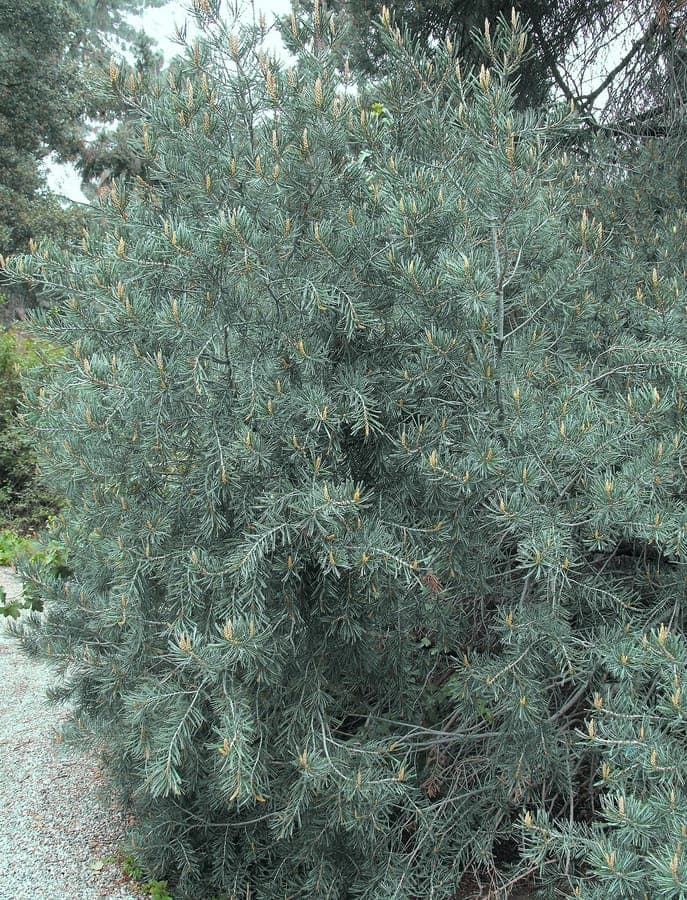
The four-needle pinyon (Pinus quadrifolia), also called Parry pine or nut pine, is a slow-growing conifer from southern California and northern Mexico. This unique tree is characterized by its distinctive four-needle bundles (four needles per fascicle instead of two or three). With its compact growth and rich green needles, it makes a beautiful addition to dry climate gardens.
Appearance and bloom
The four-needle pinyon grows as a low tree or large shrub, usually 5-10 meters tall. The plant has a compact, densely branched form with glossy green, short needles in bundles of four. The seed cones are small, about 4-6 cm long, and contain nutritious seeds (pine nuts) highly valued for food.
Ideal location
This pinyon thrives in a sunny location with direct light, minimum 6-8 hours daily. The plant is extremely drought-tolerant and excels in arid to semi-arid climates. It can also grow in more temperate climates if well-draining.
Soil
The four-needle pinyon grows in a broad range of soil types, from sandy to limestone-based. Well-draining soil is essential; the plant cannot tolerate waterlogging. The plant adapts to nutrient-poor soil, an advantage for marginal lands.
Diseño gratis
¿Quieres ver Four-needle pinyon: complete guide en tu jardín? Crea un diseño gratis ahora.
Watering
Once established, this tree is extremely drought-tolerant and requires minimal watering. In arid climates, supplemental water helps during the first growing season until well-rooted. After that, rainfall usually suffices. Excessive moisture is damaging.
Pruning
Minimal pruning is required. The plant grows in natural, compact form. Only dead or damaged branches need removal; heavy pruning is not recommended.
Maintenance calendar
May-June: Monitor young growth; water in dry periods if needed. July-August: Minimal care; plant is drought-tolerant. September-October: Seed cones ripen; birds enjoy the nuts. November-March: Dormancy; no special care needed.
Winter hardiness
The four-needle pinyon is moderately hardy in temperate climates, down to about -10C. In very cold regions, protection may be needed. In warm, dry areas, it thrives.
Companion plants
This pinyon works well in dry climate garden arrangements with other xerophytic (drought-tolerant) plants. Combine with agave, yucca, rock geranium, or other desert plants. Avoid water-hungry plants as neighbors.
Closing remarks
The four-needle pinyon is a slow-growing heritage plant ideal for dry climate landscapes. With its unique four-needle foliage, compact form, and nutritious seeds, it offers year-round interest. In the right climate, this is a reliable, low-maintenance choice.
Find premium four-needle pinyon specimens at gardenworld.app for dry climate landscapes.
¿Quieres ver Four-needle pinyon: complete guide en tu jardín? Crea un diseño gratis ahora.
Sube una foto, elige un estilo y obtén un diseño fotorrealista con lista de plantas en menos de un minuto.
Más de 10.000 jardines diseñados
Sin tarjeta de crédito


Plantas similares
Abies delavayi: complete guide
Abies delavayi
Delavayi fir is an elegant, medium-sized coniferous tree from the Pinaceae family with dark green needles. This Asian evergreen is perfect for alpine gardens and large landscapes.
Taiwan fir: complete guide
Abies kawakamii
Discover the magnificent Taiwan fir, a rare evergreen conifer from Taiwan's mountain regions. Learn growth requirements, care tips, and why this beautiful tree is perfect for collectors of unique garden specimens.
Farges fir: complete guide
Abies fargesii
Discover the majestic Farges fir, an impressive conifer from China's mountains with elegant foliage and columnar form. Ideal for large gardens.