
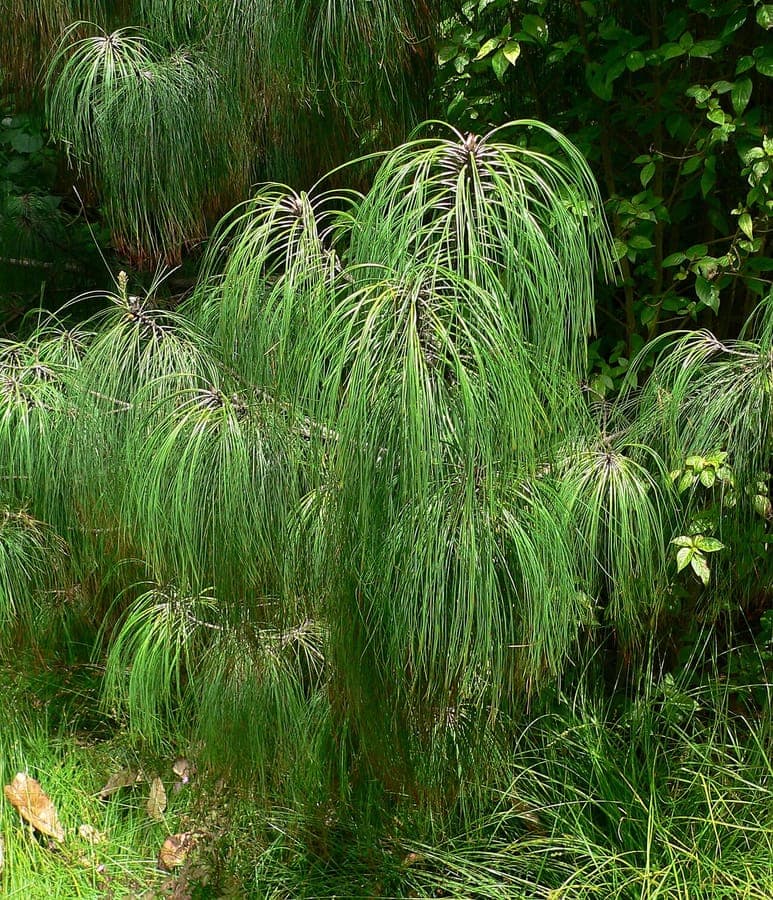
Stan Shebs / CC BY-SA 3.0, via Wikimedia Commons
Pinus pseudostrobus: complete guide
Pinus pseudostrobus
¿Quieres ver Pinus pseudostrobus: complete guide en tu jardín?
1 minuto, sin tarjeta de crédito
Overview
Pinus pseudostrobus, called False Weymouth pine or Smooth-barked Mexican pine, is a fascinating mountain pine from Mexico to Honduras. This slow-growing conifer stands out with its extremely long, drooping needles that elegantly cascade downward creating a graceful weeping effect. Though relatively unknown in temperate zones, this tree offers architectural elegance for larger gardens.
The name pseudostrobus refers to its resemblance to Weymouth pine (Pinus strobus), especially in its long needle bundles. In native habitat the tree reaches 50 meters; in cultivation usually 8-20 meters. The smooth, pale bark distinctly sets it apart from most other pines.
Appearance and Growth
Pinus pseudostrobus forms a slender pyramidal to columnar form with gracefully drooping branches. Needles are extremely long 20-30 cm, thin and flexible, arranged in bundles of five (pentaciculate). They are grey-green to dark green and through their length and drooping create a very airy effect.
Young branches are sometimes greenish to light green. Bark is smooth, grey-white to light grey, contrasting strongly with dark-green needles. This smooth character gives the tree different appearance than typical rough-barked pines. Cones are brown and elongated, 15-20 cm long.
Ideal Location
Pinus pseudostrobus loves full sun to light half shade. Ensure at least six hours direct sunlight daily. In partial shade it grows, though slowly, but forms loose structure.
Wind is not harmful. The flexible needles bend with wind without breaking. The tree grows elegantly even in windy locations and suits coastal or mountain settings. Shelter helps compact growth but is not essential.
Soil Requirements
Pinus pseudostrobus thrives on most soil types, from acidic to alkaline, sandy to clay. Naturally it grows on lean mountain soils. In cultivation it accepts fertile garden soil if well-drained. Heavy clay must be lightened with sand and gravel.
The plant prefers slightly acidic to neutral soils (pH 6.0-7.0). For container culture use seed-sowing mix or conifer-specific potting compost with good drainage.
Diseño gratis
¿Quieres ver Pinus pseudostrobus: complete guide en tu jardín? Crea un diseño gratis ahora.
Watering
Once established (after three years growth), Pinus pseudostrobus requires very little maintenance water. Rainfall suffices. During extreme droughts lasting more than eight weeks, supplementary water can be helpful.
During the first growing season provide regular water to keep soil moderately moist. Keep container culture moderately moist, never waterlogged. Wet feet damage the plant permanently.
Pruning
Pinus pseudostrobus requires virtually no pruning. Its elegant drooping form develops naturally. Remove only dead branches or damaged shoots in winter. More compact form can be achieved through careful pinching of young growth.
Heavy cutting back must be avoided.
Maintenance Calendar
January-March: Inspection, remove dead branches. April-May: Young growth begins, water if dry. June-September: Active growth season. October-November: Growth slows. December: Dormancy, no maintenance needed.
Winter Hardiness
Pinus pseudostrobus is hardy to approximately -15 degrees Celsius, sometimes to -18 degrees in continental climates. Young plants can be damaged in very severe winters. Protection with burlap wrapping in the first year is beneficial.
Early spring frost damage to young growth is possible but not fatal. The tree usually recovers.
Companion Plants
False Weymouth pine combines beautifully with other long-needled conifers: Pinus montezumae, Pinus patula, Cedrus libani. Also attractive in groupings with other fine-textured plants like ornamental grasses and delicate shrubs. Underplanting of shade-tolerant flora is possible.
Special Uses
This pine excels as a sculptural accent in large gardens - the drooping branches create striking architectural effect. Also suitable as windbreak planting because the flexible needles absorb wind without breaking. In landscape work it provides interesting vertical architecture.
Closing
When seeking a tree with unique, elegant architecture and graceful drooping form, Pinus pseudostrobus is an excellent choice. Though slow-growing, it provides sculptural interest for decades. In most regions seedlings are available through specialized conifer nurseries.
Check large tree nurseries for availability. Plant in spring. Enjoy a tree with tropical appeal in a temperate setting!
¿Quieres ver Pinus pseudostrobus: complete guide en tu jardín? Crea un diseño gratis ahora.
Sube una foto, elige un estilo y obtén un diseño fotorrealista con lista de plantas en menos de un minuto.
Más de 10.000 jardines diseñados
Sin tarjeta de crédito


Plantas similares
Abies delavayi: complete guide
Abies delavayi
Delavayi fir is an elegant, medium-sized coniferous tree from the Pinaceae family with dark green needles. This Asian evergreen is perfect for alpine gardens and large landscapes.
Taiwan fir: complete guide
Abies kawakamii
Discover the magnificent Taiwan fir, a rare evergreen conifer from Taiwan's mountain regions. Learn growth requirements, care tips, and why this beautiful tree is perfect for collectors of unique garden specimens.
Farges fir: complete guide
Abies fargesii
Discover the majestic Farges fir, an impressive conifer from China's mountains with elegant foliage and columnar form. Ideal for large gardens.