
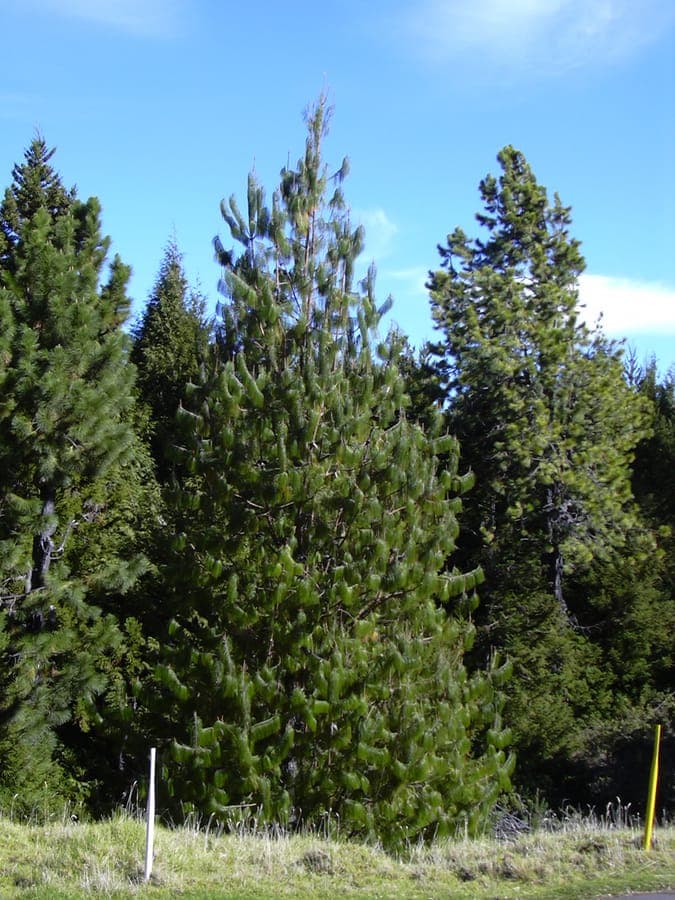
Forest & Kim Starr / CC BY 3.0, via Wikimedia Commons
Pinus patula: complete guide
Pinus patula
¿Quieres ver Pinus patula: complete guide en tu jardín?
1 minuto, sin tarjeta de crédito
Overview
Pinus patula, commonly called Jelecote Pine or Mexican Weeping Pine, is an elegant conifer native to the mountain regions of central and southern Mexico. The name 'patula' refers to the spreading arrangement of needles, which hang as if drooping rather than standing upright. This unique characteristic gives the tree its distinctive weeping appearance.
This tree is widely planted in subtropical and Mediterranean climates throughout the world. The tree combines elegance with remarkable resilience, making it perfect for gardeners seeking a distinguished specimen that stands out from conventional plantings.
Appearance and Bloom
The needles of Pinus patula are long, slender, and hang gracefully downward, giving the tree its characteristic and immediately recognizable appearance. This drooping needle pattern distinguishes this species instantly from other pines. The branches are green to gray-green, creating a light, airy crown.
The tree produces elongated cones, initially green, maturing to red-brown as they ripen. These cones typically occur in clusters, contributing to the tree's ornamental value by adding structure and texture throughout the canopy.
Ideal Location
Pinus patula thrives in full sun on sheltered sites. The tree tolerates partial shade but displays strongest form and ornamental value in complete sunlight. Position the tree where it gains protection from strong winds that might damage its elegant branches.
This tree is ideal for warm, moderately moist climates. In Mediterranean zones, subtropical gardens, and temperate regions with warm summers, it performs excellently. However, avoid extreme aridity - this pine favors moister conditions than some other Mexican pines.
Soil
Pinus patula thrives on fertile, well-drained soils. Sandy loam through heavy clay soils become suitable with improvements. Ideal pH ranges from neutral to slightly acidic (6.0 to 7.5). Incorporate compost or aged manure before planting to enrich the growing medium.
Nutrient-rich soil promotes vigorous growth and abundant fruiting. This makes it suitable for gardens receiving regular moisture rather than xeriscaping designs. The tree responds well to soil preparation and fertility management.
Diseño gratis
¿Quieres ver Pinus patula: complete guide en tu jardín? Crea un diseño gratis ahora.
Watering
Regular watering is essential during the first growing season. Keep soil moist but not waterlogged. Mature trees are moderately drought-tolerant but grow best with regular moisture. In hot, dry summers, supplemental watering becomes necessary.
Generally, this tree performs best with more consistent moisture than extreme xeriscape plants. Plan irrigation accordingly to maintain healthy growth and ornamental display throughout the season.
Pruning
Minimal pruning is needed for Pinus patula. The tree naturally develops pleasant form without regular shaping. Remove dead branches or thin lightly if the crown becomes too dense for visual preference.
Young trees can be gently guided for improved form, but the natural drooping character should be preserved. Avoid excessive pruning that would destroy the tree's distinctive weeping habit.
Maintenance Calendar
Spring: Inspect for winter damage, apply balanced fertilizer. Summer: Water regularly, monitor for pests and diseases. Autumn: Reduce watering as season cools. Winter: Protect in cold regions from extreme temperature swings.
Winter Hardiness
Pinus patula is less cold-hardy than many other pines, suitable for USDA zones 8 through 10. The tree can suffer damage below minus 10 degrees Celsius. In cold climates, it requires protection or must be grown in containers overwintered indoors.
Companion Plants
Combine this tree with Mediterranean shrubs, lavender, or other warmth-loving plants. The drooping needles provide beautiful contrast with upright or shrubby companions. Groundcovers beneath the tree create additional textural layers.
Closing Thoughts
Pinus patula is a beautiful choice for warm, sheltered gardens in Mediterranean or subtropical zones. Its elegantly drooping needles provide years of visual interest and distinctive character. For gardening in warmer climates, explore gardenworld.app/en for professional designs featuring Mediterranean specimens and warm-climate plantings.
¿Quieres ver Pinus patula: complete guide en tu jardín? Crea un diseño gratis ahora.
Sube una foto, elige un estilo y obtén un diseño fotorrealista con lista de plantas en menos de un minuto.
Más de 10.000 jardines diseñados
Sin tarjeta de crédito


Plantas similares
Abies delavayi: complete guide
Abies delavayi
Delavayi fir is an elegant, medium-sized coniferous tree from the Pinaceae family with dark green needles. This Asian evergreen is perfect for alpine gardens and large landscapes.
Taiwan fir: complete guide
Abies kawakamii
Discover the magnificent Taiwan fir, a rare evergreen conifer from Taiwan's mountain regions. Learn growth requirements, care tips, and why this beautiful tree is perfect for collectors of unique garden specimens.
Farges fir: complete guide
Abies fargesii
Discover the majestic Farges fir, an impressive conifer from China's mountains with elegant foliage and columnar form. Ideal for large gardens.