
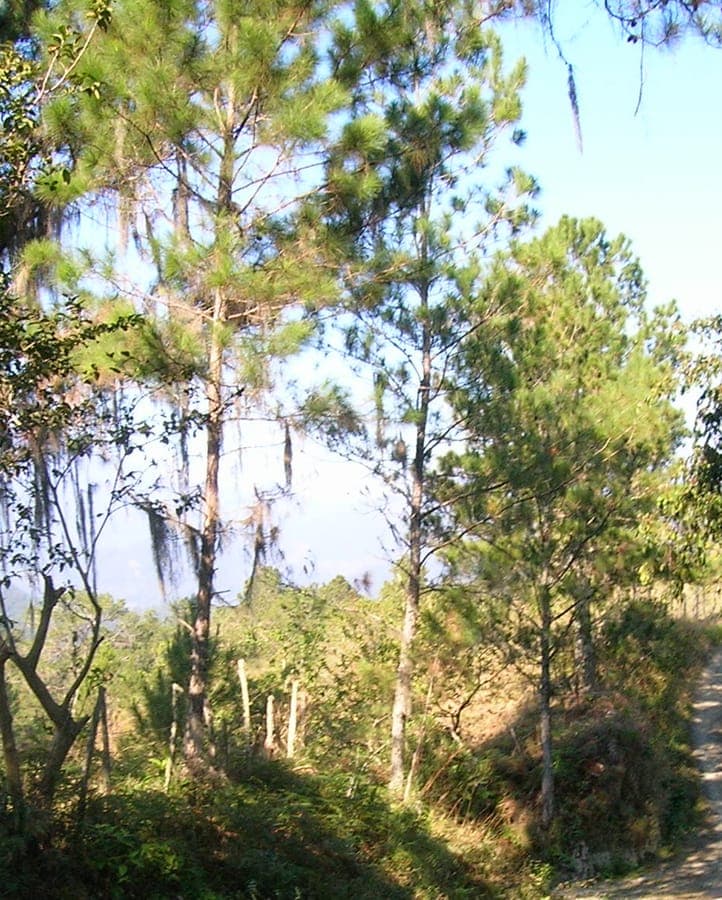
Ken_Mayer on Flickr / CC BY 2.0, via Wikimedia Commons
West Indian pine: complete guide
Pinus occidentalis
¿Quieres ver West Indian pine: complete guide en tu jardín?
1 minuto, sin tarjeta de crédito
Overview
The West Indian pine, scientifically known as Pinus occidentalis, is an impressive tropical conifer tree originating from the islands of Hispaniola (Haiti and Dominican Republic) in the Caribbean region. This special species is endemic to this island-rich area and is known as a highly valued timber tree. Reaching heights of over 30 meters in its natural habitat, it forms majestic trees that are very important to the regional ecosystem.
The West Indian pine is a highly special plant for gardeners in temperate climates, especially in protected environments such as warm greenhouses or subtropical gardens. In its natural environment, it forms an essential part of the mountainous forest landscape of Hispaniola. The plant is very valuable from an ecological perspective.
In cultivation, this species requires great care and warmth. This tree is ideal for plant enthusiasts who want to experiment with tropical species in protected conditions.
Appearance and growth
The West Indian pine is a large, upright coniferous tree with greenish-brown bark. The needles are arranged in bundles of three (trichofoore) and are green, approximately 12 to 20 centimeters long. The crown of the tree is often somewhat pyramidal and becomes wider with age.
The pine cones are quite large, approximately 8 to 12 centimeters long, and have a brown color. These cones usually appear on two-year-old twigs and are very decorative. Seed dispersal is by wind and some birds. In cultivation, young plants initially grow fairly quickly, especially in tropical and subtropical regions. In temperate climates, growth can be slower. The plant can become very large under ideal conditions.
Ideal location
The West Indian pine prefers warm, sunny locations with a certain degree of humidity. In its natural habitat, it grows on mountain slopes at high elevations where cloud and mist formation is frequent. This distinguishes it from many other pine species. In temperature-controlled countries, it can only grow outdoors in the warmest regions (subtropical climates). In colder regions, protected cultivation in a warm greenhouse is required. The plant prefers full sun.
Soil
The West Indian pine grows best in well-drained, nutrient-rich soil. In its natural habitat, it grows on volcanic and mountain soils with relatively much organic material. A soil pH between 5.5 and 7.0 is ideal. The plant is quite flexible regarding soil type, as long as drainage is good. In pot cultivation, a quality potting soil for conifers is preferred. A mixture of garden soil and fine tree bark gives good results. Feeding is important.
Diseño gratis
¿Quieres ver West Indian pine: complete guide en tu jardín? Crea un diseño gratis ahora.
Watering
The West Indian pine needs regular, moderate watering. In its natural habitat, it benefits from regular rainfall distribution. In cultivation, it's best to maintain constantly moist, but not saturated soil moisture. In pot cultivation, you need to be more careful with watering. Too much water can lead to root rot. Ensure water can drain well. In drier seasons, additional watering may be necessary, especially for young plants. With protected cultivation, it is important to maintain good air humidity. This can be achieved by regular spraying and ensuring adequate ventilation.
Pruning
The West Indian pine requires minimal artificial pruning if it grows healthily. In pot cultivation, you can gently shape it, but this should be minimal. Only remove dead or damaged wood. In very young stages, light pruning can help form a nice crown structure. However, this must be done carefully, as conifers can be sensitive to heavy pruning wounds.
Maintenance calendar
March-April: Plant young specimens or repot larger examples. Provide regular fertilization. May-August: Period of strong growth. Water regularly and ensure sufficient fertilization. September-October: Growth slows. Gradually reduce watering. November-February: Plant dormancy, especially in temperate climates. Minimal watering and fertilization.
Winter hardiness
The West Indian pine is frost-sensitive and can only tolerate brief exposure to temperatures below freezing. In regions with harsh winters, the plant must be protected in a warm greenhouse. In warmer regions (Mediterranean and south coast areas), it can grow outdoors if it receives wind protection. In general, it is considered suitable for USDA zones 10 to 11.
Companion plants
The West Indian pine is particularly interesting for creating a tropical or exotic atmosphere. It combines well with other tropical conifers, subtropical shrubs, palm trees, and tropical climbers.
Conclusion
The West Indian pine is a remarkable plant for specialized gardeners who want to create tropical atmosphere. With its large size and majestic form, it makes a true statement in any collection. Professional garden design can help integrate this exotic gem optimally.
¿Quieres ver West Indian pine: complete guide en tu jardín? Crea un diseño gratis ahora.
Sube una foto, elige un estilo y obtén un diseño fotorrealista con lista de plantas en menos de un minuto.
Más de 10.000 jardines diseñados
Sin tarjeta de crédito


Plantas similares
Abies delavayi: complete guide
Abies delavayi
Delavayi fir is an elegant, medium-sized coniferous tree from the Pinaceae family with dark green needles. This Asian evergreen is perfect for alpine gardens and large landscapes.
Taiwan fir: complete guide
Abies kawakamii
Discover the magnificent Taiwan fir, a rare evergreen conifer from Taiwan's mountain regions. Learn growth requirements, care tips, and why this beautiful tree is perfect for collectors of unique garden specimens.
Farges fir: complete guide
Abies fargesii
Discover the majestic Farges fir, an impressive conifer from China's mountains with elegant foliage and columnar form. Ideal for large gardens.