
Evangele19 / CC BY-SA 3.0, via Wikimedia Commons
Pinus muricata: complete guide
Pinus muricata
¿Quieres ver Pinus muricata: complete guide en tu jardín?
1 minuto, sin tarjeta de crédito
Overview
Pinus muricata, known as Bishop Pine or Prickly-cone Pine, is a fascinating coastal conifer native to California and northern Mexico. This distinctive pine naturally inhabits coastal areas where it has adapted to salt-laden, windy environments. With its dark green foliage and dense, compact crown, this tree offers unique interest for gardeners seeking something extraordinary.
Appearance and growth character
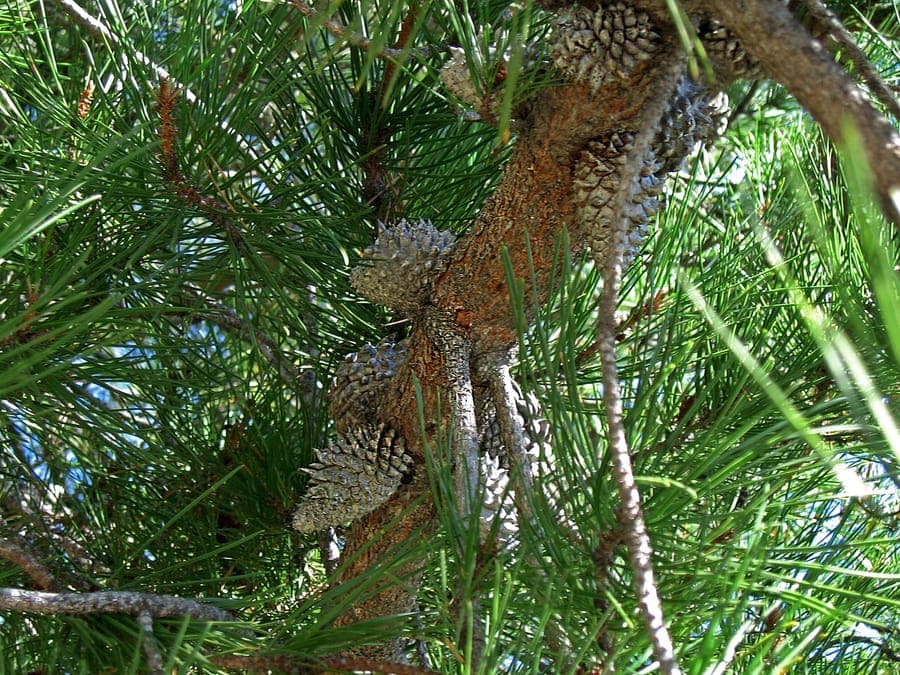
Bishop Pine forms a dense, compact pyramidal crown with stiff branches. The tree grows to 15-20 meters tall. Needles are dark green, approximately 10-15 cm long, growing in bundles of two. Distinctive are the spiky cones that cling to branches for years, sometimes remaining closed until released by fire or heat. Cones have an irregular shape with spine-like protrusions.
Ideal location
Pinus muricata thrives in full sun. Provide at least 6-8 hours of direct sunlight daily. This tree is exceptionally wind-tolerant and handles strong sea breezes well. Plant in coastal areas or windswept elevated sites. The tree grows well on sloping terrain. Avoid heavily shaded locations. A south or west-facing aspect is ideal.
Soil requirements
Pinus muricata tolerates various soils, including saline soils. A pH of 6.0 to 8.0 is acceptable. The tree grows on lean, dry soils in its native habitat. Ensure good drainage. Heavy clay soils should be amended with sand. Bishop Pine tolerates dry, nutrient-poor soils well.
Diseño gratis
¿Quieres ver Pinus muricata: complete guide en tu jardín? Crea un diseño gratis ahora.
Watering
Water regularly after planting until the tree is well-rooted (first growing season). Thereafter, this tree is very drought-tolerant. During very dry periods, supplemental water helps, especially for young trees. Excessive water is undesirable and causes root problems. The tree tolerates dry, salt-laden air well.
Pruning
Pinus muricata requires minimal pruning. Dead branches can be removed. In young years, light pruning helps promote dense form. Heavy pruning is generally undesirable. The tree naturally assumes a neat shape. Avoid wounding the main stem.
Maintenance calendar
Spring: Growth period, maintain moderate moisture. Summer: Tolerates dryness well, minimal watering. Autumn: Reduce watering, prepare for dormancy. Winter: Dormancy period, keep dry. Annual inspection for pests.
Winter hardiness
Pinus muricata is moderately hardy, tolerating approximately -10 degrees Celsius. In temperate European climates, this may occur in protected locations. In very cold areas, protection is recommended. Wind protection is more important than frost protection. Once established, the tree shows strong wind resilience.
Companion plants
Use along coastlines or in windy gardens. Combine with other coastal natives like rosemary or lavender. Dark green foliage contrasts beautifully with silver-leaved shrubs. Plant as a windbreak for tender plants. Ideal for Mediterranean gardens.
Final thoughts
Pinus muricata is an excellent choice for coastal or windy gardens. With its salt and wind tolerance, this tree serves as both practical and ornamental element. Perfect for gardens near coasts. Plant for long-term wind protection. Available from specialized tree nurseries. Find more inspiration at gardenworld.app/en
¿Quieres ver Pinus muricata: complete guide en tu jardín? Crea un diseño gratis ahora.
Sube una foto, elige un estilo y obtén un diseño fotorrealista con lista de plantas en menos de un minuto.
Más de 10.000 jardines diseñados
Sin tarjeta de crédito


Plantas similares
Abies delavayi: complete guide
Abies delavayi
Delavayi fir is an elegant, medium-sized coniferous tree from the Pinaceae family with dark green needles. This Asian evergreen is perfect for alpine gardens and large landscapes.
Taiwan fir: complete guide
Abies kawakamii
Discover the magnificent Taiwan fir, a rare evergreen conifer from Taiwan's mountain regions. Learn growth requirements, care tips, and why this beautiful tree is perfect for collectors of unique garden specimens.
Farges fir: complete guide
Abies fargesii
Discover the majestic Farges fir, an impressive conifer from China's mountains with elegant foliage and columnar form. Ideal for large gardens.