
en:User:Toiyab / CC BY-SA 3.0, via Wikimedia Commons
Pinus monophylla: complete guide
Pinus monophylla
¿Quieres ver Pinus monophylla: complete guide en tu jardín?
1 minuto, sin tarjeta de crédito
Overview
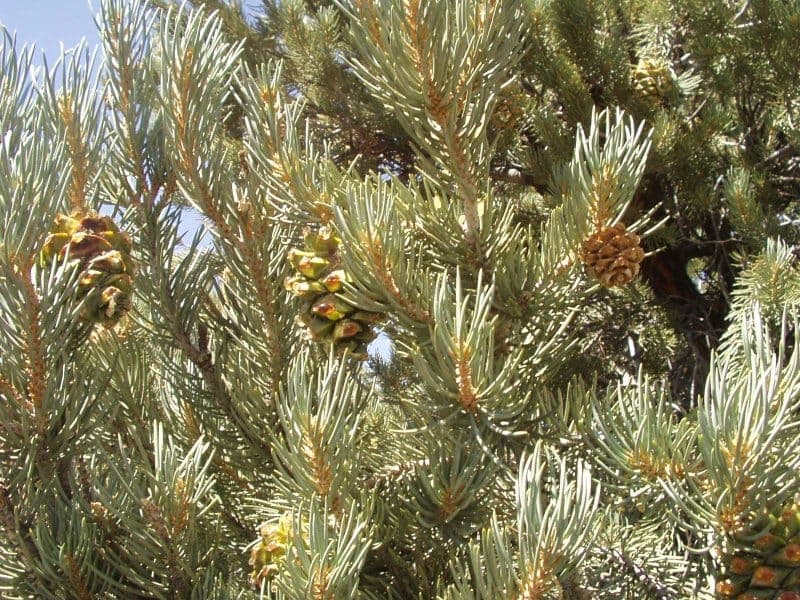
Pinus monophylla, commonly called Singleleaf Pinyon Pine, is a remarkable American conifer inhabiting the dry mountain regions of Arizona, California, Colorado, Idaho, Nevada, Utah, and northwestern Mexico. This exceptional tree is renowned for its unique needles - unlike most pines bearing multiple needles per bundle, this species produces only a single needle per bundle.
This slowly growing yet exceptionally drought-tolerant tree is perfect for gardeners in arid climates seeking sustainable alternatives to water-demanding species. With its maintenance-free character and exotic appearance, this tree adds distinctive appeal to any xeriscape garden.
Appearance and Bloom
The characteristic single needles are thin, blue-green, measuring approximately 2 to 4 centimeters long. The tree displays an open, sparsely branched profile with naturally irregular form, distinguishing it from more symmetrical conifers. The bark is gray to brown and scale-like, becoming deeply furrowed with age.
In spring, male and female flower structures produce small cones developing slowly to mature size with robust brown coloring. These cones contain edible pinyon nuts harvested commercially and used in regional cuisines throughout its native range.
Ideal Location
Pinus monophylla thrives in full sun on dry, well-drained sites. This tree particularly suits xeriscape and drought-tolerant garden designs requiring minimal water input. Position it where it receives maximum direct sunlight throughout the day.
The tree exceptionally tolerates wind and wind-exposed locations. In Mediterranean climates and dry mountain regions, this pine grows without supplemental care. It performs excellently in challenging sites where tender species fail.
Diseño gratis
¿Quieres ver Pinus monophylla: complete guide en tu jardín? Crea un diseño gratis ahora.
Soil
The Singleleaf Pinyon Pine grows best in sandy to rocky soils with pH values between 6.2 and 7.5. The tree tolerates lean soils very well - in fact, it performs best in less fertile sites. Drainage is essential; water-retaining soils must be avoided.
In gardens with clayey soils, add sandy material to improve drainage. Compost or organic matter is not needed and may prove counterproductive in very dry climates where the tree has adapted to nutrient-poor conditions.
Watering
Once established, Pinus monophylla requires practically no supplemental watering outside extreme drought periods. Young trees and seedlings need regular watering their first two growing seasons. Thereafter, mature trees rely entirely on natural rainfall.
Watering must be carefully managed - excessive moisture invites root rot in this drought-adapted species. Err on the side of dryness rather than applying frequent irrigation.
Pruning
Minimal pruning is needed. This tree grows in its natural form without intervention. Remove only dead or severely damaged branches. The tree naturally maintains attractive form.
Maintenance Calendar
Spring: Inspect for winter damage, remove dead branches as needed. Summer: No watering necessary for established specimens. Autumn: Minimal intervention required. Winter: Minimal care in most climates.
Winter Hardiness
Pinus monophylla is hardy to approximately minus 18 degrees Celsius, making it suitable for USDA zones 5 through 9. In regions with extreme cold, windbreak protection benefits young trees during establishment.
Companion Plants
Combine this tree with other arid-region plants like Picea schrenkiana for contrast, Pilosella peleteriana, and low-growing desert species. The unique form provides architectural interest with minimal competition from companion plantings.
Closing Thoughts
Pinus monophylla is an excellent choice for xeriscape gardens and arid climates. The tree is self-sustaining, ecologically sound, and offers years of unconventional beauty. For advice on drought-tolerant garden design, explore gardenworld.app/en for comprehensive compositions featuring water-wise species and sustainable landscaping principles.
¿Quieres ver Pinus monophylla: complete guide en tu jardín? Crea un diseño gratis ahora.
Sube una foto, elige un estilo y obtén un diseño fotorrealista con lista de plantas en menos de un minuto.
Más de 10.000 jardines diseñados
Sin tarjeta de crédito


Plantas similares
Abies delavayi: complete guide
Abies delavayi
Delavayi fir is an elegant, medium-sized coniferous tree from the Pinaceae family with dark green needles. This Asian evergreen is perfect for alpine gardens and large landscapes.
Taiwan fir: complete guide
Abies kawakamii
Discover the magnificent Taiwan fir, a rare evergreen conifer from Taiwan's mountain regions. Learn growth requirements, care tips, and why this beautiful tree is perfect for collectors of unique garden specimens.
Farges fir: complete guide
Abies fargesii
Discover the majestic Farges fir, an impressive conifer from China's mountains with elegant foliage and columnar form. Ideal for large gardens.