
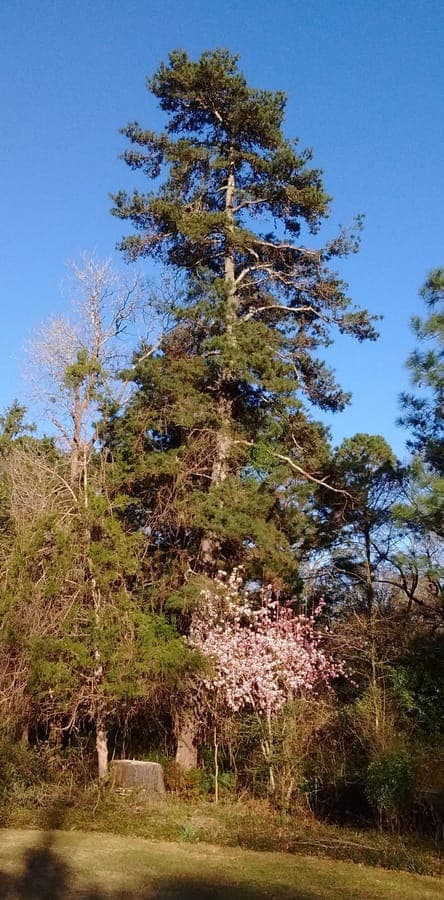
Woodlot / CC BY-SA 4.0, via Wikimedia Commons
Spruce pine: complete guide
Pinus glabra
¿Quieres ver Spruce pine: complete guide en tu jardín?
1 minuto, sin tarjeta de crédito
Overview
The spruce pine (Pinus glabra) is a majestic evergreen tree native to the southeastern United States. This slender, upright-growing tree reaches 30 meters in height and forms an elegant silhouette in the landscape. With its rich green needles and distinctive cones, it is a valuable element for larger gardens and parkland settings.
Appearance and characteristics
Pinus glabra grows as a graceful, upright tree with a narrow, cone-shaped crown. The needles are fine, 7-12 cm long, in bundles of two, and display a soft gray-green color deepening slightly in winter. The bark is smooth and gray. The female cones are yellow-brown, approximately 7 cm long, appearing in the third growing season.
Ideal location
The spruce pine grows best in open, sunny locations with excellent drainage. Avoid dense shade or permanently wet ground. This tree requires full sun for optimal growth. Acidic soils are essential; it does not thrive in calcareous material. Shelter from strong winds helps, though it has moderate wind tolerance.
Soil
Pinus glabra requires acidic, well-draining soil with pH 3.8-5.6. Sandy loamy soils are ideal. Avoid heavy clay or permanent waterlogging. The tree grows in moderate to poor soils without significant humus addition. Drainage is more important than fertility. On clay soils, adding sand and organic matter improves growth.
Watering
Once planted and established, the spruce pine requires minimal watering. In dry summers, water young trees regularly. Established trees become drought-tolerant once the root system deepens. In winter, normal rainfall suffices. Overwatering leads to root rot, so ensure good drainage.
Diseño gratis
¿Quieres ver Spruce pine: complete guide en tu jardín? Crea un diseño gratis ahora.
Pruning
Regular pruning is not necessary. The tree naturally develops an attractive form. Remove only damaged or dead branches. For young trees, removing competing stems helps maintain a strong central leader. Lateral branches need not be pruned; they form the tree's natural shape.
Maintenance calendar
- March-April: Check growth, remove dead wood
- May-June: Active growth, water in dry spells
- July-August: Continued growth, monitoring
- September-October: Growth slows, normal rainfall
- November-February: Dormancy, minimal attention
Winter hardiness
Pinus glabra is hardy to about -15C and can remain outside year-round in the Netherlands and Belgium. The tree tolerates frost and snow without significant damage. However, young plantings may suffer in severe winters; protection in the first year helps.
Companion plants
Underplanting benefits from azaleas, blueberries, evergreen rhododendrons, and acid-loving shrubs like Ilex and Vaccinium. Ground covers such as Helleborus, Liriope, and other acid-loving plants provide good underplanting.
Conclusion
The spruce pine is a beautiful conifer for larger gardens and parkland settings. With its elegant form and longevity, it provides structure and interest for decades. For more information on trees in garden design, visit gardenworld.app/en.
Want to design a beautiful woodland landscape? Discover gardenworld.app/en for professional garden advice!
¿Quieres ver Spruce pine: complete guide en tu jardín? Crea un diseño gratis ahora.
Sube una foto, elige un estilo y obtén un diseño fotorrealista con lista de plantas en menos de un minuto.
Más de 10.000 jardines diseñados
Sin tarjeta de crédito


Plantas similares
Abies delavayi: complete guide
Abies delavayi
Delavayi fir is an elegant, medium-sized coniferous tree from the Pinaceae family with dark green needles. This Asian evergreen is perfect for alpine gardens and large landscapes.
Taiwan fir: complete guide
Abies kawakamii
Discover the magnificent Taiwan fir, a rare evergreen conifer from Taiwan's mountain regions. Learn growth requirements, care tips, and why this beautiful tree is perfect for collectors of unique garden specimens.
Farges fir: complete guide
Abies fargesii
Discover the majestic Farges fir, an impressive conifer from China's mountains with elegant foliage and columnar form. Ideal for large gardens.