
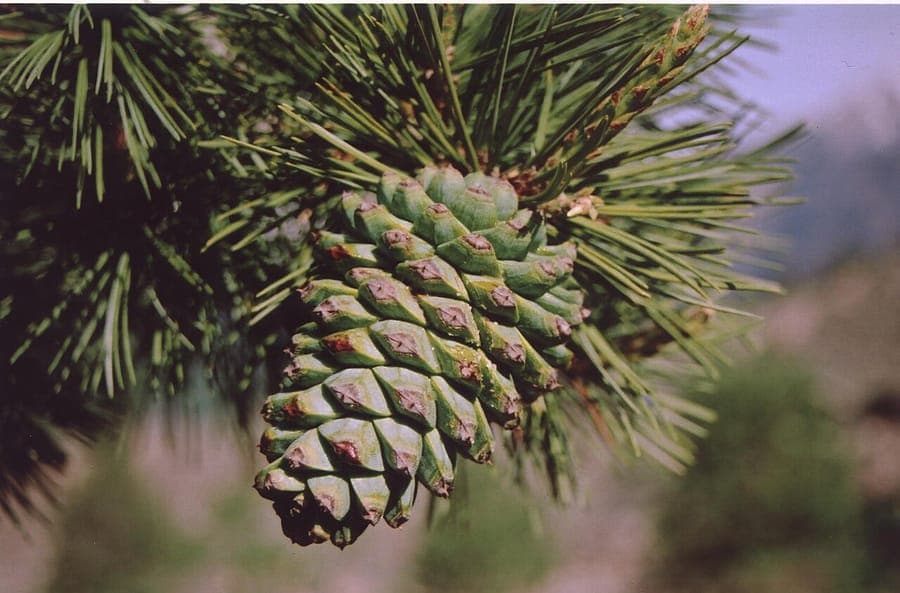
Wikimedia Commons / Public domain, via Wikimedia Commons
Himalayan Pine: complete guide
Pinus gerardiana
¿Quieres ver Himalayan Pine: complete guide en tu jardín?
1 minuto, sin tarjeta de crédito
Overview
The Himalayan pine, scientifically known as Pinus gerardiana, is a remarkable conifer native to the high altitudes of the Himalayan range, stretching from eastern Afghanistan to western China and the Tibetan plateau. This magnificent tree is sometimes called the Chillgoza pine or Gerard's pine, and it offers exceptional ornamental value combined with remarkable hardiness. For garden designers seeking a distinctive structural element with year-round interest, this conifer delivers both visual impact and horticultural reliability.
Appearance and Bloom
The Himalayan pine develops into a medium to large tree with a pyramidal silhouette that becomes more irregular with maturity. The defining feature is its distinctive foliage: long, slender needles in bundles of three, presenting a silvery-green hue that sets it apart from many other pines. The bark transitions from pale to darker gray-brown with age, developing deep fissures that add winter character. The cones are notably large and elongated, contributing additional decorative interest. Spring brings inconspicuous flowers that mature into impressive seed cones by autumn.
Ideal Location
Select a sunny position for your Himalayan pine where it receives at least six to eight hours of direct sunlight daily. Air circulation is crucial for health and vigor, making an exposed site preferable to sheltered corners. Avoid low-lying areas prone to water accumulation or frost pockets where cold air settles. Young trees benefit from some wind protection, though mature specimens prove remarkably resilient to exposed positions.
Soil
The Himalayan pine prefers well-draining soil with neutral to slightly acidic pH. Loose, crumbly earth that allows rapid drainage is essential; compacted, waterlogged conditions inevitably lead to root rot. If your garden soil tends toward clay, incorporate generous quantities of compost or bark mulch to improve drainage structure. This tree thrives in poor soils and requires no special fertility amendments.
Diseño gratis
¿Quieres ver Himalayan Pine: complete guide en tu jardín? Crea un diseño gratis ahora.
Watering
During the establishment phase, regular watering keeps the root zone consistently moist without waterlogging. As the tree matures over two to three years, supplemental irrigation becomes increasingly unnecessary, as this species develops excellent drought tolerance. In regions with regular summer rainfall, additional watering is rarely required once establishment is complete. Avoid overhead watering of the foliage, which can promote fungal diseases.
Pruning
The Himalayan pine naturally develops a neat, pyramidal form requiring minimal intervention. Remove dead, damaged, or obviously diseased branches in late winter or very early spring. Never attempt major structural pruning, as pines respond poorly to drastic cutting. Minor refinement of branch tips is acceptable in summer if shape enhancement is desired.
Maintenance Calendar
Spring: inspect for winter damage, remove any dead wood, begin irrigation as growth resumes. Summer: monitor soil moisture during dry spells, watch for pest activity. Autumn: no special care needed. Winter: this species is completely cold-hardy and requires no protection in temperate climates.
Winter Hardiness
The Himalayan pine demonstrates exceptional cold hardiness, tolerating temperatures far below zero Celsius. Throughout Europe, this tree overwinters without difficulty. Young specimens may appreciate wind protection during extreme winters, but mature trees exhibit remarkable resilience to harsh conditions.
Companion Plants
The Himalayan pine pairs excellently with other conifers such as spruces and true firs, creating layered texture in the landscape. Lower-story evergreen groundcovers like ivy or sarcococca provide effective contrast. Avoid dense understorey plantings directly beneath the canopy, as the tree casts substantial shade and competes vigorously for soil moisture.
Final Thoughts
The Himalayan pine represents an outstanding choice for gardens seeking a distinctive, reliable structural element. Its silvery-green needles, regular form, and impressive stature deliver visual interest across all seasons. Visit gardenworld.app to explore more coniferous options and discover how structural trees transform your garden design. With proper placement and minimal maintenance, this splendid pine will grace your landscape for decades. Learn more about architectural plants and design integration on gardenworld.app.
¿Quieres ver Himalayan Pine: complete guide en tu jardín? Crea un diseño gratis ahora.
Sube una foto, elige un estilo y obtén un diseño fotorrealista con lista de plantas en menos de un minuto.
Más de 10.000 jardines diseñados
Sin tarjeta de crédito


Plantas similares
Jeffrey Pine: complete guide
Pinus jeffreyi
The Jeffrey pine is a massive North American conifer with fragrant cinnamon-colored bark. Learn about placement, growth, care, and landscape integration.
Scotch pine: complete guide
Pinus sylvestris
Everything you need to know about growing and caring for Scotch pine (Pinus sylvestris): ideal conditions, watering, pruning, and companion plants.
Dwarf mountain pine: complete guide
Pinus mugo
Complete care guide for Pinus mugo: ideal location, soil, watering, pruning and winter hardiness. Perfect for rock gardens and low-maintenance landscapes.