
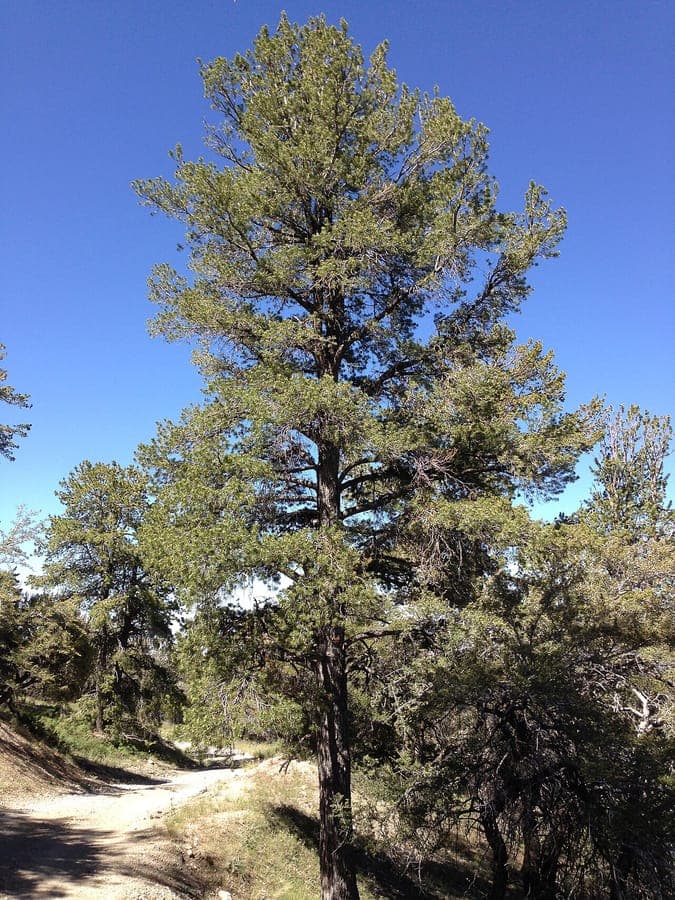
Famartin / CC BY-SA 3.0, via Wikimedia Commons
Limber pine: complete guide
Pinus flexilis
¿Quieres ver Limber pine: complete guide en tu jardín?
1 minuto, sin tarjeta de crédito
Overview
Limber pine (Pinus flexilis), also known as Rocky Mountain white pine or flexible pine, is an alpine North American conifer from mountain regions of Canada and the western United States. This unique pine is named for its flexible branches, which can bend without breaking. Limber pine is extremely hardy and adaptable to harsh mountain conditions. The tree typically grows 6-15 meters tall and has a compact, regularly pyramidal form. This makes it ideal for large alpine gardens and high elevations.
Appearance and growth
Limber pine has bundles of five needles (unlike two or three in many other pines), which are 5-8 cm long and densely dark-green. The needles show no noticeable color variation from season to season. The branches are extremely flexible and bend easily, which gives the plant its name. The cones are small to medium-sized, 8-10 cm long, compact and greenish to brownish at ripening. The tree grows slowly, especially in young years, but becomes extremely long-lived. Limber pine can be 1000 years or older in wild populations.
Ideal location
Limber pine grows best in full sun at elevated, cold locations. The tree is highly suitable for alpine gardens, mountain habitats, and locations with short growing seasons. In temperate climates the tree grows best on south or southwest-facing slopes. Ideal for windy mountain locations because the flexible branches tolerate wind well. Not suitable for warm, dry lowland areas.
Soil
Limber pine grows best in well-draining, acidic to neutral soils. The tree accepts poor soils, rocky soils, and very poor soils much better than most plants. The tree prefers somewhat poorer soil which helps its slow, strong growth pattern. Stagnant wet soil is deadly, so ensure excellent drainage. In alpine areas the tree grows on very meager soils where almost nothing else grows.
Diseño gratis
¿Quieres ver Limber pine: complete guide en tu jardín? Crea un diseño gratis ahora.
Watering
Once well-established, limber pine requires virtually no water. The tree is extremely drought tolerant thanks to its deep root systems. Young trees should be watered carefully until they establish, but mature trees tolerate dry periods easily. Too much water is more damaging than too little water for this alpine tree.
Maintenance
Limber pine requires virtually no maintenance pruning. The tree naturally forms a perfect, attractive pyramidal shape. Dead branches should be removed, but this is rarely necessary. The tree is highly resistant to harmful insects and diseases.
Maintenance calendar
May-June: Growth of new needles. Check young trees for moisture. July-August: Slow growth continues. Minimal care. September-October: Seed ripening. Stop watering. November-April: Winter dormancy. No maintenance needed. Tree is fully hardy.
Winter hardiness
Limber pine is extremely hardy to minus 30 degrees Celsius or lower (USDA zones 2-3 and higher). The tree grows in pure alpine conditions from Canada to the high mountains of Colorado. Snow, ice, and extreme cold are no problem. This makes it ideal for very cold regions.
Companion plants
Limber pine grows well with other alpine conifers and shrubs. Underplant with drought-tolerant alpine herbs, mountain laurel, and coniferous shrubs. In alpine gardens the tree adds a central architectural element.
Conclusion
Limber pine is an exceptional conifer for extreme conditions. The tree is extremely hardy, drought tolerant, and adaptable to harsh mountain conditions. For gardeners in cold mountain regions or those seeking alpine display, limber pine is a perfect choice.
Limber pine is only available through specialized alpine nurseries. Check gardenworld.app for alpine specialists in your region. For more information about alpine gardens, visit gardenworld.app.
¿Quieres ver Limber pine: complete guide en tu jardín? Crea un diseño gratis ahora.
Sube una foto, elige un estilo y obtén un diseño fotorrealista con lista de plantas en menos de un minuto.
Más de 10.000 jardines diseñados
Sin tarjeta de crédito


Plantas similares
Abies delavayi: complete guide
Abies delavayi
Delavayi fir is an elegant, medium-sized coniferous tree from the Pinaceae family with dark green needles. This Asian evergreen is perfect for alpine gardens and large landscapes.
Taiwan fir: complete guide
Abies kawakamii
Discover the magnificent Taiwan fir, a rare evergreen conifer from Taiwan's mountain regions. Learn growth requirements, care tips, and why this beautiful tree is perfect for collectors of unique garden specimens.
Farges fir: complete guide
Abies fargesii
Discover the majestic Farges fir, an impressive conifer from China's mountains with elegant foliage and columnar form. Ideal for large gardens.