
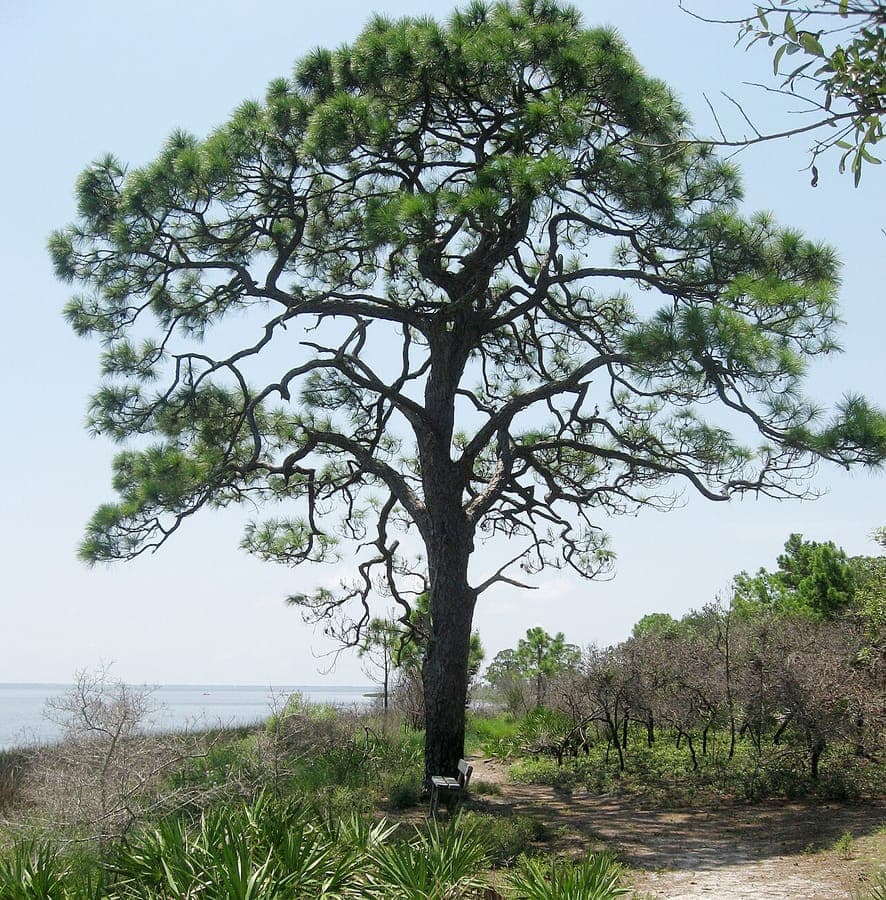
Mason Brock (Masebrock) / Public domain, via Wikimedia Commons
Slash pine: complete guide
Pinus elliottii
¿Quieres ver Slash pine: complete guide en tu jardín?
1 minuto, sin tarjeta de crédito
Overview
Slash Pine (Pinus elliottii), also known as American pitch pine, is a fast-growing pine tree native to the southeastern United States. This is a highly productive commercial tree widely used for timber and pulp production. In gardens, it is valued for its rapid growth, attractive form and resistance to diseases and pests.
Slash Pine is highly adaptable and can grow in various soil types, from sand to clay. This makes it a versatile choice for gardeners in temperate climates.
Appearance and bloom
Slash Pine grows into a tall, straight tree with regular conical form. The tree can reach 20-30 meters in height and has a diameter of 6-10 meters. The needles are long, approximately 12-20 centimeters, and grow in bundles of two or three. These long needles give the tree full, dense appearance.
The flowers are inconspicuous because pines are wind-pollinated. The male flowers are yellow pollen clusters, while female flowers form in red or purple groups. The cones are large, approximately 10-12 centimeters long, and mature in two years.
Ideal location
Slash Pine thrives best in sunny locations where it receives full sun for at least six to eight hours daily. The tree can also grow in light shade, although this may slow growth. Position the tree where it has plenty of space to expand.
The tree tolerates wind well and can withstand strong sea breezes, making it suitable for coastal areas. This makes it useful in many parts of Europe and America.
Soil
Slash Pine grows well in sandy to sandy loam soils. The tree can also grow in acidic soils, with a pH range of 4 to 6.4. The tree tolerates moderately water-holding soils better than many other pines. In overly wet soils, root rot problems can occur.
The tree is not particularly fussy about nutrition, although supplemental feeding can enhance growth. Add compost or organic matter in the first year to promote establishment.
Diseño gratis
¿Quieres ver Slash pine: complete guide en tu jardín? Crea un diseño gratis ahora.
Watering
Slash Pine requires regular water in the first year for establishment. Water thoroughly and regularly to encourage deep root growth. Thereafter, the tree is relatively drought-tolerant, although it grows better with moderately moist soils.
Water deeply during dry periods, especially during the growing season. Avoid waterlogging, which can cause root rot. A mulch layer of 5-10 centimeters helps retain moisture.
Pruning
Slash Pine usually requires little pruning as it naturally assumes a beautiful form. Remove only dead, damaged or diseased branches. Pruning is best done in late spring or summer so wounds can heal quickly.
If you want formal shapes, you can shape the tree in its youth. Later, pruning will be less necessary.
Maintenance calendar
Spring: Check for dead wood, add compost around base. Summer: Water regularly, especially during dry periods. Autumn: Remove leaf litter around tree. Winter: Minimal maintenance.
Winter hardiness
Slash Pine is hardy to approximately -10 to -15 degrees Celsius. In milder climates, protection is unnecessary. In colder regions, heavy frost can damage young trees. Plant young trees in protected locations.
Companion plants
Slash Pine grows well with understory shade-tolerant plants such as sarcococca and hellebores. The tree forms a beautiful background for smaller plants through its height and form. Planted in groups, it creates attractive forest effect.
The tree attracts birds and helps support biodiversity by providing shelter for many bird species.
Conclusion
Slash Pine is an excellent choice for gardeners seeking fast-growing, tall-reaching trees with pleasant form. The tree is robust, adaptable and can be used to provide height and privacy in your garden. With minimal maintenance, you can enjoy this beautiful tree for many years. Available at gardenworld.app/en.
¿Quieres ver Slash pine: complete guide en tu jardín? Crea un diseño gratis ahora.
Sube una foto, elige un estilo y obtén un diseño fotorrealista con lista de plantas en menos de un minuto.
Más de 10.000 jardines diseñados
Sin tarjeta de crédito


Plantas similares
Abies delavayi: complete guide
Abies delavayi
Delavayi fir is an elegant, medium-sized coniferous tree from the Pinaceae family with dark green needles. This Asian evergreen is perfect for alpine gardens and large landscapes.
Taiwan fir: complete guide
Abies kawakamii
Discover the magnificent Taiwan fir, a rare evergreen conifer from Taiwan's mountain regions. Learn growth requirements, care tips, and why this beautiful tree is perfect for collectors of unique garden specimens.
Farges fir: complete guide
Abies fargesii
Discover the majestic Farges fir, an impressive conifer from China's mountains with elegant foliage and columnar form. Ideal for large gardens.