
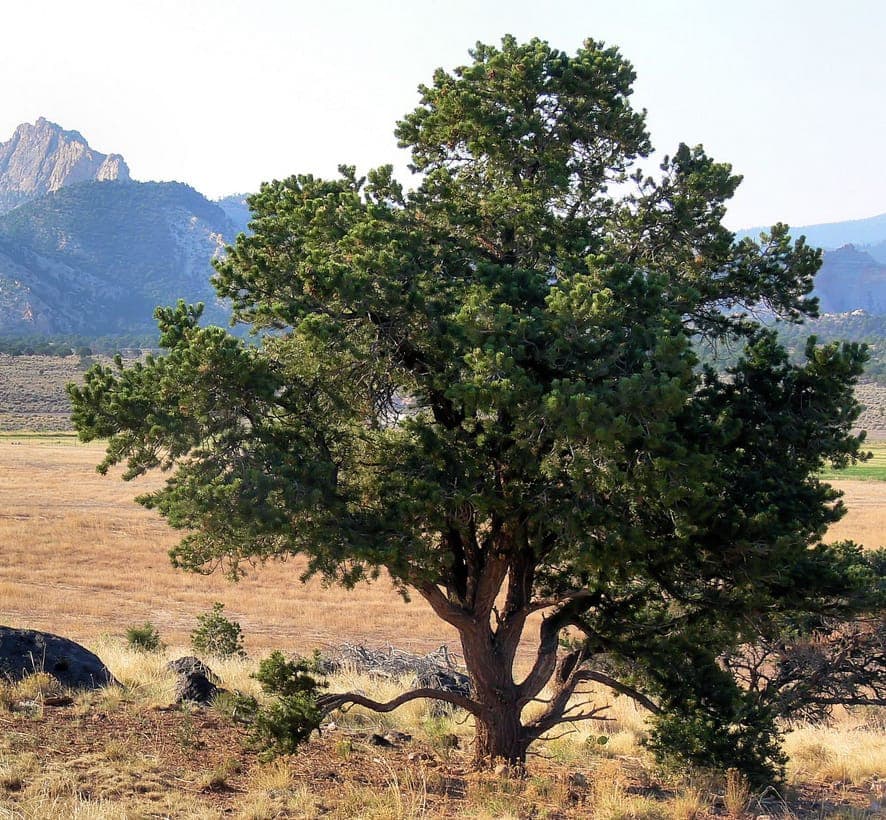
jotor at Flickr / CC BY-SA 2.0, via Wikimedia Commons
Pinyon pine: complete guide
Pinus edulis
¿Quieres ver Pinyon pine: complete guide en tu jardín?
1 minuto, sin tarjeta de crédito
Overview
The Pinyon pine, scientifically known as Pinus edulis, is a characteristic small pine tree native to western North America. This tree is especially renowned for its edible nuts, pinyon nuts, which have been gathered and used by indigenous peoples for centuries. The tree grows slowly, reaches only modest height, and is exceptionally suited for smaller gardens and mountainous regions.
The Pinyon is extremely drought and cold-tolerant, making it perfect for dry gardens and rugged landscapes. The tree adds unique texture to your garden with its slow growth and fine needles.
Appearance and bloom
The Pinyon grows into a compact, dense tree with regular form. The tree typically reaches a height of 5-10 meters and width of 3-6 meters. The needles are short, approximately 2-3 centimeters, and grow in bundles of two. These short needles give the tree fine, dense texture.
The flowers are inconspicuous, primarily because pines are wind-pollinated. After pollination, the characteristic heavy, round cones develop, ripening over two to three years. The nuts within the cones are larger than those of many other pines, giving them nutritional value.
Ideal location
The Pinyon thrives best in sunny locations with well-drained, typically sandy or rocky soils. The tree is extremely drought-tolerant and can thrive in areas where other trees cannot survive. Plant it in a location where it receives full sun for at least six to eight hours daily.
The tree is not sensitive to wind and can withstand cold. This makes it ideal for mountainous regions and cold climates. However, in warm, humid climates, it may experience difficulties.
Soil
The Pinyon grows best in poor, sandy or gravelly soils. Heavy clay soils can cause problems due to poor drainage. The tree can grow in acidic and basic soils, with a pH range of 6.5 to 8.5. Do not add compost or organic matter; this can be detrimental rather than beneficial.
The tree tolerates drought very well and needs little additional nutrients. In fact, better nutrient availability can lead to weaker wood and faster growth, which may be undesirable.
Diseño gratis
¿Quieres ver Pinyon pine: complete guide en tu jardín? Crea un diseño gratis ahora.
Watering
The Pinyon is very drought-tolerant once established. Water regularly in the first year to encourage deep root establishment. Thereafter, the tree can thrive with minimal supplemental water, especially in areas with annual precipitation of 400-600 millimeters or more.
In very dry years, water deeply but infrequently. Ensure the soil dries between waterings to prevent root rot. A thick mulch layer (5-10 centimeters) helps retain moisture and stabilize temperature.
Pruning
Pruning is usually unnecessary for the Pinyon, as the tree naturally assumes a beautiful form. Remove only dead, damaged, or crossing branches. Pruning is best done in spring before growth.
Be careful with pruning as it can cause severe damage. The tree recovers slowly from wounds. Prune minimally, limited to removing dead wood.
Maintenance calendar
Spring: Minimal pruning, no feeding needed. Summer: Check growth watering, especially in first year. Autumn: Clean cones if desired, harvest nuts. Winter: No maintenance needed, very winter-hardy.
Winter hardiness
The Pinyon is very winter-hardy and survives temperatures down to -20 degrees Celsius with ease. This makes it an excellent choice for mountainous regions and cold climates. The tree needs no protection against cold.
Companion plants
The Pinyon grows well with other drought-tolerant plants such as lavender, rosemary, and other Mediterranean species. The tree works well as a specimen due to its interesting form. Planted in groups, it creates attractive natural woodland effect.
The tree attracts birds and squirrels due to its nuts, making it a good choice for wildlife-friendly gardens.
Conclusion
The Pinyon is an excellent choice for gardeners seeking a drought-tolerant, slow-growing tree with historical and nutritious nuts. With minimal maintenance and care, you can enjoy this powerful tree for decades. Ideal for mountainous regions, dry gardens and landscapes. Available at gardenworld.app/en.
¿Quieres ver Pinyon pine: complete guide en tu jardín? Crea un diseño gratis ahora.
Sube una foto, elige un estilo y obtén un diseño fotorrealista con lista de plantas en menos de un minuto.
Más de 10.000 jardines diseñados
Sin tarjeta de crédito


Plantas similares
Abies delavayi: complete guide
Abies delavayi
Delavayi fir is an elegant, medium-sized coniferous tree from the Pinaceae family with dark green needles. This Asian evergreen is perfect for alpine gardens and large landscapes.
Taiwan fir: complete guide
Abies kawakamii
Discover the magnificent Taiwan fir, a rare evergreen conifer from Taiwan's mountain regions. Learn growth requirements, care tips, and why this beautiful tree is perfect for collectors of unique garden specimens.
Farges fir: complete guide
Abies fargesii
Discover the majestic Farges fir, an impressive conifer from China's mountains with elegant foliage and columnar form. Ideal for large gardens.