
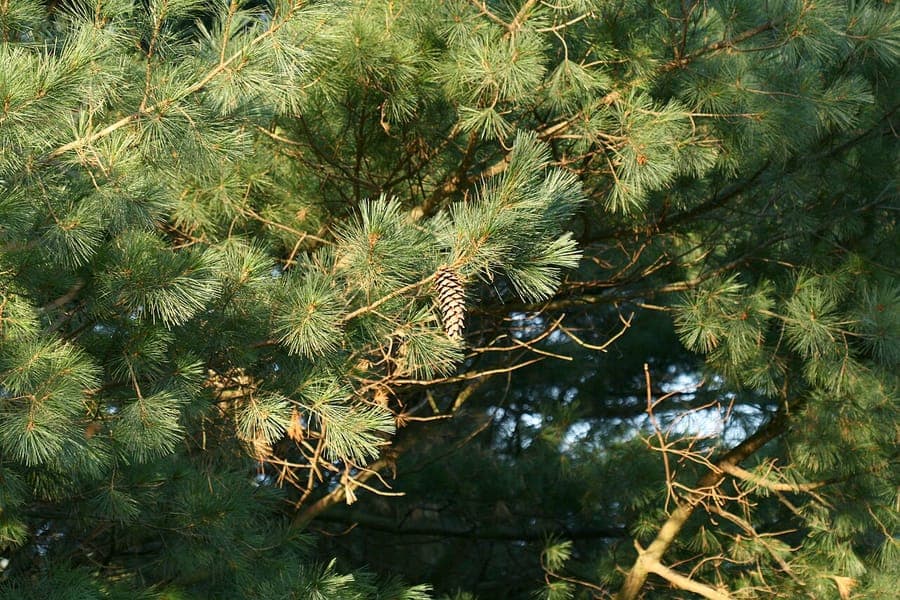
Silversyrpher / CC BY 2.0, via Wikimedia Commons
Mexican white pine: complete guide
Pinus ayacahuite
¿Quieres ver Mexican white pine: complete guide en tu jardín?
1 minuto, sin tarjeta de crédito
Overview
The Mexican white pine (Pinus ayacahuite), also known as the ayacahuite pine, is a large and majestic conifer native to Mexico and Central America. This impressive tree can reach 40 meters or higher and is renowned for its long, soft needles and architectural form. It is a rare and valuable tree in European gardens.
Appearance and bloom
The Mexican white pine grows as a tall, slender tree with a regular pyramidal form. The needles are long (10-15 centimetres), soft and blue-green colored, giving an elegant appearance. The pine cones are very large, 20-30 centimetres long, and hang on long stalks. The tree has gray, smooth bark when young, later becoming fissured. The tree has a fascinating architecture with widely-spreading branches.
Ideal location
The Mexican white pine prefers a sunny to partially shaded location. The tree needs plenty of space for full development and works best in large gardens or parkland settings. The tree is not suitable for small gardens or urban environments due to its large mature size.
Soil
The Mexican white pine grows on well-draining, moderately acidic to neutral soil with pH 6.0-7.0. The tree is somewhat frost-sensitive regarding root environment. Heavy, compacted soils are unsuitable; free-draining soil is essential.
Diseño gratis
¿Quieres ver Mexican white pine: complete guide en tu jardín? Crea un diseño gratis ahora.
Watering
The Mexican white pine is moderately drought-tolerant once established, but young trees need regular watering. Ensure the soil does not become waterlogged. Water young trees during dry periods in summer months.
Pruning
Pruning is usually not needed for the Mexican white pine, as the tree develops a beautiful natural form. Remove only dead or damaged branches. Shaping the tree is not recommended.
Maintenance calendar
Spring: Growth resumes, water young trees; Summer: Continue watering during dry periods; Autumn: Gradually reduce watering; Winter: Minimal maintenance.
Winter hardiness
The Mexican white pine is winter-hardy to approximately -15 degrees Celsius, but many specimens in Northern Europe are not fully hardy. In the Netherlands and Belgium, specimens need protection against extreme winter cold. Young plants are especially vulnerable.
Companion plants
The Mexican white pine combines beautifully with other large conifers such as cedars and firs. In parkland settings it works well as a specimen. Underplanting with shade-tolerant plants is advisable.
Closing remarks
The Mexican white pine is an exceptional tree for large gardens in mild-climate areas. The soft needles and elegant form make it a true focal point. Enthusiasts of large trees? Visit gardenworld.app/en. Discover more at gardenworld.app/en!
¿Quieres ver Mexican white pine: complete guide en tu jardín? Crea un diseño gratis ahora.
Sube una foto, elige un estilo y obtén un diseño fotorrealista con lista de plantas en menos de un minuto.
Más de 10.000 jardines diseñados
Sin tarjeta de crédito


Plantas similares
Abies delavayi: complete guide
Abies delavayi
Delavayi fir is an elegant, medium-sized coniferous tree from the Pinaceae family with dark green needles. This Asian evergreen is perfect for alpine gardens and large landscapes.
Taiwan fir: complete guide
Abies kawakamii
Discover the magnificent Taiwan fir, a rare evergreen conifer from Taiwan's mountain regions. Learn growth requirements, care tips, and why this beautiful tree is perfect for collectors of unique garden specimens.
Farges fir: complete guide
Abies fargesii
Discover the majestic Farges fir, an impressive conifer from China's mountains with elegant foliage and columnar form. Ideal for large gardens.