
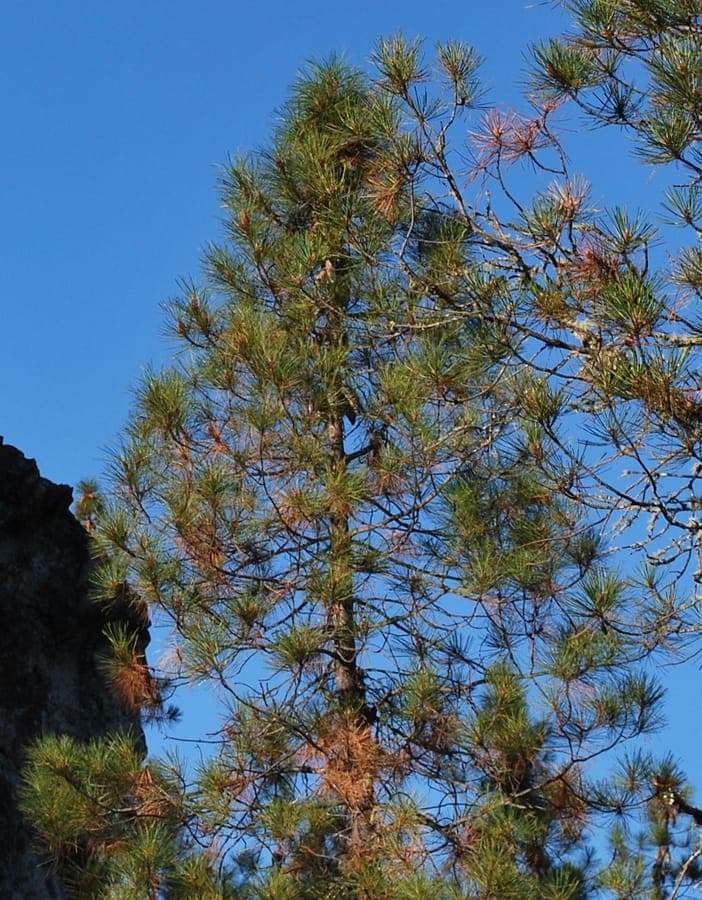
User:Shultzc / CC BY-SA 3.0, via Wikimedia Commons
Pinus attenuata: complete guide
Pinus attenuata
¿Quieres ver Pinus attenuata: complete guide en tu jardín?
1 minuto, sin tarjeta de crédito
Overview
Pinus attenuata, commonly known as knobcone pine or narrowcone pine, is a unique American conifer from mountain slopes of California, Oregon, and northern Mexico. This is not a traditional European garden tree, but it's rapidly gaining popularity in modern garden designs due to its exceptional drought tolerance and compact growth pattern. Unlike many other pines, Pinus attenuata grows actively faster and reaches mature size in fewer years.
This tree is adapted to extreme conditions: rocky slopes, strong winds, drought, and poor soils. This makes it ideal for challenging garden locations where other trees fail. Its cones are distinctive: much smaller than typical pine cones, tightly clustered, and remaining on the tree for many years, providing unique visual interest throughout seasons.
Appearance and Bloom
Pinus attenuata develops a dense, highly regular conical silhouette, typically reaching 8 to 15 meters at maturity. This is more compact than many other pines. The needles grow in bundles of two to three (unlike many Pinus species with five), are approximately 2 to 5 centimeters long, thin, and yellow-green to gray-green in color. This gives it a more refined, graceful appearance.
The characteristic cones are small, approximately 4 to 8 centimeters long, tightly clustered together, and deep brown to reddish-brown. They remain closed on the tree for years, waiting for intense heat or fire to release seeds. This phenomenon makes it a striking ornament in winter gardens.
The bark is gray and smooth on young trees, becoming rougher with age and splitting into irregular plates.
Ideal Location
Pinus attenuata performs best in full sunlight: minimum eight hours direct sun daily. A south to southwest-facing slope is perfect, especially on hillsides where water drainage occurs naturally. Compared to other pines, it accepts wind extremely well and grows even stronger in windy situations.
This tree is perfect for exposed garden locations, mountain slopes, and windy coastal areas. It can grow where many other trees fail. A steep south-facing slope with full sun is ideal.
Soil
Pinus attenuata is exceptionally tolerant of poor soils. It grows on sandy, gravelly, and even volcanic soils in its natural range. In garden situations, it accepts sandy to loamy soils and can even thrive on very lean soils. pH can range from acidic (pH 5.0) to neutral (pH 7.0).
The tree demands excellent drainage. Waterlogging is dangerous and causes death. Plant on elevated ground or slopes to ensure drainage. The tree prefers lean soils and nutrition is not essential.
Mulch is optional but useful: coarse sand or gravel around the base aids drainage.
Diseño gratis
¿Quieres ver Pinus attenuata: complete guide en tu jardín? Crea un diseño gratis ahora.
Watering
Once established, Pinus attenuata is exceptionally drought-resistant. In its natural range, it grows on less than 500 mm annual rainfall. This makes it perfect for very dry gardens. Regular water is needed during the first two years, then irrigation can largely cease.
Water once weekly during first season in dry periods. After first year, reduce to once every two weeks. Mature specimens need virtually no supplementary water in normal climates.
In Mediterranean areas, it can grow without any irrigation once established. This makes it ideal for dry gardens with minimal water management.
Pruning
Pinus attenuata grows in its natural form without requiring much artificial pruning. The tree maintains a dense, regular form automatically. Remove only dead branches or branches encroaching on buildings. This is best done in April to May.
Artificial shaping is not recommended. The tree recovers slowly from major pruning wounds. Natural growth is preferred.
If branches trail to ground and you wish to lift them, cut back to their origin. Heavy pruning steps can cause imbalance.
Maintenance Calendar
April-May: inspect for winter damage, remove dead branches. June-July: monitor watering on young trees; check for insects (extremely rare). August-September: reduce watering significantly; monitor only severe droughts. October-November: cease watering; add no extra feeding. December-February: monitor snow damage on dense branches; check for ice coating. March: remove needles damaged by frost.
Winter Hardiness
Pinus attenuata is winter hardy to approximately -10 to -15 degrees Celsius, making it suitable for temperate climates through USDA zone 8-9. Throughout much of the Netherlands, Germany, and Belgium, it will survive mild winters. In very cold winters, young trees may experience frost damage.
Once established and mature, it's highly robust. Protect young trees against strong cold wind during years with extreme frost. Plant in sheltered locations in northern regions.
Companion Plants
Pinus attenuata grows well in dry, sunny compositions with other drought-resistant conifers and herbs. Combine with Juniperus species, Quercus ilex (holm oak), lavender, rosemary, and gray shrubs. This creates a Mediterranean or semi-desert theme.
Avoid wet-soil groundcovers directly adjacent. Allow space for ventilation around the trunk.
Closing
Pinus attenuata is an excellent choice for gardeners with dry, exposed locations seeking minimal maintenance effort. This tree adds compact height, interesting cones, and rustic character without water-intensive care. On mountain slopes and windy locations, it will thrive excellently.
When purchasing, this tree is sometimes available from specialized tree nurseries in southern Europe or via special order. Verify thorough drainage of the root system. Gardenworld.app can help design complete dry gardens where Pinus attenuata plays a central role.
Enjoy your knobcone pine! Appreciate its drought tolerance and quiet mountain character.
¿Quieres ver Pinus attenuata: complete guide en tu jardín? Crea un diseño gratis ahora.
Sube una foto, elige un estilo y obtén un diseño fotorrealista con lista de plantas en menos de un minuto.
Más de 10.000 jardines diseñados
Sin tarjeta de crédito


Plantas similares
Abies delavayi: complete guide
Abies delavayi
Delavayi fir is an elegant, medium-sized coniferous tree from the Pinaceae family with dark green needles. This Asian evergreen is perfect for alpine gardens and large landscapes.
Taiwan fir: complete guide
Abies kawakamii
Discover the magnificent Taiwan fir, a rare evergreen conifer from Taiwan's mountain regions. Learn growth requirements, care tips, and why this beautiful tree is perfect for collectors of unique garden specimens.
Farges fir: complete guide
Abies fargesii
Discover the majestic Farges fir, an impressive conifer from China's mountains with elegant foliage and columnar form. Ideal for large gardens.