
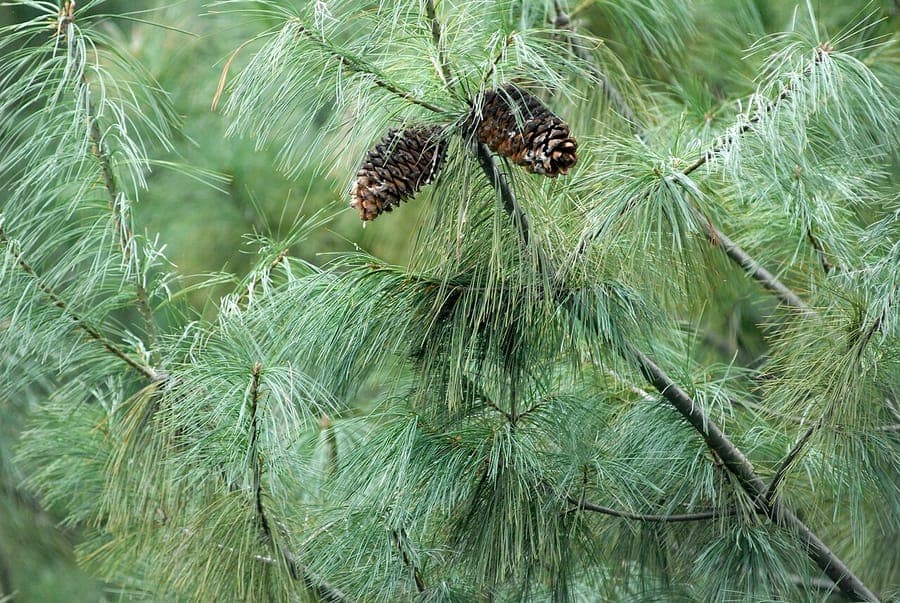
nekonoir on Flickr / CC BY-SA 2.0, via Wikimedia Commons
Pinus armandii: complete guide
Pinus armandii
¿Quieres ver Pinus armandii: complete guide en tu jardín?
1 minuto, sin tarjeta de crédito
Overview
Pinus armandii, commonly known as Chinese white pine or Armand pine, is an elegant conifer with a more refined character than many robust pine species. This graceful specimen originates from mountain regions of central and eastern China, where it grows at elevations of 1,500 to 3,000 meters. Unlike sturdy American pines, Pinus armandii features a subtle presence that fits well within European garden designs.
This tree is renowned for its soft, gray-green needles arranged in bundles of five, and its beautiful pale bark that flakes with age. It grows slower than Pinus arizonica but faster than Pinus aristata, offering a good middle ground for gardeners. The tree adds Asian elegance without extreme requirements.
Appearance and Bloom
Pinus armandii develops a slender, regular conical form, typically reaching 12 to 18 meters at maturity. The needles are remarkably elegant: arranged in bundles of five, approximately 8 to 15 centimeters long, with a soft gray-green hue and blunt tips rather than sharp points. This gives it a more refined appearance than more robust Pinus variants.
Young bark is green to grayish, but matures into striking gray to brown color that exfoliates in lengthwise strips, providing visual interest even in winter. Male flowers appear in May to June in yellow to orange tones. Female cones are elongated, approximately 8 to 12 centimeters long, with greenish to brown coloration.
Ideal Location
Pinus armandii performs best in moderate sunlight to full sun: minimum six hours of direct sun daily, but it accepts partial shade better than more robust Pinus species. A south to southeast orientation is ideal, but it can work on northern slopes provided not in deep shade. This offers more placement flexibility for mixed gardens.
Protection from harsh cold winds is beneficial, especially in early years. Do not plant on fully exposed mountain slopes without shelter. A semi-open position beside larger deciduous trees offers ideal growing conditions.
Soil
Pinus armandii demands well-drained soils with preference for slightly acidic to neutral pH (6.0 to 7.5). It grows best in nutrient-rich mountain soils with good humus content. Add rich garden compost and sufficient leaf mold at planting to replicate mountain growing conditions.
The tree does not accept waterlogging, so ensure good drainage. In heavy clay, plant in raised beds or amend soil with sand and compost. The tree grows slower in poor soils, so nutrition is more important than with other Pinus variants.
Mulch around the base with 5 to 8 centimeters of natural pine needle litter or leaf mold to retain moisture and acidity.
Watering
Pinus armandii requires regular watering, especially after planting and during dry growth periods. In its mountain habitat, it receives regular mist and rainfall. Water deeply two to three times weekly in first season, then reduce to once every two weeks in normal climates.
Increased watering is essential during hot summers. Preference is for consistent moisture without waterlogging. Unlike extremely drought-resistant pines, Pinus armandii can suffer from prolonged droughts.
During rainy periods, reduce watering frequency as needed. The tree prefers moderate moisture over extreme dryness.
Diseño gratis
¿Quieres ver Pinus armandii: complete guide en tu jardín? Crea un diseño gratis ahora.
Pruning
Pinus armandii grows in a naturally elegant form without requiring much artificial pruning. Remove only dead branches, damaged needles, and branches encroaching on buildings. This is best done in June to July, after the spring growth pulse.
If you wish certain branches to be less prominent, cut them back to their origin with sharp pruning shears. However, it's better to allow the tree its natural form because artificial shaping doesn't suit its elegant character.
Avoid drastic pruning steps. The tree recovers slowly from major wounds and can become unbalanced through excessive pruning.
Maintenance Calendar
April-May: inspect for winter damage; apply feeding if needed. June-July: monitor watering; perform pruning for summer growth; check for insects. August-September: intensify watering during dry periods; monitor for disease. October-November: reduce watering as rain increases; add extra mulch. December-February: protect against harsh frost wind with burlap or moss cloth; monitor for ice damage. March: remove winter damage; prepare for growing season.
Winter Hardiness
Pinus armandii is winter hardy to approximately -10 to -15 degrees Celsius, making it suitable for temperate climates and less extreme mountain regions. Throughout much of the Netherlands, Germany, and Belgium, it overwinters without problems. In very cold winters, young trees or specimens in exposed locations may experience frost damage.
Protection from drying winter winds is beneficial. Plant young trees in protected locations. Mature specimens are more robust and can survive harsh winters.
Companion Plants
Pinus armandii combines well with other Asian trees and shrubs in gardens with mountain or Japanese themes. Plant alongside Acer palmatum (Japanese maple), rhododendrons, azaleas, and fine-leaved deciduous trees. Other Chinese Pinus species or deciduous trees from central China work well together.
Avoid crowded compositions. Give the tree space for its elegant growth. Underplanting with shade-tolerant mountain plants such as hellebores or carex varieties complements well.
Closing
Pinus armandii is ideal for sophisticated gardeners who appreciate elegant mountain conifers over robust evergreens. This tree adds Asian refinement and natural beauty to both modern and traditional gardens alike. With regular maintenance and careful placement, it will thrive for decades.
When purchasing, seek healthy specimens with undamaged foliage. This tree is less common in commercial nurseries than American Pinus species, so special order may be necessary. Verify well-developed roots. Gardenworld.app can help design complete garden compositions around this elegant mountain conifer.
Enjoy your Chinese white pine! Appreciate its graceful appearance and subtle growth. Gardenworld.app also helps with complete Asian-inspired garden designs where Pinus armandii can serve as a core specimen.
¿Quieres ver Pinus armandii: complete guide en tu jardín? Crea un diseño gratis ahora.
Sube una foto, elige un estilo y obtén un diseño fotorrealista con lista de plantas en menos de un minuto.
Más de 10.000 jardines diseñados
Sin tarjeta de crédito


Plantas similares
Abies delavayi: complete guide
Abies delavayi
Delavayi fir is an elegant, medium-sized coniferous tree from the Pinaceae family with dark green needles. This Asian evergreen is perfect for alpine gardens and large landscapes.
Taiwan fir: complete guide
Abies kawakamii
Discover the magnificent Taiwan fir, a rare evergreen conifer from Taiwan's mountain regions. Learn growth requirements, care tips, and why this beautiful tree is perfect for collectors of unique garden specimens.
Farges fir: complete guide
Abies fargesii
Discover the majestic Farges fir, an impressive conifer from China's mountains with elegant foliage and columnar form. Ideal for large gardens.