
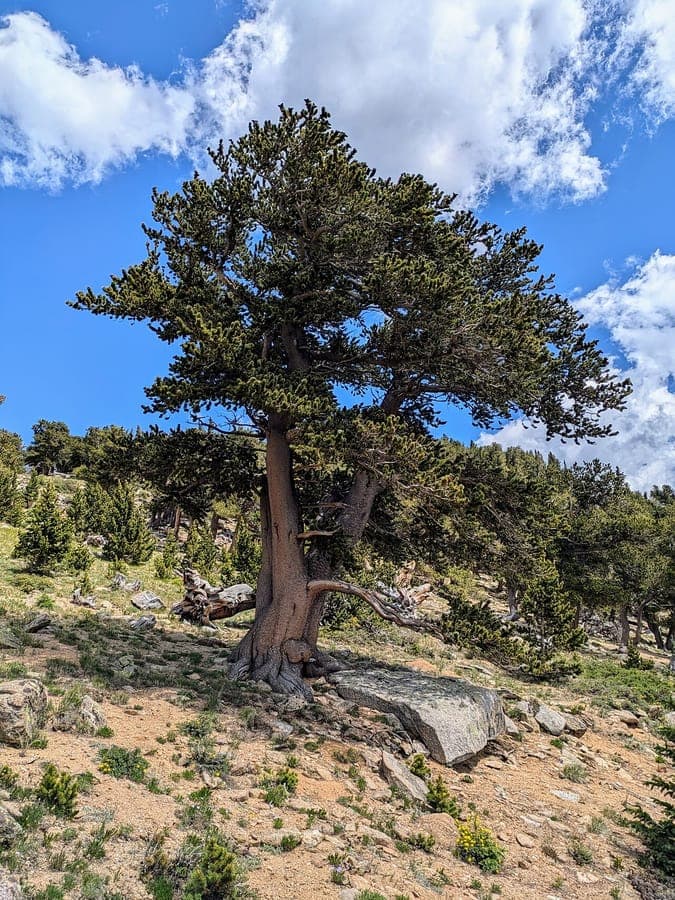
MtBotany / CC BY-SA 4.0, via Wikimedia Commons
Pinus aristata: complete guide
Pinus aristata
¿Quieres ver Pinus aristata: complete guide en tu jardín?
1 minuto, sin tarjeta de crédito
Overview
Pinus aristata, commonly known as Rocky Mountain bristlecone pine, is an exceptional conifer distinguished by its extraordinary longevity and unique character. This tree originates from high-mountain regions of Arizona, Colorado, and New Mexico in the United States. In its natural habitat, it grows at elevations above 3,600 meters, where extreme conditions select only the most robust plant life. Some trees exceed 1,000 years of age, making them living monuments for any garden fortunate enough to host them.
In European gardens, Pinus aristata is an unconventional choice, but it delivers remarkable structure and longevity. Its distinctive spiral-bundled needles provide textural depth, and its very slow growth ensures a lifetime of stable architectural presence. This is a tree for patient gardeners who value living legacy over rapid transformation.
Appearance and Bloom
Pinus aristata develops a dense, conical silhouette, typically reaching 10 to 15 meters at maturity (considerably smaller in European gardens due to different climate conditions). The needles are striking: arranged in bundles of five, about 2 to 4 centimeters long, rigid, and sharply pointed. They appear dark green with conspicuous white resin spots, giving the tree a vigorous appearance even in winter.
Flowering occurs in May and June. Male flowers appear at twig terminals in brilliant red to golden hues. Female flowers are far more discrete: tiny purple structures nestled deep within branch junctures. The female cones are reddish-brown and mature extremely slowly, requiring up to three years before releasing their seeds.
Mature bark becomes gray and cracks into irregular patterns, adding character and texture as the tree ages.
Ideal Location
Pinus aristata performs best in full sun exposure, requiring minimum six to eight hours of direct sunlight daily. This ensures compact, vigorous growth. A south to southwest facing position is ideal, particularly in regions with strong maritime winds where the tree's resilience becomes valuable.
This tree completely rejects shade beneath larger trees. If incorporating it into mixed plantings, position it at peripheries where it receives unobstructed light from above.
In mountain gardens, exposed locations with full wind exposure exactly replicate Pinus aristata's natural conditions, resulting in stronger, denser growth.
Soil
Pinus aristata demands well-drained soil. Heavy clay or permanently moist conditions are fatal, leading to root rot and death. The tree thrives in sandy to loamy soils with pH values between 5.7 and 7.5. If your garden contains heavy clay, significantly amend with sand and compost, or plant in raised beds.
The tree adapts to poor soils, especially in mountainous regions, so nutrient-rich amendments are unnecessary. Some enrichment during establishment years helps, but once rooted, lean soil is acceptable.
Coarse sand dramatically improves drainage in wet-winter regions. Mulch around the base with approximately 5 centimeters of pine needle litter for moisture retention and natural soil acidification.
Diseño gratis
¿Quieres ver Pinus aristata: complete guide en tu jardín? Crea un diseño gratis ahora.
Watering
Once established, Pinus aristata is exceptionally drought-tolerant, reflecting its mountain origin. However, regular water is essential during the first two growing seasons. Water deeply twice weekly during dry periods, ensuring the soil drains thoroughly between applications.
After the third year, irrigation can be dramatically reduced. The tree will adapt to rainfall alone, except during extreme droughts or in Mediterranean climates.
Avoid waterlogging around the root collar. Winter water retention poses serious risks. If your garden sits on low terrain, establish in raised beds.
Pruning
Pinus aristata requires minimal pruning. Given its slow growth rate, formal trimming is unnecessary unless removing damaged or dead branches. Perform such work in April-May, before summer growth.
If branches encroach on buildings or pathways, cut them back to their origin with sharp saws. Avoid ragged cuts; the tree recovers slowly from major wounds.
Natural growth is preferred. The tree's symmetrical conical form rarely requires artificial guidance.
Maintenance Calendar
April-May: inspect for winter damage, remove dead branches. June-July: scout for insects; aphids may occasionally appear but are rarely serious. August-September: ensure adequate watering if drought persists. October-November: add supplementary mulch in preparation for winter. December-February: monitor for snow damage on heavy branches after storms. March: prepare for upcoming growing season.
Winter Hardiness
Pinus aristata is extraordinarily winter hardy, adapted to mountain winters with temperatures regularly below -30 degrees Celsius. This makes it perfect for all temperate European climates. Heavy snow loading can stress branches; consider gentle bamboo supports for weak young growth to prevent breakage.
In temperate regions, winter damage will be extremely rare. The only real threat is prolonged ice-loading combined with strong winds, which may cause branch breakage.
Companion Plants
Pinus aristata grows excellently alongside other alpine specimens. Combine with Juniperus species (junipers), other Pinus varieties, or alpine stone crops (Sempervivum). These combinations harmonize regarding water and drainage requirements.
Avoid understory plantings with heavy nutrient demands, such as ferns or moisture-demanding shrubs. Instead, plant light-growing alpine groundcovers like mountain phlox around the base.
Closing
Pinus aristata is a spectacular choice for gardeners valuing patience and thoughtful placement. This tree is an investment in the future: generations will benefit from the same specimen. With proper attention to drainage and sun exposure, your bristlecone pine will thrive for centuries.
When purchasing, seek quality specimens from specialized tree nurseries. Examine the root ball to ensure appropriate moisture retention before purchasing. Once planted, consult gardenworld.app for further assistance with conifer selection and placement. We can help design comprehensive garden compositions featuring Pinus aristata as a centerpiece.
Enjoy your Rocky Mountain bristlecone pine! Appreciate its slow growth and the enduring legacy it represents.
¿Quieres ver Pinus aristata: complete guide en tu jardín? Crea un diseño gratis ahora.
Sube una foto, elige un estilo y obtén un diseño fotorrealista con lista de plantas en menos de un minuto.
Más de 10.000 jardines diseñados
Sin tarjeta de crédito


Plantas similares
Abies delavayi: complete guide
Abies delavayi
Delavayi fir is an elegant, medium-sized coniferous tree from the Pinaceae family with dark green needles. This Asian evergreen is perfect for alpine gardens and large landscapes.
Taiwan fir: complete guide
Abies kawakamii
Discover the magnificent Taiwan fir, a rare evergreen conifer from Taiwan's mountain regions. Learn growth requirements, care tips, and why this beautiful tree is perfect for collectors of unique garden specimens.
Farges fir: complete guide
Abies fargesii
Discover the majestic Farges fir, an impressive conifer from China's mountains with elegant foliage and columnar form. Ideal for large gardens.