
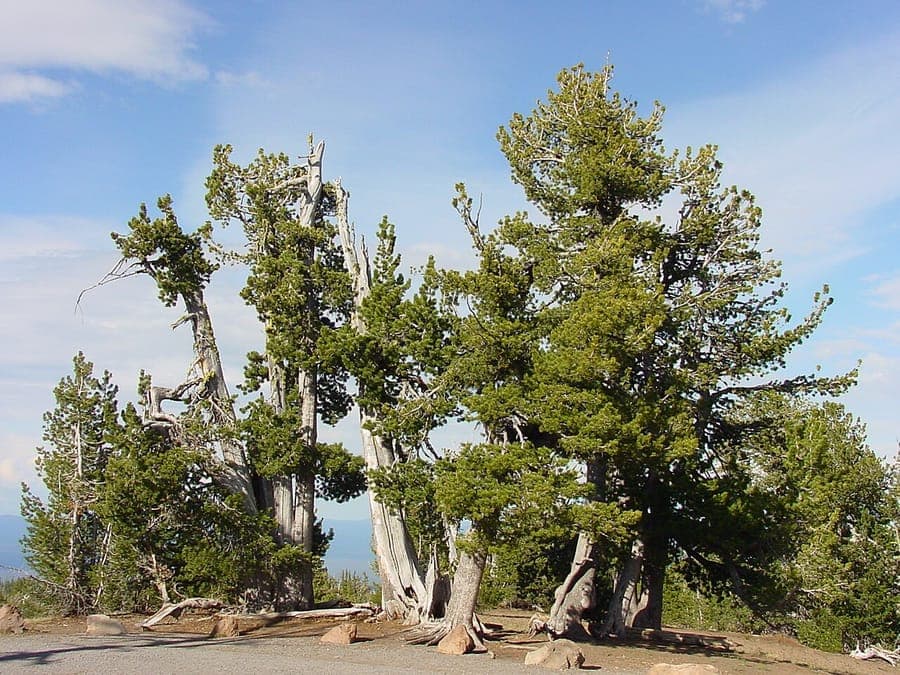
Richard Sniezko, US Forest Service / Public domain, via Wikimedia Commons
Alpine whitebark pine: complete guide
Pinus albicaulis
¿Quieres ver Alpine whitebark pine: complete guide en tu jardín?
1 minuto, sin tarjeta de crédito
Overview
Alpine whitebark pine (Pinus albicaulis) is a striking alpine conifer from the Pinaceae family. Native to high mountains from western Canada to western United States (Alberta to California and Wyoming), this tree withstands extreme elevations and harsh mountain conditions.
This distinctive pine is named for its characteristic whitish bark creating dramatic contrast with dark green needles. For gardeners, Pinus albicaulis offers exceptional visual drama, extreme hardiness, and authentic alpine landscape character.
Appearance & Growth
Alpine whitebark pine grows as a striking tree with characteristic whitish bark (albicaulis means white-stemmed) creating dramatic visual contrast. Growth is slow and often irregular, developing characteristic asymmetrical silhouettes in cultivation.
Needles occur in bundles of five, dark green, approximately 2-8 cm long, and persist year-round. Needles are quite compact around branches, creating dense evergreen structure.
Cones are purple-brown, approximately 5-10 cm long and appear in clusters. These handsome cone clusters provide ornamental value in late summer and autumn. Growth rate is typically slow - 10-30 cm annually.
Ideal Location
Alpine whitebark pine thrives in full sun requiring minimum 6-8 hours direct daily sunlight. The tree is extremely light-demanding and will fail in shade.
The tree thrives on sites where other trees fail: rocky slopes, wind-exposed terrain, dry elevations. Plant on raised, well-drained positions.
Avoid low, wet areas where stagnant moisture accumulates, as this causes root rot.
Soil
Alpine whitebark pine grows on well-draining, typically acidic to neutral soils (pH 4.8-8). The tree tolerates rocky, poor soils better than most trees.
Excellent drainage is critical - waterlogging is fatal. Add sand, gravel, and perlite to clay soils. The tree thrives on mountain-slope-like conditions with superior drainage.
Avoid heavily enriched soils producing weak, spindly growth.
Diseño gratis
¿Quieres ver Alpine whitebark pine: complete guide en tu jardín? Crea un diseño gratis ahora.
Watering
Once established, alpine whitebark pine is remarkably drought-tolerant and withstands extended dry periods. Young trees require more water until deep rooting occurs.
Water seedlings and young plants regularly, especially in the first year. Mature trees tolerate drought well and typically need supplemental water only during severe drought.
Winter moisture monitoring is important: ensure well-drained soil for wet winters.
Pruning
Minimal pruning required. The tree grows naturally attractive and pruning can damage its character. Remove only dead or broken branches.
When young, you may gently correct asymmetry, but this should be minimal. Allow the tree to achieve its natural form.
Heavy pruning creates large wounds and slow recovery.
Maintenance Calendar
April-May: Growth begins. Water young trees regularly. Check drainage. June-August: Peak growing season. Monitor summer drought. No fertilizing. September-October: Growth slows. Watering needs decline. Cones mature. November-March: Dormancy. Minimal care. Monitor winter moisture balance.
Winter Hardiness
Alpine whitebark pine is exceptionally hardy to -25 to -30°C or lower, depending on origin. This tree survives harsh European winters without protection.
The problem is not cold but wet winters. Ensure excellent drainage at all sites. Heavy snowfall can damage young trees - gently brush off snow if it compacts on branches.
Trees from protected high-elevation origins show superior winter performance.
Companion Plants
Alpine whitebark pine fits perfectly in alpine, mountain gardens. Combine with other hardy conifers: juniper, larch, and fir species.
Understory plants can be alpine sedums, alpine heathers, and rock-garden perennials. Avoid vigorous competitors.
Alpine whitebark pine stands best as a solitary specimen on raised ground where its white bark is prominent.
Closing
Alpine whitebark pine offers dramatic visual impact, authentic alpine character, and extreme hardiness for gardeners with space and well-drained soil. With proper location, this tree grows for decades. Read more mountain plant guides on gardenworld.app. Discover other Pinus species in our plant blog. Bring alpine drama to your landscape with Pinus albicaulis - gardenworld.app provides complete design solutions for your mountain garden vision.
¿Quieres ver Alpine whitebark pine: complete guide en tu jardín? Crea un diseño gratis ahora.
Sube una foto, elige un estilo y obtén un diseño fotorrealista con lista de plantas en menos de un minuto.
Más de 10.000 jardines diseñados
Sin tarjeta de crédito


Plantas similares
Abies delavayi: complete guide
Abies delavayi
Delavayi fir is an elegant, medium-sized coniferous tree from the Pinaceae family with dark green needles. This Asian evergreen is perfect for alpine gardens and large landscapes.
Taiwan fir: complete guide
Abies kawakamii
Discover the magnificent Taiwan fir, a rare evergreen conifer from Taiwan's mountain regions. Learn growth requirements, care tips, and why this beautiful tree is perfect for collectors of unique garden specimens.
Farges fir: complete guide
Abies fargesii
Discover the majestic Farges fir, an impressive conifer from China's mountains with elegant foliage and columnar form. Ideal for large gardens.