
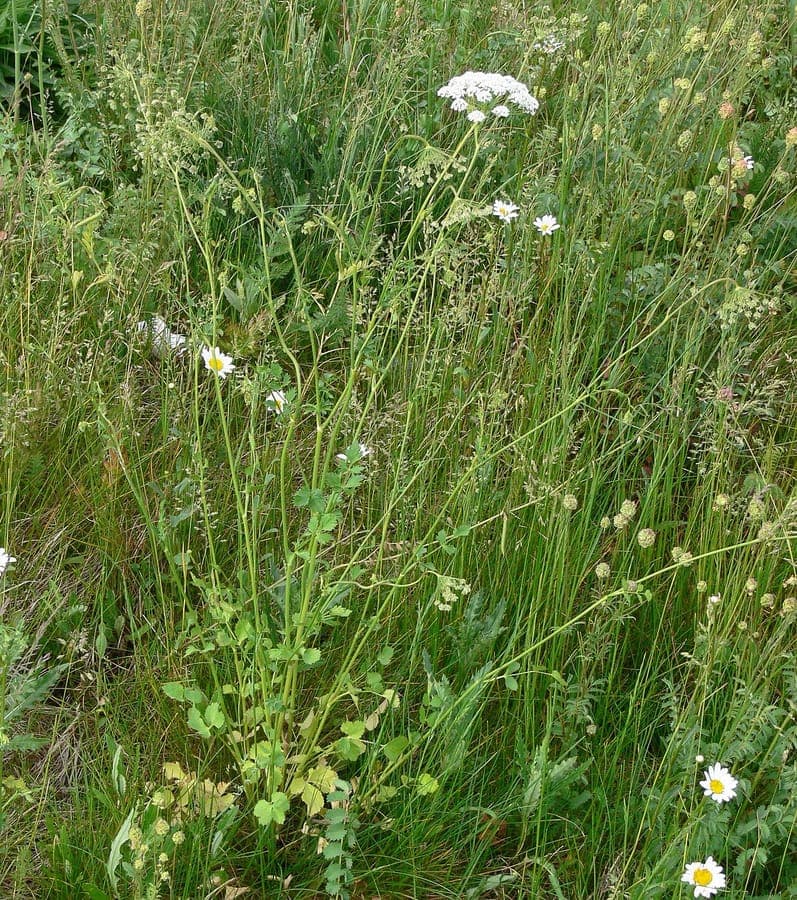
Der Michels / CC0, via Wikimedia Commons
Southern burnet saxifrage: complete guide
Pimpinella peregrina
¿Quieres ver Southern burnet saxifrage: complete guide en tu jardín?
1 minuto, sin tarjeta de crédito
Overview
Southern burnet saxifrage (Pimpinella peregrina) is a distinctive herbaceous plant from the Apiaceae family, native to the Mediterranean region and Central Asia. This charming perennial brings authentic Mediterranean character to temperate gardens, thriving where heat and excellent drainage converge. The plant holds historical significance - it was valued in antiquity for both culinary and medicinal properties.
The botanical name peregrina reflects the plant's "traveling" nature through trade routes and botanical collections across centuries. Today, gardeners rediscover this elegant species as climate-adapted alternatives gain popularity.
Appearance & Bloom
Pimpinella peregrina grows 30-60 cm tall with finely divided foliage resembling parsley or fennel fronds. The delicate, feathery leaves create an ethereal, airy texture in garden spaces. Leaf color is pale green with occasional purple tinging along the stems.
Flowers appear June-July in characteristic flat umbels (flower clusters) composed of dozens of tiny white blooms. These intricate flower heads attract pollinators and create visual interest for weeks. Post-bloom, ornamental ribbed fruits develop, extending the plant's ornamental value.
The overall habit is upright and graceful, making Pimpinella peregrina an excellent addition to herbaceous borders and formal herb gardens.
Ideal Location
Position southern burnet saxifrage in full sun, requiring minimum seven hours of direct daily sunlight. Light-loving by nature, the plant produces more aromatic compounds and flowers more prolifically in bright conditions.
Ensure good air circulation around the plant to minimize fungal risks. South-facing walls provide ideal warmth reflection. In hot climates, afternoon partial shade reduces water requirements while maintaining vigor.
Avoid stagnant air pockets, low-lying damp spots, or positions beneath dense tree canopies. Mediterranean-climate gardeners should site the plant on elevated beds for superior drainage.
Soil
This species demands well-draining soil with pH 7.5-8. Waterlogging quickly causes root rot, so amendment is essential for heavy clay soils. Incorporate horticultural sand or perlite liberally.
The plant thrives on moderately fertile soil - avoid over-enrichment with compost or fertilizer, which promotes lush but weak growth. Alpine and steppe-adapted species like Pimpinella often flourish on lean soils where competition is reduced.
Amend annually with fine gravel mulch to maintain superior drainage through winter wet periods.
Diseño gratis
¿Quieres ver Southern burnet saxifrage: complete guide en tu jardín? Crea un diseño gratis ahora.
Watering
Once established, southern burnet saxifrage is remarkably drought-tolerant. During the growing season (March-October), maintain moderate moisture without waterlogging.
Young plants require more frequent watering than mature specimens. Water deeply but infrequently - this encourages deeper rooting. In dry periods, once-weekly soaking is typically sufficient. Reduce watering dramatically in winter dormancy.
Apply gravel mulch around the base to conserve soil moisture and protect crowns. If the plant appears wilted despite recent rain, check drainage rather than increase water.
Pruning
Minimal pruning is required. Remove spent flower stems after bloom to prevent excessive self-seeding and maintain neat form.
In spring, carefully remove any winter-damaged foliage. Never severely cut back Pimpinella, as recovery is slow. For leaf harvest, gently pinch tender growing tips once plants are well-established.
If plants become leggy or weak, remove top 5-10 cm in early spring to encourage bushier branching.
Maintenance Calendar
March: Check drainage; apply light compost topdressing; begin regular watering. May: Monitor flowering onset; watch for water needs. June-July: Peak blooming; collect seeds if desired. August: Hot-season period; monitor soil moisture carefully. September-October: Declining flower production; remove dead stems. November-February: Dormancy period; minimal watering; watch for pests in mild winters.
Winter Hardiness
Southern burnet saxifrage is hardy to approximately -5 to -10°C, with hardiness varying by site exposure and soil conditions. Northern European gardeners should provide winter protection in exposed locations.
Offer shelter with horticultural fleece or dry leaf mulch during harsh spells. Plant on raised beds for superior winter drainage. Site against south-facing walls or protective hedges in snow-prone regions.
Severe snow combined with temperature fluctuations poses risk. As insurance, start seeds indoors in January.
Companion Plants
Pimpinella combines beautifully with Mediterranean herbs: oregano, thyme, sage, and winter savory. Purple-flowering lavender creates striking contrast with southern burnet saxifrage's white blooms.
Underplant with dianthus, santolina, and nepeta for authentic Mediterranean garden effect. In herb gardens, pair with dill, fennel, and parsley naturally.
Avoid vigorous spreaders like lemon balm or mints that may overwhelm slower-growing Pimpinella. Low ground covers like creeping thyme provide effective textural contrast.
Closing
Southern burnet saxifrage brings authentic Mediterranean elegance to temperate gardens with minimal maintenance. The right location ensures decades of reliable performance. Explore more Apiaceae herbs on gardenworld.app for comprehensive Mediterranean herb growing guides. Discover our design system for creating complete Mediterranean garden visions through gardenworld.app.
¿Quieres ver Southern burnet saxifrage: complete guide en tu jardín? Crea un diseño gratis ahora.
Sube una foto, elige un estilo y obtén un diseño fotorrealista con lista de plantas en menos de un minuto.
Más de 10.000 jardines diseñados
Sin tarjeta de crédito


Plantas similares
Whorled carrot: complete guide
Daucus involucratus
Daucus involucratus is a Mediterranean umbellifer with white flower heads framed by lacy bracts. Growing this gravel garden gem.
Daucus muricatus: complete guide
Daucus muricatus
Daucus muricatus, the spiny wild carrot, grows wild on Mediterranean coasts. Discover sowing, June-July bloom, and wildflower meadow use.
Daucus pumilus: complete guide
Daucus pumilus
Daucus pumilus is a dwarf wild carrot relative with white lacy umbels, thriving on dunes and coastal rock in poor, fast-draining soil.