
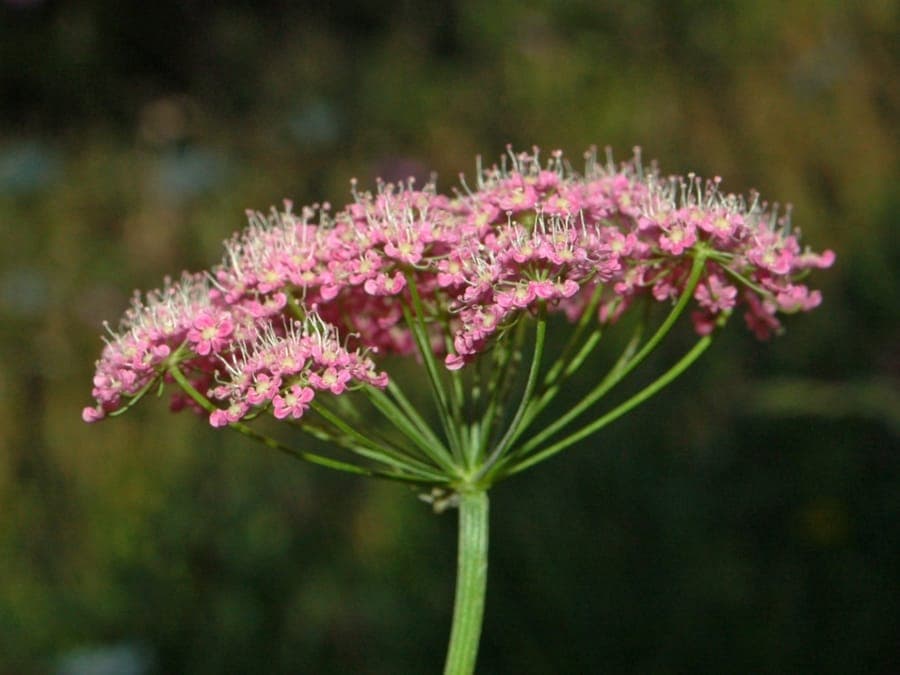
Hectonichus / CC BY-SA 3.0, via Wikimedia Commons
Pimpinella major: complete guide
Pimpinella major
¿Quieres ver Pimpinella major: complete guide en tu jardín?
1 minuto, sin tarjeta de crédito
Overview
Pimpinella major, commonly known as greater burnet-saxifrage or greater pimpernel, is a fascinating perennial plant from the Apiaceae family (carrot family). This European species grows wild in many European countries and is both an attractive garden plant and a traditional medicinal herb.
Greater burnet-saxifrage forms strong, upright plants with beautiful white flower clusters. The plant is highly wildlife-friendly, attracts insects, and is easy to grow. It is an excellent choice for wildflower gardens and flower meadows.
Appearance and bloom
Greater burnet-saxifrage forms attractive rosettes of finely divided leaves that resemble carrot-like leaf structures. The leaves have a fine, hairy texture and are dark green.
The flowers are small, white to soft pink, and appear in typical umbrella structures (small flower clusters) from June through September. This abundant blooming provides insects with plenty of food and makes the plant highly wildlife-friendly.
The plant grows to approximately 60-100 cm in height during bloom, giving it an impressive appearance in borders and flower meadows. After blooming, characteristic grooved seeds develop.
Ideal location
Greater burnet-saxifrage thrives in full sun to semi-shade. The plant accepts at least four hours of direct sunlight daily. In semi-shady locations, the plant grows very well, although the blooming is somewhat less abundant.
The plant works excellently in:
- Wildflower meadows and grasslands
- Sunny to semi-shady borders
- Natural heathland-like gardens
- Combination with other wildflowers
- Flower meadows for beekeepers and insects
Soil
Greater burnet-saxifrage grows on virtually all soils from sand to heavy clay. The plant is very flexible regarding soil preference and accepts both moist and dry grounds.
The plant prefers neutral to slightly acidic soil. Nutrient-rich soil is not required; in fact, greater burnet-saxifrage grows better on poor soils without much fertilizer.
Well-draining soil is preferred, although the plant also grows in moist places. The plant is very adaptable to various growing conditions.
Diseño gratis
¿Quieres ver Pimpinella major: complete guide en tu jardín? Crea un diseño gratis ahora.
Watering
Once established, greater burnet-saxifrage needs very little water. The plant accepts both dry and moist periods and grows at almost all moisture levels.
During growth and blooming in spring and summer, provide moderate water if it is very dry. In wet periods, you need not water extra.
New plants need more water in their first season to establish well. Once established, supplemental water is usually not needed.
Pruning
Greater burnet-saxifrage does not need regular pruning. The plant grows naturally in an attractive form. Remove spent flowers to keep the plant tidy.
In late autumn or early spring, you can remove old leaves. Drastic pruning is not necessary and can be harmful.
If you want to prevent seed production, you can remove the flower clusters before they set seed. This can help direct more energy into growth.
Maintenance calendar
Spring: Remove dead leaves. Begin watering as growth starts.
Summer: Water during dry periods. Remove spent flowers for a tidy appearance.
Autumn: Ensure good drainage. Remove old leaves in preparation for winter.
Winter: Normally no maintenance needed. Plant remains largely green.
Winter hardiness
Greater burnet-saxifrage is very winter-hardy and tolerates temperatures far below freezing without problem. The plant is native to European countries with harsh winters.
The leaves remain largely green through the winter, providing interesting winter colors. The plant certainly regrows in spring.
In winter, focus especially on well-draining soil. Waterlogging is more harmful than frost.
Companion plants
Greater burnet-saxifrage grows excellently alongside:
- Other carrot family plants (Apiaceae)
- Wild marjoram (Origanum vulgare)
- Alchemilla mollis (Lady's mantle)
- Thymus species (Thyme)
- Teasels and thistles
- Tormentil (Potentilla erecta)
- Scabious (Knautia arvensis)
- Sun rose (Helianthemum spp.)
This combination creates wildlife-friendly, insect-loving compositions.
Closing thoughts
Pimpinella major (greater burnet-saxifrage) is a wonderfully underappreciated plant for gardens. The combination of robustness, white flowers, wildlife value, and traditional use makes it a winner plant.
Whether you want a wildflower meadow, a traditional herb collection, or simply easy-to-maintain flowers, greater burnet-saxifrage performs repeatedly well. Look for plants at local nurseries or seed suppliers.
Visit gardenworld.app for more ideas about wildflowers. Also check gardenworld.app for garden design ideas.
¿Quieres ver Pimpinella major: complete guide en tu jardín? Crea un diseño gratis ahora.
Sube una foto, elige un estilo y obtén un diseño fotorrealista con lista de plantas en menos de un minuto.
Más de 10.000 jardines diseñados
Sin tarjeta de crédito


Plantas similares
Whorled carrot: complete guide
Daucus involucratus
Daucus involucratus is a Mediterranean umbellifer with white flower heads framed by lacy bracts. Growing this gravel garden gem.
Daucus muricatus: complete guide
Daucus muricatus
Daucus muricatus, the spiny wild carrot, grows wild on Mediterranean coasts. Discover sowing, June-July bloom, and wildflower meadow use.
Daucus pumilus: complete guide
Daucus pumilus
Daucus pumilus is a dwarf wild carrot relative with white lacy umbels, thriving on dunes and coastal rock in poor, fast-draining soil.