
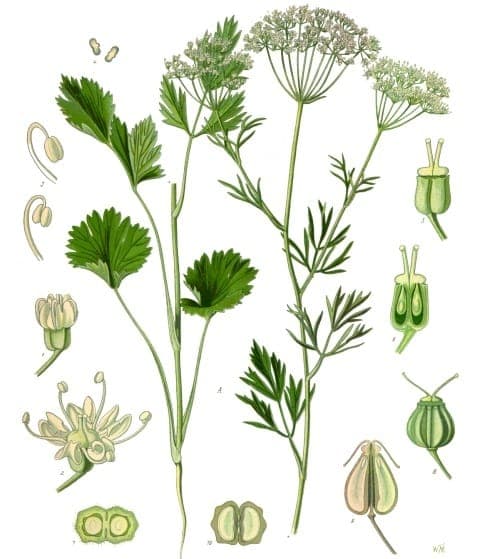
Franz Eugen Köhler, Köhler's Medizinal-Pflanzen / Public domain, via Wikimedia Commons
Pimpinella anisum: complete guide
Pimpinella anisum
¿Quieres ver Pimpinella anisum: complete guide en tu jardín?
1 minuto, sin tarjeta de crédito
Overview
Pimpinella anisum, commonly known as anise, is an annual herbaceous plant from the Apiaceae family (carrot family). This plant originates from Southeast Turkey, Cyprus, and Israel but is now cultivated worldwide for its aromatic seeds.
Anise is much more than just a culinary herb; it is also an attractive garden plant with delicate flowers that attract insects. The seeds have a warm, sweet flavor and are used in baking, confectionery, liqueur, and tea.
Appearance and bloom
The anise plant forms an upright plant with fine, leaf-like structures. The lower leaves are somewhat broader and triangular, while the upper leaves are more finely divided.
The flowers are small, white to pale yellow, and appear in typical umbrella structures (small flower clusters) during summer. These delicate flowers give the plant an airy, elegant appearance.
After blooming, characteristic aromatic seeds develop that are harvested when they turn brown. These seeds contain essential oils that provide the distinctive anise flavor.
The plant grows to approximately 40-60 cm in height. This makes it suitable for medium-sized borders and especially for herb gardens.
Ideal location
Anise thrives in full sun. The plant requires at least six to eight hours of direct sunlight daily for optimal growth. In semi-shade, the plant grows poorly and blooms less abundantly.
The plant works excellently in:
- Sunny herb gardens
- Sunny borders
- With other culinary herbs
- Pot culture on terraces
- Mediterranean gardens
Soil
Anise prefers well-draining, lightly fertile soils. The plant grows on sandy, loamy to moderately heavy soils as long as drainage is good.
The plant accepts neutral to slightly acidic soil. Fertile soil leads to more foliage and less seed, so avoid excessive fertilization.
Well-draining soil is essential; stagnant moisture certainly leads to diseases. Add sand or compost if your soil is heavy.
Diseño gratis
¿Quieres ver Pimpinella anisum: complete guide en tu jardín? Crea un diseño gratis ahora.
Watering
Anise needs moderate water, especially during growth and blooming periods. Water when the soil feels dry, but ensure the plant does not dry out completely.
In rainy periods, you need not water extra. Ensure water drains well and avoid stagnation.
In dry summers, water regularly, especially when the plant begins to bloom. This promotes larger seed yields.
Pruning
Anise does not really need pruning. The plant is an annual that dies at the end of the season. You can remove wilted flowers to encourage new flower clusters.
When the seeds ripen (turn brown), you can harvest them by cutting the plant and letting it dry.
Maintenance calendar
Spring: Sow seeds directly in soil once frost danger has passed.
Summer: Water regularly. Provide support if needed.
Autumn: Harvest seeds when they turn brown. Let them dry before storing.
Winter: Plant dies off. Clean up and prepare for next sowing.
Winter hardiness
Anise is an annual plant and does not tolerate frost. The plant dies off when temperatures drop below freezing.
Re-sow the seeds each spring after the last frost. In temperate climates, you can sow seeds in May.
Companion plants
Anise grows well with other culinary herbs:
- Cilantro (Coriandrum sativum)
- Dill (Anethum graveolens)
- Fennel (Foeniculum vulgare)
- Cumin (Cuminum cyminum)
- Parsley (Petroselinum crispum)
- Garden oregano (Origanum vulgare)
- Basil (Ocimum basilicum)
- Summer savory (Satureja hortensis)
This combination creates a pollinator-friendly herb garden.
Closing thoughts
Pimpinella anisum (anise) is a fascinating plant for gardeners who enjoy the entire process from seed to harvest. The combination of aromatic seeds, attractive flowers, and culinary value makes it a winner plant.
Anise is easy to grow from seed and offers much benefit for the effort. Sow each spring for abundant yields. Look for seeds at seed suppliers or specialty shops.
Whether you want an herb collection or simply want to try something new, anise deserves a place. Visit gardenworld.app for more garden inspiration. Also check gardenworld.app for more plant ideas.
¿Quieres ver Pimpinella anisum: complete guide en tu jardín? Crea un diseño gratis ahora.
Sube una foto, elige un estilo y obtén un diseño fotorrealista con lista de plantas en menos de un minuto.
Más de 10.000 jardines diseñados
Sin tarjeta de crédito


Plantas similares
Whorled carrot: complete guide
Daucus involucratus
Daucus involucratus is a Mediterranean umbellifer with white flower heads framed by lacy bracts. Growing this gravel garden gem.
Daucus muricatus: complete guide
Daucus muricatus
Daucus muricatus, the spiny wild carrot, grows wild on Mediterranean coasts. Discover sowing, June-July bloom, and wildflower meadow use.
Daucus pumilus: complete guide
Daucus pumilus
Daucus pumilus is a dwarf wild carrot relative with white lacy umbels, thriving on dunes and coastal rock in poor, fast-draining soil.