
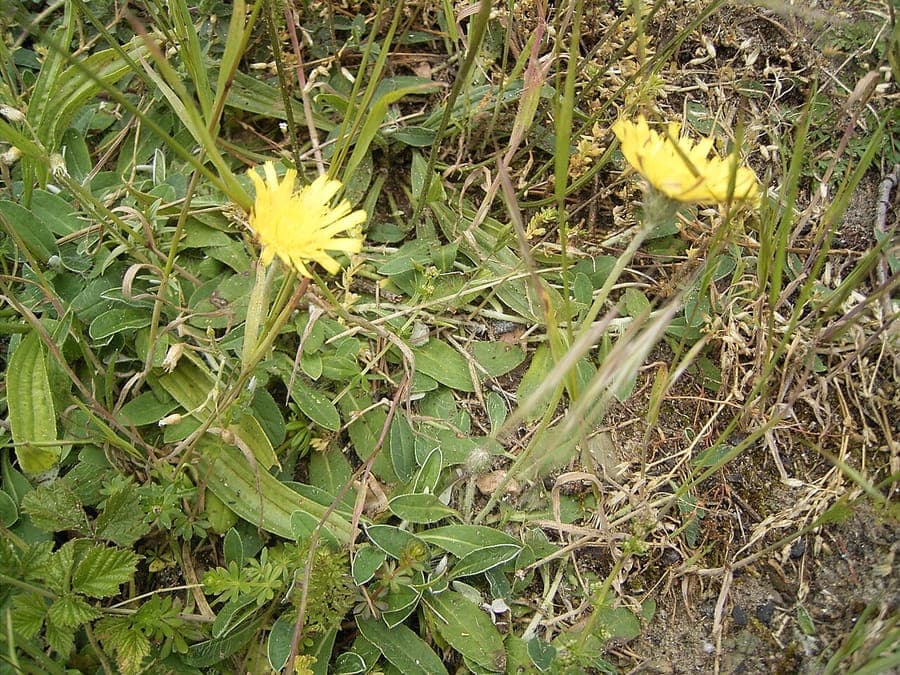
Wikimedia Commons / CC BY-SA 3.0, via Wikimedia Commons
Pilosella officinarum: complete guide
Pilosella officinarum
¿Quieres ver Pilosella officinarum: complete guide en tu jardín?
1 minuto, sin tarjeta de crédito
Overview
Pilosella officinarum, commonly known as mouse-ear hawkweed or pilosella, is a widely used traditional medicinal plant from the Asteraceae family. This European species grows wild from Europe to Siberia and Iran. Mouse-ear hawkweed is not only a beautiful bloomer but is also known for its use in herbal medicine.
The plant forms low rosettes of characteristic hairy leaves and produces abundant yellow flower clusters. It is an insect-attracting plant and very maintenance-friendly, making it an ideal choice for both formal and informal gardens.
Appearance and bloom
Mouse-ear hawkweed forms compact rosettes of hairy foliage. The leaves are elongated with striking white hairs, giving the plant a silvery appearance, especially in dry weather. These hairs function as moisture protection and give the plant its characteristic name.
The flowers are bright yellow and appear from May through August in abundant bunches. The flower clusters sit on thin, often reddish-colored stems that rise high above the leaf canopy. After blooming, fluffy fruits form that are dispersed by wind.
The plant grows to approximately 30-40 cm in flowering condition but remains compact in non-flowering periods. This makes it excellent for edging and small garden corners.
Ideal location
Mouse-ear hawkweed thrives in fully sunny locations. The plant prefers at least six to eight hours of direct sunlight daily for optimal growth and blooming. Semi-shade is accepted but leads to fewer flowers and more open growth.
The plant is suitable for:
- Sunny borders and parterre gardens
- Dry rock gardens and alpine gardens
- Edging along paths and steps
- Terracotta pots on terraces
- Wildflower meadows
- Herb gardens as a medicinal plant
Soil
Mouse-ear hawkweed grows optimally on well-draining, preferably poor soils. The plant accepts sandy, loamy to clayey soils, as long as water drains well. Wet soil leads to root rot, especially in winter.
The plant prefers neutral to slightly acidic soils with minimal nutrition. In fact, mouse-ear hawkweed grows worse in very nutrient-rich soils, where it becomes leggy. Poor soil promotes more compact growth and richer flowering.
Do not add fertilizer. Many gardeners instead add some sand or fine gravel to improve drainage, especially on heavy clay soils.
Watering
Mouse-ear hawkweed is drought-tolerant and requires very little water. Once established, mature plants need water almost only during extreme drought. Young plants need more water to grow, especially in the first season.
Provide careful watering, especially in winter. The plant tolerates wet feet much worse than dry conditions. In pot culture, water only when the soil feels noticeably dry.
In rainy periods, you do not need to water at all. The plant does perfectly fine without artificial irrigation.
Diseño gratis
¿Quieres ver Pilosella officinarum: complete guide en tu jardín? Crea un diseño gratis ahora.
Pruning
Mouse-ear hawkweed does not need regular pruning. The plant grows naturally compact and form does not need to be maintained. For medicinal purposes, you can harvest leaves and flowers during the growing season.
Remove spent flower stems to keep the plant tidy and prevent seedlings. This also encourages further blooming.
In March or April, you can remove dead leaves from the previous season. Drastic pruning is not necessary and can be harmful.
Maintenance calendar
Spring: Remove dead leaves. Begin careful watering as growth starts.
Summer: Water during extreme drought. Harvest leaves and flowers for tea or tinctures.
Autumn: Reduce watering. Ensure good drainage in preparation for wet winter.
Winter: Normally no maintenance. Water almost not at all.
Winter hardiness
Mouse-ear hawkweed is very winter-hardy and tolerates temperatures far below freezing without problem. The plant is native to regions with much harsher winters than Northern Europe.
The leaves remain largely green through winter, though they may turn somewhat purple in extreme frost. This provides interesting winter colors. The plant certainly regrows in spring.
In winter, focus especially on dry soil and good drainage. Winter mats and snow are much less problematic than damp roots.
Companion plants
Mouse-ear hawkweed combines excellently with:
- Sedum species
- Alchemilla mollis (Lady's mantle)
- Thymus species (Thyme types)
- Heuchera species
- Pulsatilla vulgaris (Pasque flower)
- Armeria maritima (Sea thrift)
- Geranium sanguineum (Bloody cranesbill)
- Veronica prostrata (Speedwell)
These drought-tolerant partners create beautiful multi-season compositions that require minimal care.
Closing thoughts
Pilosella officinarum (mouse-ear hawkweed) is a versatile plant that delivers much reward for very little effort. The combination of traditional use, attractive appearance, and maintenance-friendliness makes it ideal for modern gardens.
The plant is also interesting for beekeepers and butterflies. Many gardeners choose to harvest leaves for tea brewing. Look for mouse-ear hawkweed at your local garden center or nursery.
Whether you want a medicinal herb collection or simply a beautiful front garden, mouse-ear hawkweed performs reliably. Discover more garden inspiration on gardenworld.app. Also check gardenworld.app for more plant ideas.
¿Quieres ver Pilosella officinarum: complete guide en tu jardín? Crea un diseño gratis ahora.
Sube una foto, elige un estilo y obtén un diseño fotorrealista con lista de plantas en menos de un minuto.
Más de 10.000 jardines diseñados
Sin tarjeta de crédito


Plantas similares
Calendula stellata: complete guide
Calendula stellata
Complete guide to Calendula stellata, the star-flowered marigold from Sicily: location, soil, watering and companion planting tips.
Korean chrysanthemum: complete guide
Chrysanthemum x rubellum
Chrysanthemum x rubellum is a hardy autumn perennial with single pink to copper flowers from August to November. Care and combinations.
Helianthus divaricatus: complete guide
Helianthus divaricatus
Helianthus divaricatus is a North American woodland sunflower with yellow summer blooms, ideal for naturalistic borders and shady edges.