
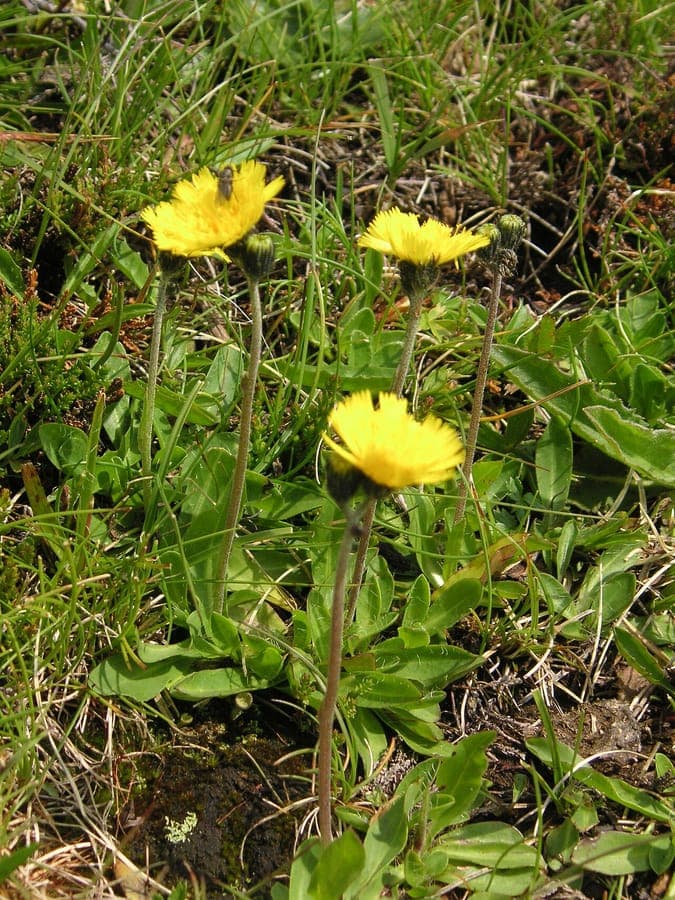
Liuthalas / CC BY-SA 3.0, via Wikimedia Commons
Pilosella lactucella: complete guide
Pilosella lactucella
¿Quieres ver Pilosella lactucella: complete guide en tu jardín?
1 minuto, sin tarjeta de crédito
Overview
Pilosella lactucella, commonly known as glaucous fox-and-cubs or lettuce hawkweed, is a fascinating herbaceous perennial from the Asteraceae family. This European species is native to diverse regions, from Belgium and the Netherlands to Poland and Italy. Glaucous fox-and-cubs is an excellent choice for gardeners who appreciate robust, easy-to-maintain plants that attract beneficial insects.
The plant grows as a herb to several decimeters in height and produces beautiful yellow flower clusters. It is highly tolerant of various growing conditions and fits perfectly in wildflower gardens, sunny borders, and rock gardens.
Appearance and bloom
Glaucous fox-and-cubs forms attractive rosettes of narrow leaves with a characteristic gray-green color. The plant grows more compact than many other hawkweed species. The flowers are bright yellow and appear in small clusters on slender stems, giving the plant an elegant appearance.
The flowering period extends from June through August, sometimes longer in mild years. The flowers remain present for extended periods and provide ample nectar for flying insects. After flowering, characteristic seed heads with hairy projections form, which are dispersed by wind.
The leaves are elongated to lance-shaped with fine hairs, which protect the plant against drought and sunburn. This hairy covering gives the hawkweed its distinctive gray-green color.
Ideal location
Glaucous fox-and-cubs thrives in full sun to semi-shady locations. For optimal blooming, choose a spot with at least six hours of direct sunlight daily. The plant is highly tolerant and accepts semi-shady spots as well, although flowering will be less abundant there.
The plant works excellently in:
- Sunny borders and pergolas
- Dry rock gardens and rockeries
- Wildflower gardens and meadows
- Groups between stacked stones
- Herb gardens as a medicinal plant
Soil
Glaucous fox-and-cubs is remarkably flexible regarding soil preference. The plant grows on sandy, loamy to clayey soils. What matters most is good drainage. Waterlogging leads to problems, especially in wet winters.
The plant prefers neutral to slightly acidic soils (pH 5.0 to 5.5 according to Trefle data). A nutrient-rich soil is not necessary; in fact, glaucous fox-and-cubs grows better in poor soils without much nitrogen. This makes it an excellent choice for difficult spots where many garden plants do not thrive.
Add humus to the soil to improve water drainage. On clayey soils, add sand or shells to prevent waterlogging.
Watering
Once established, glaucous fox-and-cubs requires very little water. The plant is drought-tolerant and withstands extended dry periods better than many of its relatives. This makes it an ideal choice for water-conscious gardeners.
During the growth and flowering period in spring and summer, provide moderate water, especially during dry spells. In winter, when the plant enters dormancy, you need to water almost not at all.
New plants need more regular water in their first growing season to develop root systems properly. Once established, you can significantly reduce water supply.
Diseño gratis
¿Quieres ver Pilosella lactucella: complete guide en tu jardín? Crea un diseño gratis ahora.
Pruning
Glaucous fox-and-cubs is a maintenance-friendly plant regarding pruning. The plant does not need regular pruning and grows naturally in an attractive form. If you wish to remove flower heads immediately after they fade, simply do so with your hands or pruning shears.
If you want to prevent seed production to keep the plant more compact, remove spent flowers regularly. This also encourages the plant to produce more flowers.
In late autumn or early spring, you can remove old or damaged leaves. Do not prune the plant drastically; this is unnecessary and can weaken the plant.
Maintenance calendar
Spring: Remove dead leaves and debris. Provide some feeding if the plant appears weak (though usually not necessary).
Summer: Water during dry spells. Remove spent flowers for increased flowering.
Autumn: Remove old leaves. Ensure good drainage in preparation for winter.
Winter: Normally no maintenance needed. In extreme winters, you can provide protection with mulch.
Winter hardiness
Glaucous fox-and-cubs is highly winter-hardy. The plant tolerates temperatures far below freezing without problem. In fact, the plant is native to many European countries with harsh winters, from Scandinavia to Poland.
The leaves generally remain green throughout winter, making the plant interesting for winter gardens. In extreme winters with heavy snow and ice, you can provide protection with dry leaf material, but this is usually unnecessary.
Ensure that the soil drains well in winter. Waterlogging combined with frost can be harmful to plants.
Companion plants
Glaucous fox-and-cubs grows excellently alongside other drought-tolerant wildflowers:
- Other hawkweed species (Pilosella and Hieracium species)
- Foxglove (Digitalis purpurea)
- Thyme species (Thymus vulgaris and relatives)
- Lavender (Lavandula spp.)
- Mullein (Verbascum spp.)
- Sun rose (Helianthemum spp.)
- Alchemilla species
- Wild marjoram (Origanum vulgare)
This combination creates a bird-friendly, insect-loving composition that blooms for extended periods.
Closing thoughts
Pilosella lactucella (glaucous fox-and-cubs) is a wonderfully underappreciated plant for gardens. The combination of hardiness, yellow flowers, and wildlife value makes it an excellent choice for sustainable gardens.
Whether you want a dry rock garden, a wildflower meadow, or simply a low-maintenance border, glaucous fox-and-cubs performs repeatedly well. Look for specimens at your local nursery or garden center. You will discover that this modest plant can bring much joy with minimal effort.
Visit gardenworld.app for more inspiration about wildflowers in your front garden. Also explore gardenworld.app for garden design ideas.
¿Quieres ver Pilosella lactucella: complete guide en tu jardín? Crea un diseño gratis ahora.
Sube una foto, elige un estilo y obtén un diseño fotorrealista con lista de plantas en menos de un minuto.
Más de 10.000 jardines diseñados
Sin tarjeta de crédito


Plantas similares
Calendula stellata: complete guide
Calendula stellata
Complete guide to Calendula stellata, the star-flowered marigold from Sicily: location, soil, watering and companion planting tips.
Korean chrysanthemum: complete guide
Chrysanthemum x rubellum
Chrysanthemum x rubellum is a hardy autumn perennial with single pink to copper flowers from August to November. Care and combinations.
Helianthus divaricatus: complete guide
Helianthus divaricatus
Helianthus divaricatus is a North American woodland sunflower with yellow summer blooms, ideal for naturalistic borders and shady edges.