
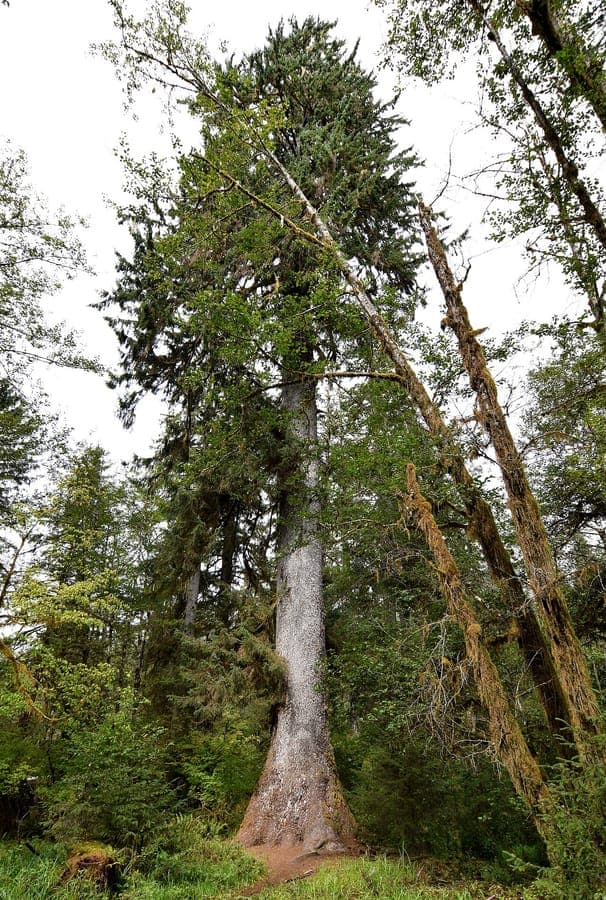
Graaf van Vlaanderen / CC BY-SA 4.0, via Wikimedia Commons
Sitka spruce: complete guide
Picea sitchensis
¿Quieres ver Sitka spruce: complete guide en tu jardín?
1 minuto, sin tarjeta de crédito
Overview
The Sitka spruce (Picea sitchensis), also known as stinking spruce or tideland spruce, is an impressive conifer originating from the coastal regions of Alaska to northern California. This tree belongs to the Pinaceae family and is renowned for its majestic growth and beauty. In its native habitat, Sitka spruce reaches enormous dimensions, but in European gardens it grows more moderately.
The Sitka spruce is ecologically important and planted in many countries for both landscaping and timber. In Europe, it's a popular choice for large gardens and parks where space permits.
Appearance & growth
The Sitka spruce grows as a majestic tree with a tight, pyramidal form. In its native environment, trees reach 50-70 metres, but in Europe 25-40 metres is more typical. The trunk is straight and strong with reddish-brown, deeply furrowed bark.
The needles are dark green with white striped undersides (stomatic bands), giving the tree fine texture. Typically 2-3 cm long, they release a characteristic smell when touched. In autumn, distinctive cones appear: initially green, later brown, approximately 7-10 cm long and pendulous.
Ideal location
Sitka spruce thrives in sunny locations, though it tolerates part-shade. This tree prefers cool, moist climates - ideal for maritime regions of northwestern Europe. Place it in a sheltered spot from strong winds, though it eventually becomes wind-resistant.
Ensure adequate space for mature growth. Don't plant close to buildings or delicate plants, as mature trees cast heavy shade.
Soil requirements
Sitka spruce prefers acidic to neutral soil (pH 5.5-7.0) with no special feeding requirements. Excellent drainage is crucial - waterlogging causes root rot. The tree grows in loamy soils if well-draining.
Add organic matter (compost) when planting to improve structure, especially in poor soils. Avoid compact clay without amendment.
Diseño gratis
¿Quieres ver Sitka spruce: complete guide en tu jardín? Crea un diseño gratis ahora.
Watering
Young plants need regular watering during the first growing season. Once established, the tree tolerates reasonable drought, though regular rainfall is ideal. In dry summers, supplemental water helps, especially for young trees.
In warm southern regions, extra irrigation during drought is important. Mulch around the tree helps retain moisture and protect roots.
Pruning
Sitka spruce requires minimal pruning. The natural form is attractive and needs no adjusting. Remove only dead, damaged, or diseased branches. Avoid heavy pruning - it damages the tree.
For trees growing against environmental pressures (wind, irregular frost), gentle directional pruning in early years helps. Growing spruce are generally self-shaping.
Maintenance calendar
May-June: Plant young trees carefully. Water regularly after planting.
July-August: Monitor for drought; water during dry periods.
September-October: Check for pests; prepare for winter.
November-April: Minimal maintenance. Protect young trees from heavy snow.
Winter hardiness
Sitka spruce is hardy to USDA zone 6 (-23°C minimum), making it winter-hardy throughout virtually all of northern Europe. In extreme winters in eastern regions, shoots may freeze but the tree typically recovers. In very warm subtropical regions it may be too hot.
Companion plants
Sitka spruce works well with:
- Other conifers: Tsuga, Abies, Chamaecyparis for structure.
- Shade-tolerant underplanting: Hosta, Helleborus, Epimedium beneath the tree.
- Shrubs: Rhododendrons and azaleas benefit from acidic soil and shelter.
Dense canopies make underplanting challenging. Choose shade-tolerant plants.
Closing
The Sitka spruce is a majestic, long-lived tree for large gardens and landscapes. Though it takes time to reach full potential, it's worth the wait for its beauty and ecological value. With adequate drainage, space, and patience, you'll have an impressive tree lasting generations. Use gardenworld.app to find inspiration for landscape designs with large trees. Remember this tree grows for decades - plan carefully before planting!
¿Quieres ver Sitka spruce: complete guide en tu jardín? Crea un diseño gratis ahora.
Sube una foto, elige un estilo y obtén un diseño fotorrealista con lista de plantas en menos de un minuto.
Más de 10.000 jardines diseñados
Sin tarjeta de crédito


Plantas similares
Abies delavayi: complete guide
Abies delavayi
Delavayi fir is an elegant, medium-sized coniferous tree from the Pinaceae family with dark green needles. This Asian evergreen is perfect for alpine gardens and large landscapes.
Taiwan fir: complete guide
Abies kawakamii
Discover the magnificent Taiwan fir, a rare evergreen conifer from Taiwan's mountain regions. Learn growth requirements, care tips, and why this beautiful tree is perfect for collectors of unique garden specimens.
Farges fir: complete guide
Abies fargesii
Discover the majestic Farges fir, an impressive conifer from China's mountains with elegant foliage and columnar form. Ideal for large gardens.