
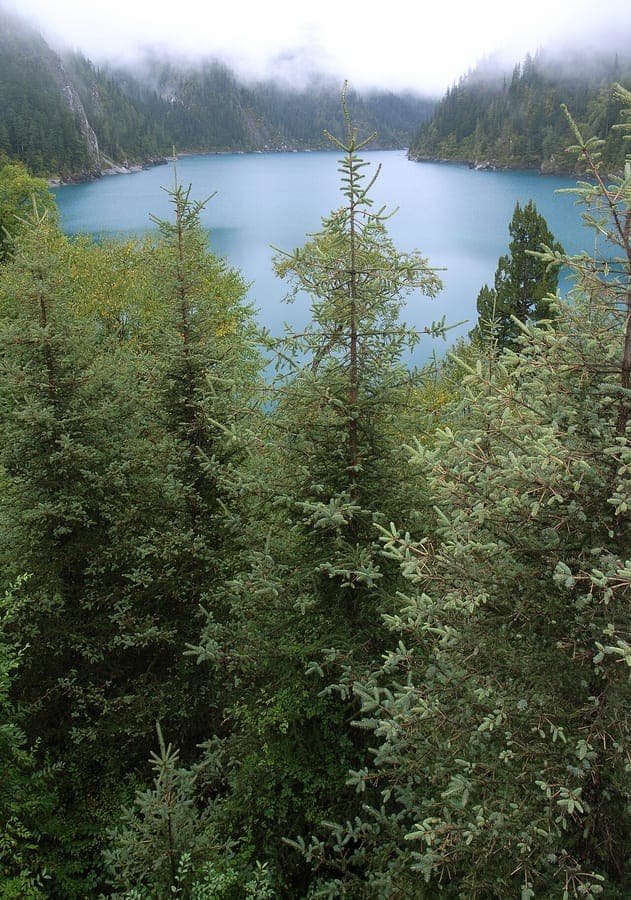
matsuyuki on Flickr / CC BY-SA 2.0, via Wikimedia Commons
Picea asperata: complete guide
Picea asperata
¿Quieres ver Picea asperata: complete guide en tu jardín?
1 minuto, sin tarjeta de crédito
Overview
Picea asperata, commonly known as Dragon spruce, is a striking conifer native to the mountains of China. This evergreen beauty belongs to the Pinaceae family (pine family) and is perfectly suited for gardens with sufficient space. With its distinctive character and year-round presence, the Dragon spruce makes an excellent focal point in any landscape.
The Dragon spruce earns its name from its notably angular and pointed needles that give it a rough, dragon-like appearance. This tree grows slowly to moderately, making it suitable for larger gardens where it can develop fully. In its natural habitat in the mountains of eastern China, this species thrives at elevations between 1,200 and 3,000 meters.
Appearance and Bloom
The Dragon spruce is characterized by its regular, pyramidal form with dense, dark green needles. The needles are relatively short, about 1 to 2 centimeters long, and point stiffly away from the branches. This gives the tree a fine, refined texture that distinguishes it from many larger spruces.
The bark is gray-brown and becomes rougher with age. In spring, small, elongated cones appear that are initially purple-red before turning green and finally brown when mature. These cones reach about 5 to 8 centimeters in length and are a characteristic feature of mature trees.
Ideal Location
The Picea asperata thrives in full sunlight. Position this tree where it receives at least six hours of direct sunlight daily. In warm climates, some afternoon shade can be beneficial, particularly during very hot summers.
The tree is extremely hardy and suitable for most European gardens, including the Netherlands. It is recommended for gardens in USDA zones 3-7, meaning it can tolerate temperatures as low as -40 degrees Celsius. This makes it ideal for northern regions.
Soil
The Dragon spruce prefers well-draining soil with a slightly acidic to neutral pH range (5.5 to 7.0). Ensure the soil is not compacted and water drains well, as this conifer dislikes waterlogged conditions.
If you have heavy clay soil, add compost or peat to improve drainage. A mulch layer of 5 to 10 centimeters around the root zone also helps retain moisture and maintain consistent soil temperature.
Diseño gratis
¿Quieres ver Picea asperata: complete guide en tu jardín? Crea un diseño gratis ahora.
Watering
Once established, the Dragon spruce is relatively drought-tolerant and requires minimal supplemental watering. However, ensure consistently moist soil during the first year after planting, especially during dry periods. Water deeply but infrequently, which promotes deeper root development.
During normal rainfall, no additional watering is needed. During prolonged dry spells, supplemental watering may be beneficial. Ensure the soil does not become waterlogged, which can lead to fungal diseases.
Pruning
The Dragon spruce requires minimal pruning due to its natural pyramidal form. Only dead wood and damaged branches should be removed. This is best done in late winter or early spring before new growth begins.
If you wish to shape the tree, prune gently in early summer. Avoid aggressive cutting, which can disturb the tree's form. Small adjustments of a few centimeters are preferable to heavy pruning.
Maintenance Calendar
Spring (March-April): Inspect for winter damage and remove dead wood. Begin light fertilization as the tree begins growth.
Summer (June-July): Water regularly during dry periods and ensure the tree remains healthy. Monitor for insects.
Autumn (September-October): No major pruning needed. The tree prepares for winter dormancy.
Winter (December-February): Protect against extreme cold and snow breakage in very snowy regions by gently loosening branches.
Winter Hardiness
The Picea asperata is extremely hardy and can tolerate temperatures as low as -40 degrees Celsius. This makes it perfectly suitable for Dutch winters. The tree does not shed its needles and remains green throughout the year.
In exceptionally snowy regions, heavy snow loads can damage branches. Tying rope around the stem can help keep branches together.
Companion Plants
The Dragon spruce grows well alongside other hardy conifers such as pines and spruces. Underplanting with low-growing shrubs or heather provides contrast. Shade plants like bergenia also work well beneath the tree.
Avoid planting moisture-loving plants directly under the tree due to its dry shade.
Closing
The Picea asperata is a remarkable conifer that provides years of enjoyment with minimal maintenance. With its extreme hardiness, ornamental value, and low requirements, it makes an excellent choice for larger gardens in temperate climates.
You can find this fascinating Dragon spruce at specialized garden centers. Choose a plant with healthy dark green needles and place it in a location where it has sufficient space to achieve its natural form. Enjoy years of this Chinese beauty in your garden. For more information about growing conifers, visit GardenWorld.app.
¿Quieres ver Picea asperata: complete guide en tu jardín? Crea un diseño gratis ahora.
Sube una foto, elige un estilo y obtén un diseño fotorrealista con lista de plantas en menos de un minuto.
Más de 10.000 jardines diseñados
Sin tarjeta de crédito

