
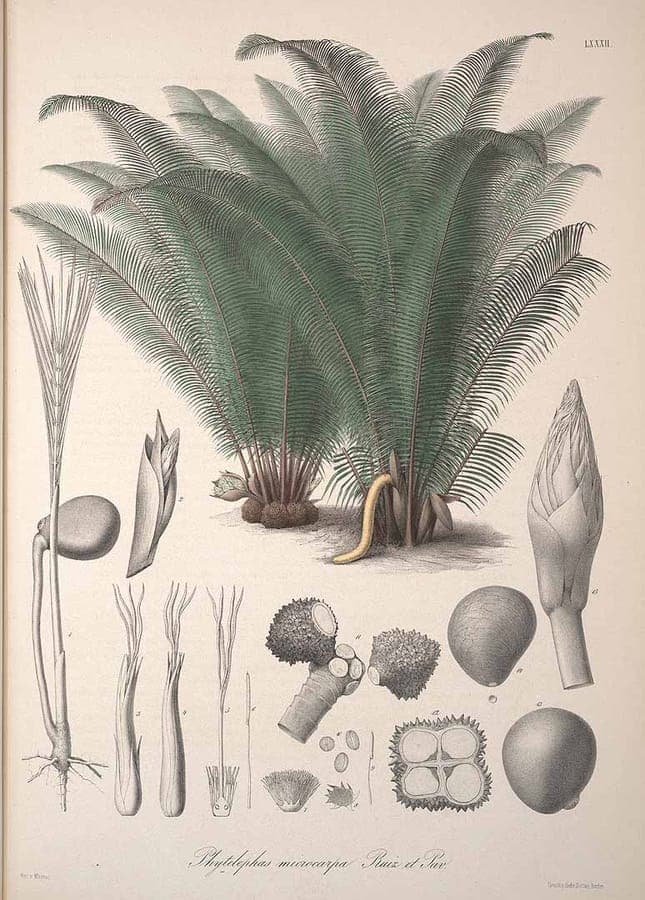
Karsten, K.W.G.H. / Public domain, via Wikimedia Commons
Ivory palm: complete guide
Phytelephas macrocarpa
¿Quieres ver Ivory palm: complete guide en tu jardín?
1 minuto, sin tarjeta de crédito
Overview
Phytelephas macrocarpa, commonly called Ivory palm or Tagua palm, is a remarkable tropical tree from the Arecaceae (palm) family. This South American specimen grows naturally from Panama to Bolivia and northwest Brazil. The plant produces distinctive ivory-like nuts historically used for carving and ornamental crafts. With massive feathery fronds and imposing fruit structures, Ivory palm makes a dramatic garden specimen.
Appearance and Bloom
Ivory palm grows as a medium-sized palm reaching 15-25 meters in its native habitat, but remaining more modest in cultivation. Massive, feathery fronds can reach 2-3 meters in length, displaying striking green coloration. The trunk is relatively slender without prominent leaf sheaths. Rather than flowers, this plant produces distinctive male and female reproductive structures. The true spectacle is the fruit - round, hard nuts reaching 5 cm diameter, maturing from green to yellow-orange.
Ideal Location
This plant requires tropical warmth - ideal in USDA zones 10-12. It thrives in full sun to partial shade. Provide shelter from strong winds that damage massive fronds. In cooler regions, grow in large containers moveable indoors for winter. Space carefully to accommodate mature size.
Soil
Phytelephas macrocarpa prefers well-drained soil enriched with organic matter. A mixture of loamy soil, coconut coir, and perlite works well. The plant prefers slightly acidic to neutral pH (6.0-7.0). Excellent drainage is crucial as waterlogging causes rapid root decay.
Diseño gratis
¿Quieres ver Ivory palm: complete guide en tu jardín? Crea un diseño gratis ahora.
Watering
During the growing season, water regularly keeping soil moist but never soggy. Ivory palm is fairly drought-tolerant once established but prefers consistent moisture cycles. Reduce watering significantly in winter. For container plants, ensure good drainage and avoid overwatering.
Pruning
Minimal pruning is needed for Phytelephas macrocarpa. Remove only dead fronds and damaged stems. Avoid pruning green fronds as this damages the plant. If the plant becomes too large, careful topping can be used as a last resort, though this is risky.
Maintenance Calendar
Spring: Apply slow-release palm fertilizer. Monitor for pests. Summer: Water regularly. Fertilize biweekly. Check for drought stress. Fall: Reduce feeding as growth slows. Winter: Minimal watering. No fertilizer. Move containers indoors in cool zones.
Winter Hardiness
Ivory palm is frost-tender outside USDA zones 10-12. Freezing temperatures cause severe damage or death. In zones 9 and cooler, grow in containers that can be moved indoors. Protect even established plants when temperatures drop below 10 degrees Celsius.
Companion Plants
Pair Ivory palm with other large-foliaged tropical plants like Musa or Heliconia for dramatic effects. Shade-tolerant plants can grow beneath the canopy. Other palms create interesting textural contrasts. Avoid dense surrounding plantings that restrict air circulation.
Closing
Ivory palm brings authentic tropical grandeur to warm gardens. With proper care and location, this impressive specimen rewards with decades of growth. Visit gardenworld.app for tropical palm gardening guidance. Discover on gardenworld.app how to create your perfect tropical paradise garden.
¿Quieres ver Ivory palm: complete guide en tu jardín? Crea un diseño gratis ahora.
Sube una foto, elige un estilo y obtén un diseño fotorrealista con lista de plantas en menos de un minuto.
Más de 10.000 jardines diseñados
Sin tarjeta de crédito


Plantas similares
Needle palm: complete guide
Rhapidophyllum hystrix
Everything about the needle palm: the world's hardiest palm, suitable for gardens in temperate climates down to USDA zone 7b.
Saw palmetto: complete guide
Serenoa repens
A complete guide to saw palmetto (Serenoa repens), the iconic fan palm from Florida and the southeastern United States, prized for its toughness.
Puerto Rican hat palm: complete guide
Sabal causiarum
Grow Puerto Rican hat palm successfully. A majestic fan palm with tropical presence suited to sheltered Mediterranean-style gardens.