
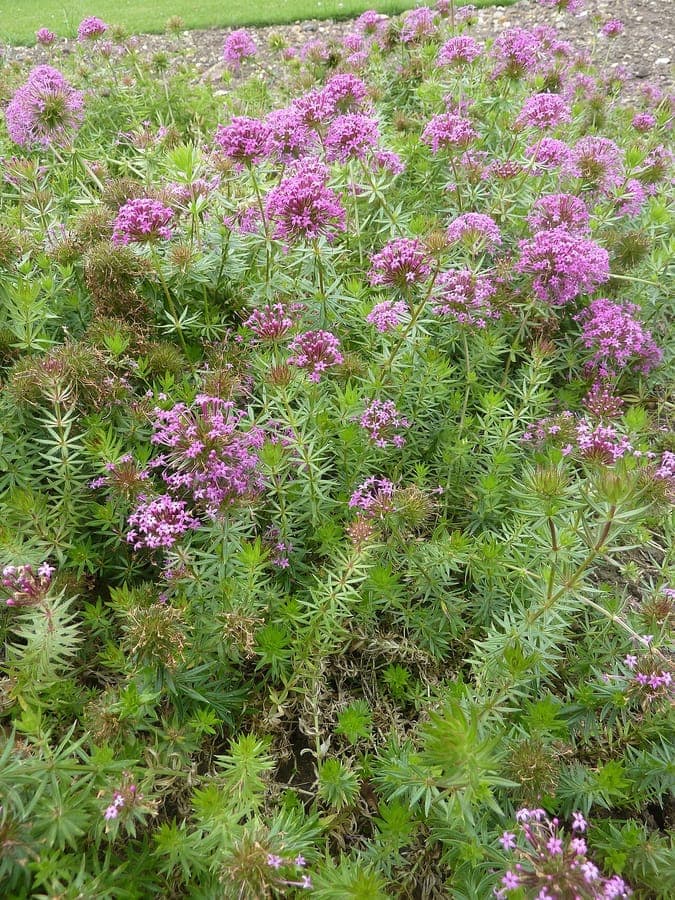
Magnus Manske / CC BY-SA 3.0, via Wikimedia Commons
Crosswort: complete guide
Phuopsis stylosa
¿Quieres ver Crosswort: complete guide en tu jardín?
1 minuto, sin tarjeta de crédito
Overview
Crosswort, scientifically known as Phuopsis stylosa, is an impressive low-growing ground cover plant originating from the Caucasus Mountains. This charming plant is renowned for its numerous pink flowers that appear from May through July in dense, rounded flower clusters. The plant typically reaches a height of only 15 to 20 centimeters and forms a compact, dense mat perfectly suited for borders, garden edges, and rock gardens.
The name Crosswort refers to the characteristic arrangement of flower petals in a cross form. The plant has been cultivated in gardens since 1886 and has proven itself as a reliable perennial. In Northern Europe, Crosswort is particularly popular in Germany and Great Britain, where it thrives in temperate climate conditions.
Appearance and bloom
Crosswort is a semi-evergreen ground cover with fine, narrow leaves that grow in whorls around the stems. The leaves have a fresh, grass-like texture and measure only a few millimeters in width. During the growing season, the plant forms a very compact, rounded tuft.
The bloom is the most spectacular feature of this plant. The flowers are small, approximately 3-4 millimeters in diameter, and appear in dense, rounded flower clusters (cymes) that can reach 2-3 centimeters in diameter. These flower clusters stand closely together and create a very striking, highly attractive effect. The flowers are usually pink to red in color, although cultivars with deeper tones are also available.
The flowering period runs from May through July, making the plant a fine addition to late spring to summer borders. After flowering, the plant forms small fruits with very fine seeds.
Ideal location
Crosswort thrives best in a sunny to partially shaded location. In Southern regions, some partial shade is appreciated to keep the plant fresh. The plant tolerates dry conditions reasonably well but grows faster and blooms more abundantly in a location with regular moisture supply.
Place the plant in a well-drained location where no stagnant water can form. Crosswort is fairly indifferent to the microclimates in the garden, as long as the moisture balance is good. In rock gardens and on dry slopes, it performs remarkably well, especially when given some water-draining gravel or stone chips around it.
Soil
Crosswort grows best in nutrient-rich, well-drained soil with a neutral to slightly acidic pH (6.5 to 7.0). The plant is very tolerant of various soil types, as long as they are not too dense or waterlogged. Adding compost or peat moss during planting helps with water retention capacity.
In very nutrient-poor soil, additional feeding can help, although this is not strictly necessary. The plant grows slower on very lean soils but can still survive. However, ensure well-drained soil, as the plant is susceptible to root rot in persistent wet conditions.
Diseño gratis
¿Quieres ver Crosswort: complete guide en tu jardín? Crea un diseño gratis ahora.
Watering
Crosswort needs moderate water and can cope well with dry periods, especially once well established. However, ensure regular moisture supply during the growing season and especially during the flowering period. A ground cover anticipates a consistently moist soil without, however, waterlogging.
During dry summers, additional watering may be necessary, especially in warm regions. Water preferably at the base of the plant and avoid spraying over the foliage, as this can increase susceptibility to fungi. A layer of 2-3 centimeters of mulch around the plant helps retain moisture.
Pruning
Crosswort requires minimal maintenance in terms of pruning. After blooming, faded flower clusters can be gently removed to keep the plant tidy and encourage further blooming. This deadheading is, however, not strictly necessary.
In spring, the plant can be gently pruned to promote dense growth, especially if it has become somewhat straggly. However, avoid heavy pruning work, as the plant has a somewhat natural, rounded growth habit.
Maintenance calendar
March-April: Plant new specimens once the soil is frost-free. Give established plants a light ration of nitrogen-containing fertilizer. May-July: The plant blooms abundantly. Water regularly and deadhead faded flowers. August-September: Gradually reduce watering as the plant finishes blooming. October-November: Further reduce moisture supply. Add mulch around the plant in preparation for winter. December-February: Plant is largely dormant. No feeding or moisture supply needed. In areas with heavy frost, a layer of mulch can prevent the plant from settling.
Winter hardiness
Crosswort is extremely winter hardy and can tolerate temperatures down to about -20 degrees Celsius. In most parts of Europe, it overwinters excellently without special protection. In areas with very heavy frost or wet winters, however, a layer of mulch can gently prevent the plant from settling.
The semi-evergreen nature of the plant means it retains most of its foliage in winter. This also makes it attractive in winter. However, ensure the plant is not in stagnant water, as this can cause root diseases.
Companion plants
Crosswort is an excellent companion plant for low borders and rock gardens. It combines well with other low-growing ground covers, spring bulbs, dwarf grasses, and low-growing perennials.
Conclusion
Crosswort is a proven, low-maintenance ground cover that can give every garden a fine form. With minimal care, it blooms abundantly every year and forms a dense, attractive mat. Ideal for gardeners looking for something special yet simple. Check gardenworld.app for perfect garden designs.
¿Quieres ver Crosswort: complete guide en tu jardín? Crea un diseño gratis ahora.
Sube una foto, elige un estilo y obtén un diseño fotorrealista con lista de plantas en menos de un minuto.
Más de 10.000 jardines diseñados
Sin tarjeta de crédito


Plantas similares
Oregon bedstraw: complete guide
Galium oreganum
Everything about Oregon bedstraw (Galium oreganum): shade planting, soil requirements, care and use as a low groundcover in woodland and shade gardens.
Awned woodruff: complete guide
Asperula aristata
Full guide to growing Asperula aristata, the awned woodruff: sunny location, alkaline soil, minimal watering, and companion plants for dry or rock gardens.
Purple woodruff: complete guide
Asperula purpurea
Full guide to Asperula purpurea, purple woodruff: sunny sites, chalky soil, watering, pruning, winter hardiness and companion plants for rock and dry gardens.