
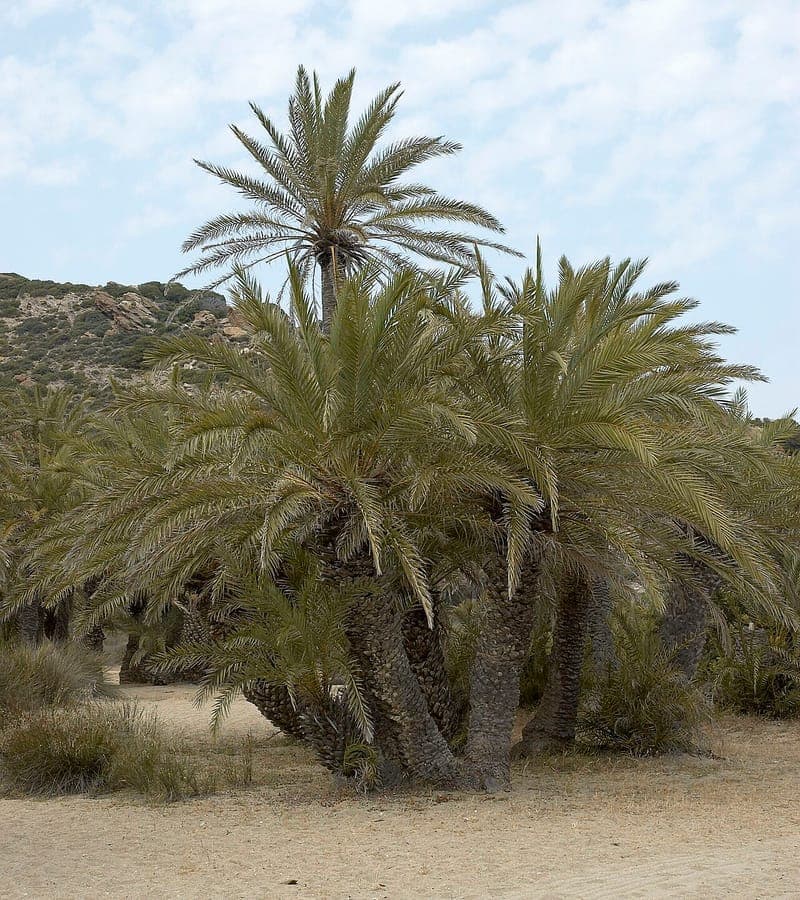
Wouter Hagens / CC BY-SA 3.0, via Wikimedia Commons
Phoenix theophrasti: complete guide
Phoenix theophrasti
¿Quieres ver Phoenix theophrasti: complete guide en tu jardín?
1 minuto, sin tarjeta de crédito
Overview
The Cretan date palm (Phoenix theophrasti) is an elegant palm species from the Arecaceae family, native to the Mediterranean region. This impressive palm thrives best in warmer climates and is named after the Greek islands where this plant grows naturally. The plant is known for its slender trunk and fine, feathery fronds that give a tropical appearance. For those interested in Mediterranean garden architecture, this palm is an excellent choice to bring the warm climate of Greece and Turkey into your garden.
The Phoenix theophrasti is not only decorative but also a symbol of warmth and sustainability. With the right location and care, this plant can be a characteristic element in your garden for many years. Growth is moderate, meaning patience is rewarded with an increasingly impressive specimen. This Mediterranean beauty deserves a prominent place in any warm-climate garden.
Appearance and bloom
The trunk of the Cretan date palm is relatively slender and can grow to several meters high in its natural habitat. In gardens in temperate climates, growth remains more compact. The fronds are delicately feathered, graceful, and form an impressive crown at the top of the plant.
The plant produces small yellow flowers that appear between the fronds. These flowers are not very conspicuous, but they do form the precursor to the fruits. The fruits are dark brown to black and have an oval shape, which is characteristic of palms in the Phoenix genus. These fruits give the plant extra visual interest and are popular with birds.
The overall growth form can be pyramidal or conical in ideal conditions, which many gardeners find attractive. The texture of the fronds creates shade and movement in the wind, adding dynamism to the garden landscape.
Ideal location
The Phoenix theophrasti thrives best in a location with plenty of sunlight. At least 6 to 8 hours of direct sunlight per day is ideal. The plant can also grow in partial shade, but will not grow as quickly and may develop thin fronds.
Protection from strong winds is important. Although the plant is fairly tough, heavy winds can damage the elegant fronds. A location with some wind protection from other plants or structures is therefore recommended.
Moisture retention is important, especially during the growing season. Therefore, do not plant in a very dry location. A sheltered garden or patio provides ideal conditions. For those in colder climate zones, the plant can be better protected in winter or even placed in a pot outside, which can be moved indoors during frost.
Soil
The Phoenix theophrasti prefers well-draining soil. Heavy clay soils should be improved with organic matter such as compost or peat. A mixture of garden soil, sand and compost (in a 3:1:1 ratio) works well.
The pH can be neutral to slightly acidic. A pH between 6 and 7.5 is ideal for healthy growth. Check your soil pH regularly and add lime if needed to prevent overly acidic conditions.
The soil should contain nutrients but not be overloaded. An annual application of slow-release fertilizer in spring helps support growth without overfeeding the plant. Organic compost or palm-specific fertilizers are recommended.
Diseño gratis
¿Quieres ver Phoenix theophrasti: complete guide en tu jardín? Crea un diseño gratis ahora.
Watering
The Cretan date palm likes to receive water regularly, especially during the growing season (spring and summer). Water the plant two to three times a week in warm weather. In fall and winter, the frequency can be reduced.
Make sure the soil is moist but not waterlogged. Excess water leads to root problems and fungal infections. Good drainage is therefore essential. Check the soil before watering - if it is still moist to a few centimeters deep, wait another day.
During very dry periods or heat waves, additional irrigation may be needed. Also occasionally spray water on the fronds to remove dust and refresh the plant. This also promotes healthy gas exchange.
Pruning and maintenance
The Phoenix theophrasti requires minimal pruning. Remove only dead or damaged fronds, which helps keep the plant tidy and prevents disease. Dead fronds can be safely removed once they have turned brown.
Do not do thorough pruning of the plant, as this can damage the natural form. Keep the natural growth pattern largely intact. If the plant becomes too large, you can carefully remove a few lower fronds to make the trunk visible and make the plant appear airier.
Regularly check for pests and diseases, especially spider mites and scale insects. These can be harmful to the fronds. If infestation occurs, treat with insecticide or biological control.
Maintenance calendar
February to April: Beginning of growing season. Add slow-release fertilizer and check for pests.
May to September: Active growing season. Regular watering and regular health checks.
October to November: Preparation for winter. Gradually reduce watering frequency and add organic mulch.
December to January: Winter period. Minimal maintenance. Protect from frost in colder regions.
Winter hardiness
The Phoenix theophrasti is not very frost-hardy and cannot tolerate frost well. In Mediterranean climates with mild winters (not below 0 degrees Celsius), this palm can grow outdoors year-round.
In colder climate zones, it is recommended to grow the plant in a pot and bring it indoors in winter, or wrap it well with insulating material. Temperatures below 5 degrees Celsius are harmful to the plant. If frost is expected, cover the plant with burlap or other protective material.
Multiple years of frost exposure can severely damage the plant. Therefore, consider placing the plant in an area with plenty of sunlight and shelter, such as against a south-facing wall.
Companion plants
The Phoenix theophrasti combines well with other Mediterranean plants such as lavender, rosemary and cistus. These combinations create an authentic Southern European garden feel.
Variegated varieties of ivy and clematis can grow around the palm trunk without damaging it. However, make sure they don't shade the fronds.
Ardisia and other evergreen shrubs can also be combined beautifully, especially in warmer climates. The contrast between the slender palm and more compact plants can be visually very pleasing.
Closing
The Cretan date palm is a beautiful addition to gardens in warmer climates and can be enjoyed for many years with proper care. With plenty of sunlight, good drainage and regular watering, this palm will grow into an impressive specimen. Enhance your garden experience with this elegant Mediterranean classic. If you are looking for a durable and exotic plant, visit local garden centers such as garden retailers for advice and purchase. Gardenworld.app also offers inspiration for designing gardens around these fascinating palms. Enjoy the warmth and beauty that the Phoenix theophrasti brings to your garden.
¿Quieres ver Phoenix theophrasti: complete guide en tu jardín? Crea un diseño gratis ahora.
Sube una foto, elige un estilo y obtén un diseño fotorrealista con lista de plantas en menos de un minuto.
Más de 10.000 jardines diseñados
Sin tarjeta de crédito


Plantas similares
Needle palm: complete guide
Rhapidophyllum hystrix
Everything about the needle palm: the world's hardiest palm, suitable for gardens in temperate climates down to USDA zone 7b.
Saw palmetto: complete guide
Serenoa repens
A complete guide to saw palmetto (Serenoa repens), the iconic fan palm from Florida and the southeastern United States, prized for its toughness.
Puerto Rican hat palm: complete guide
Sabal causiarum
Grow Puerto Rican hat palm successfully. A majestic fan palm with tropical presence suited to sheltered Mediterranean-style gardens.